


Kiritsuke Knife - Spectre
Also discover
Kiritsuke Knife - Spectre
Description and technical specifications
Japanese Kiritsuke Knife Spectre: one blade, six handles
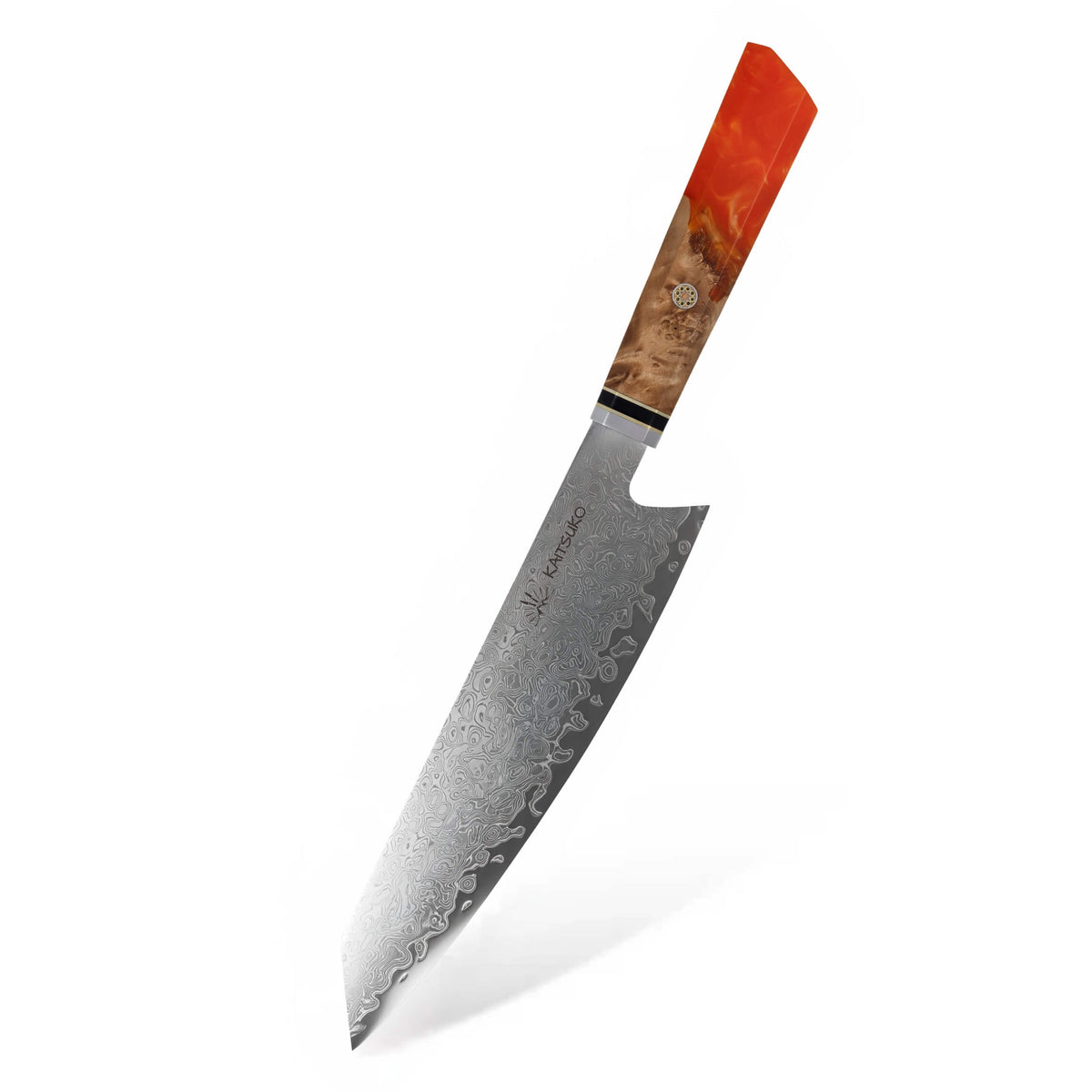
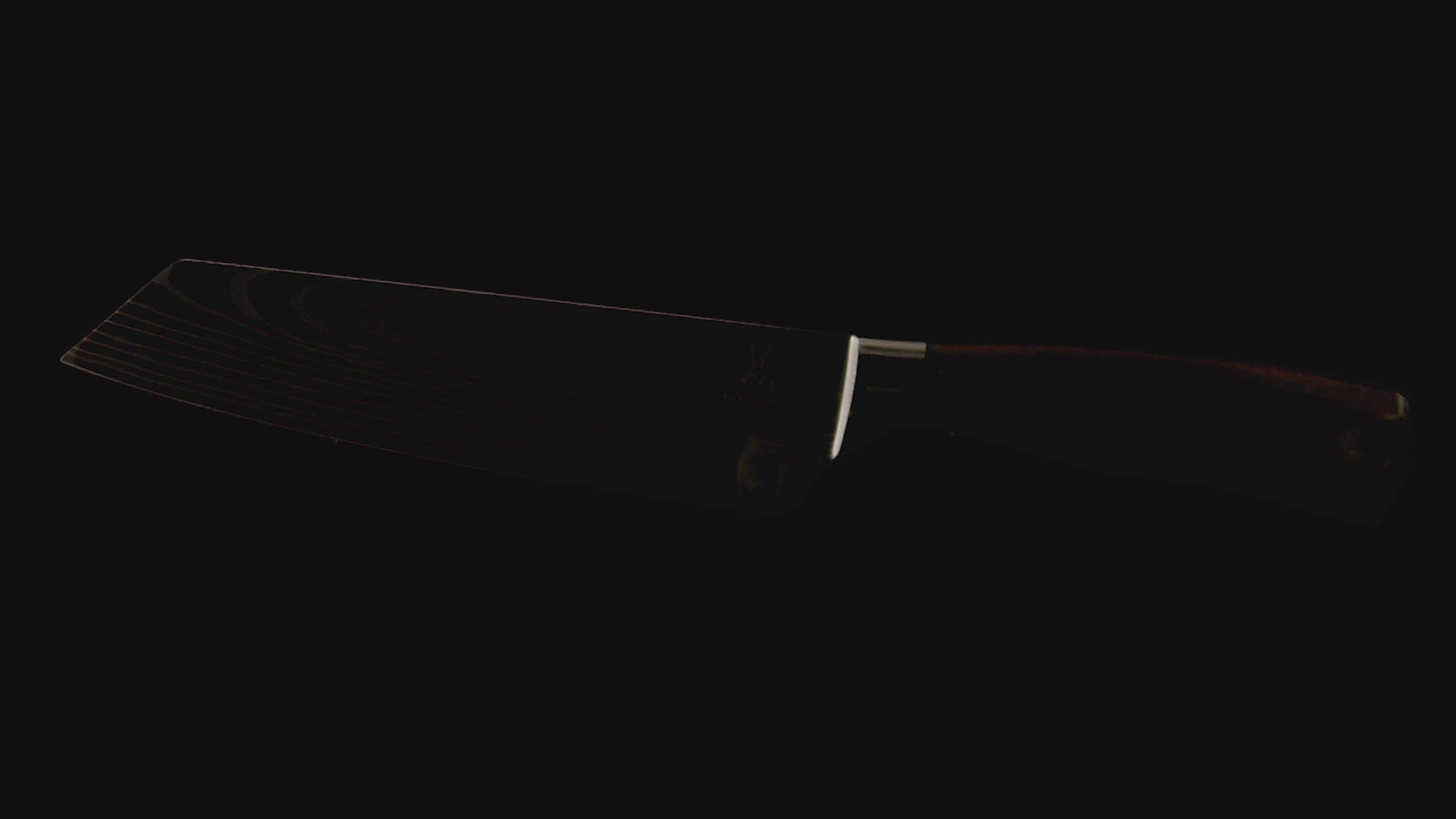
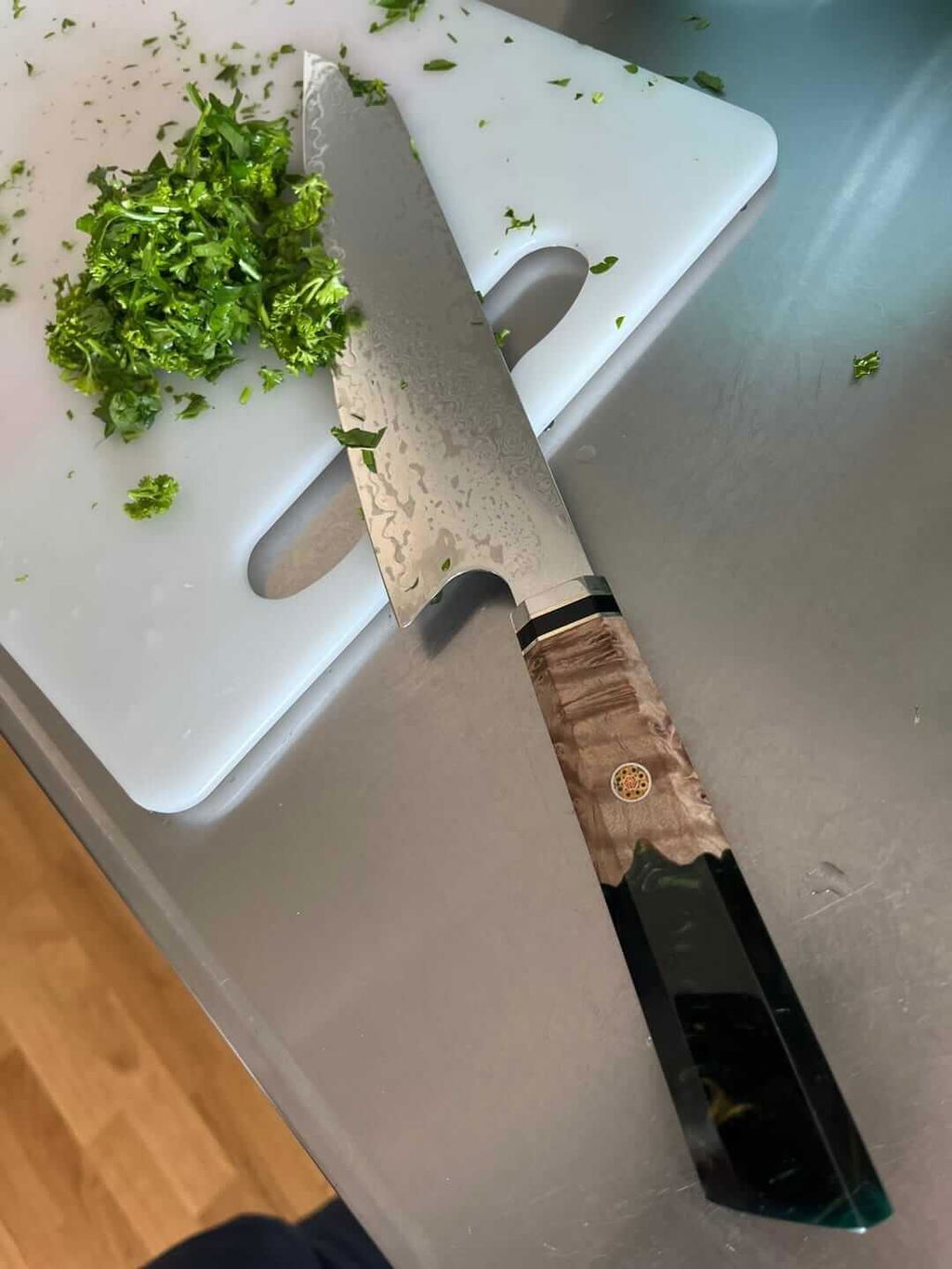
The Spectre is the Kiritsuke from Kaitsuko's Prestige collection. Its blade is shared across the entire series: a 10CR15CoMoV cobalt-enhanced steel core, hardness of 58–60 HRC and 67 Damascus layers. What changes is the handle. Each variant pairs a stabilised wood with a different-coloured epoxy resin, hand-poured and hand-sanded, for six clearly distinct visual identities around the same 21.5 cm blade.
You choose your Spectre the way you choose a statement piece: the cut is the same, the handle reflects your personality.
Six handles, one blade: choose your Spectre
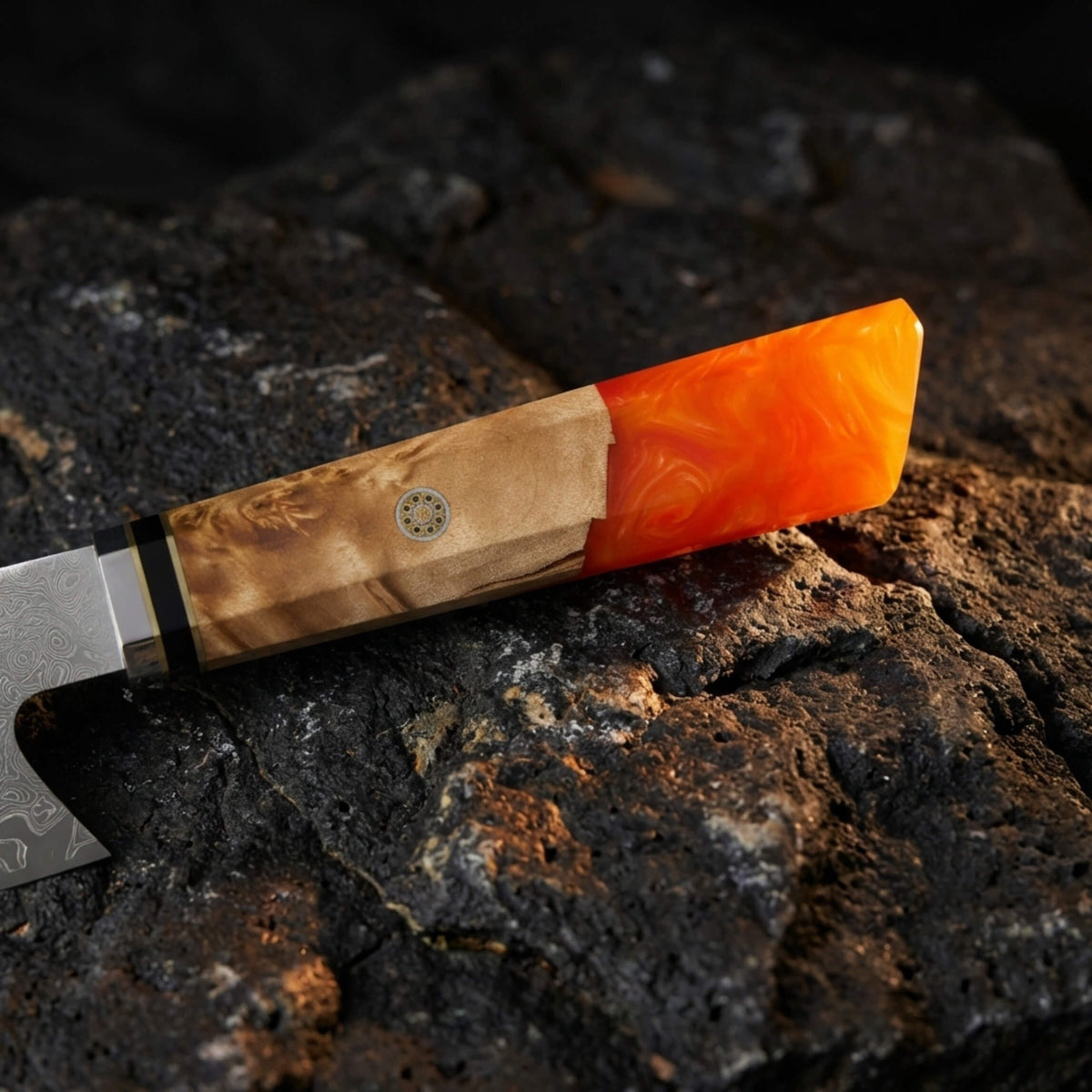
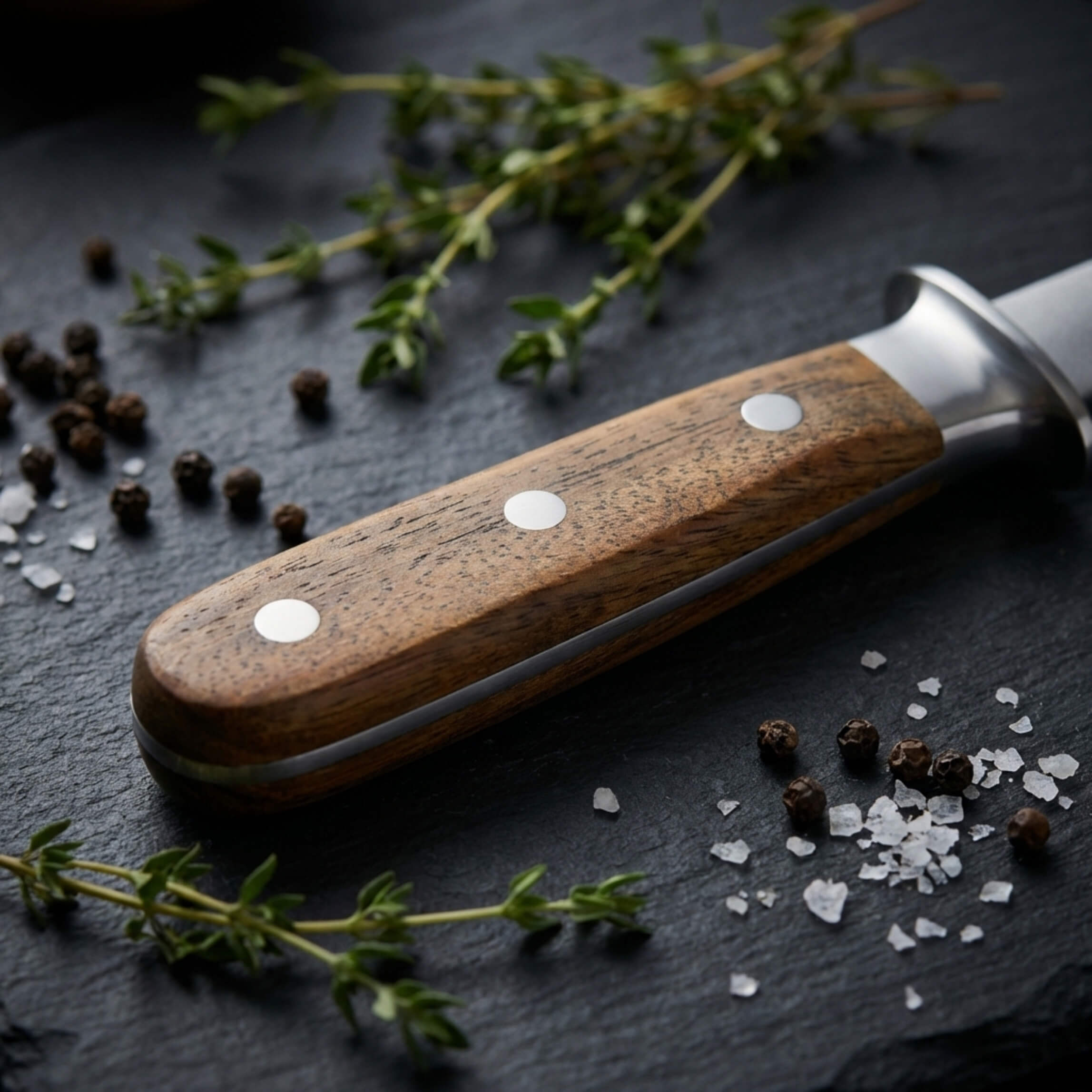
All six variants share the same handle construction — stabilised wood and epoxy resin — for a comfortable, balanced grip that does not slip even with wet hands. Only the resin colour and wood tones change:
- Spectre I: bright red resin and stabilised wood in brown tones. The warmest and most vibrant variant in the series.
- Spectre II: light wood on the blade side, white resin on the pommel side. The bright, clean pole of the series — the one that contrasts most with the Damascus.
- Spectre III: black resin and beige wood. The most understated contrast, designed for minimalist kitchens.
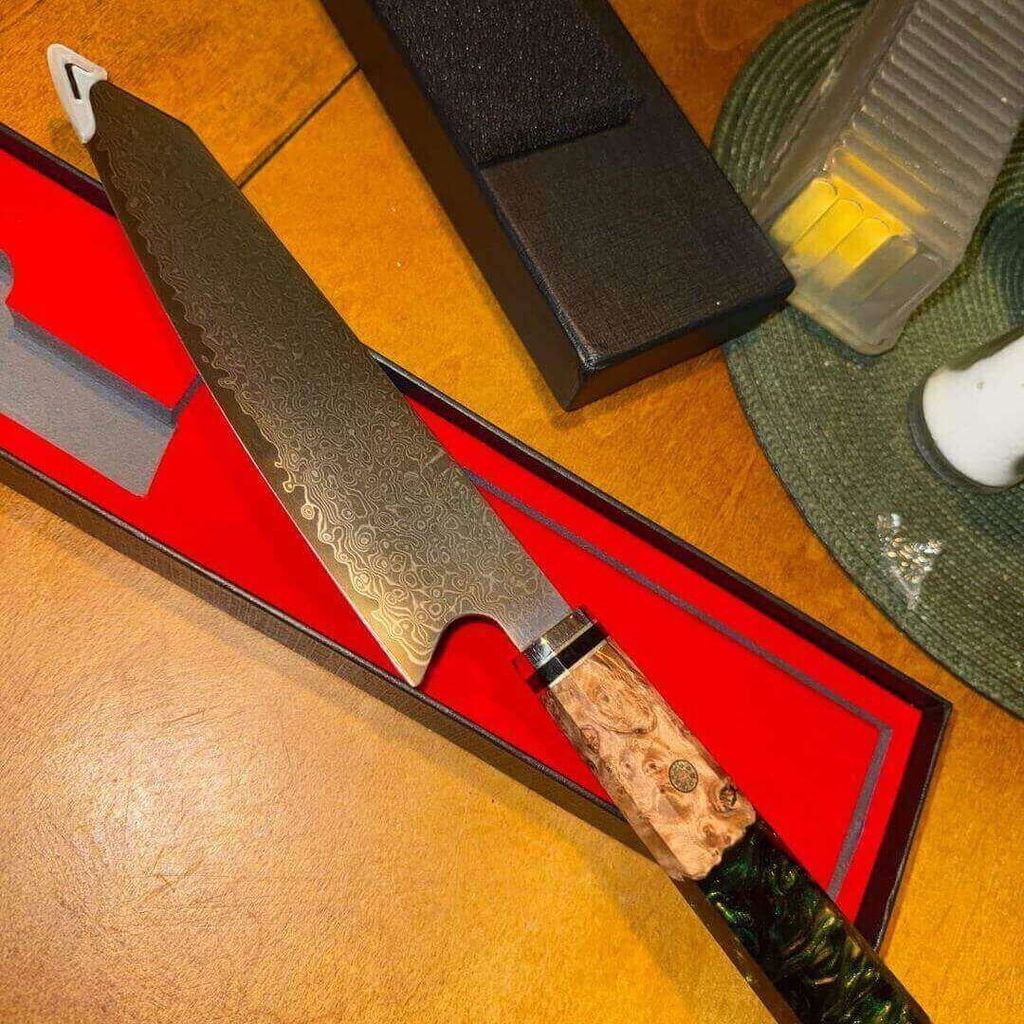
- Spectre IV: exotic green and beige wood set in resin. The most organic and artistic variant, inspired by natural colour palettes.
- Spectre V: deep red resin, almost burgundy, on light wood. The most saturated version — a knife that stands out on the worktop.
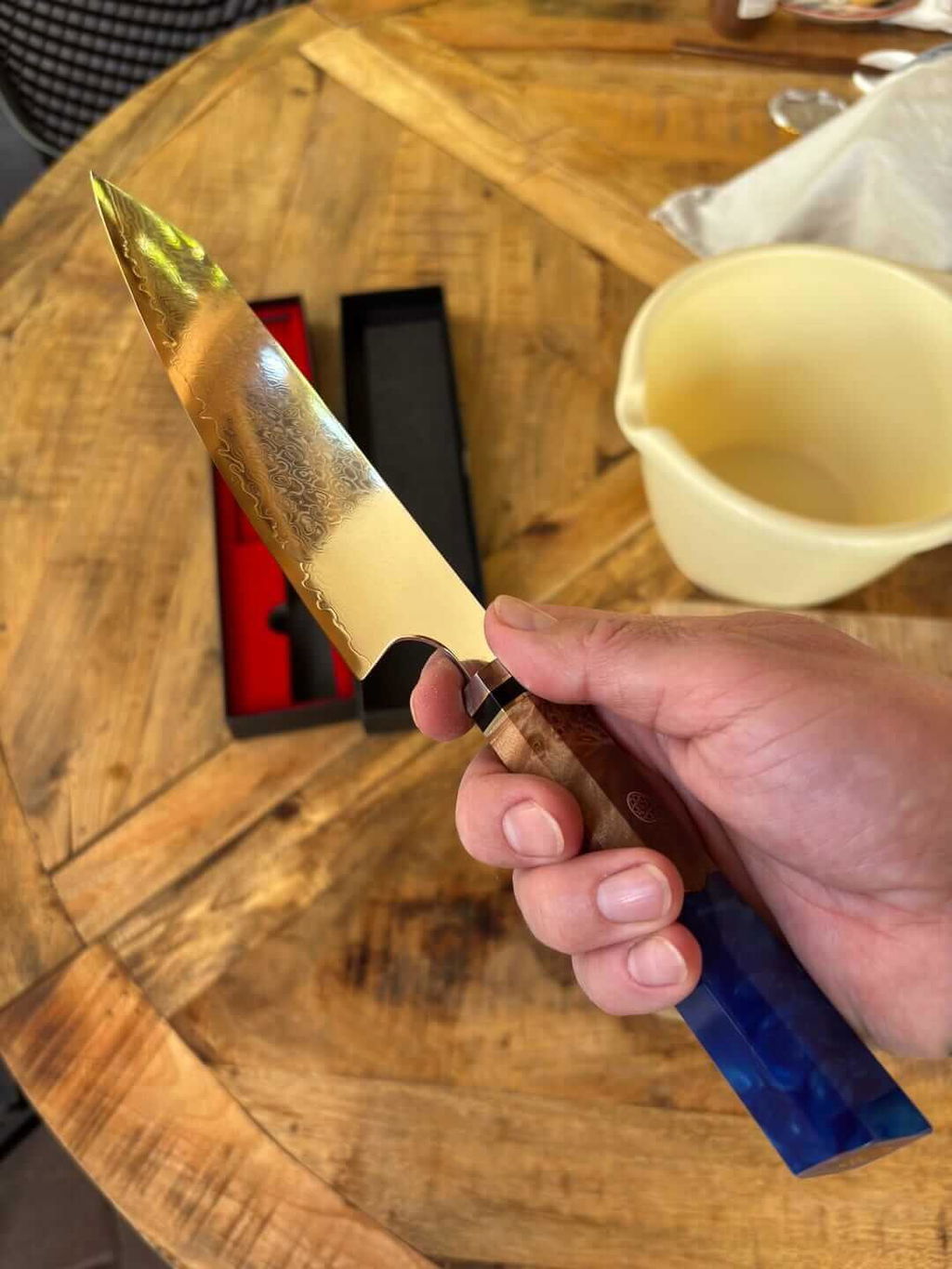
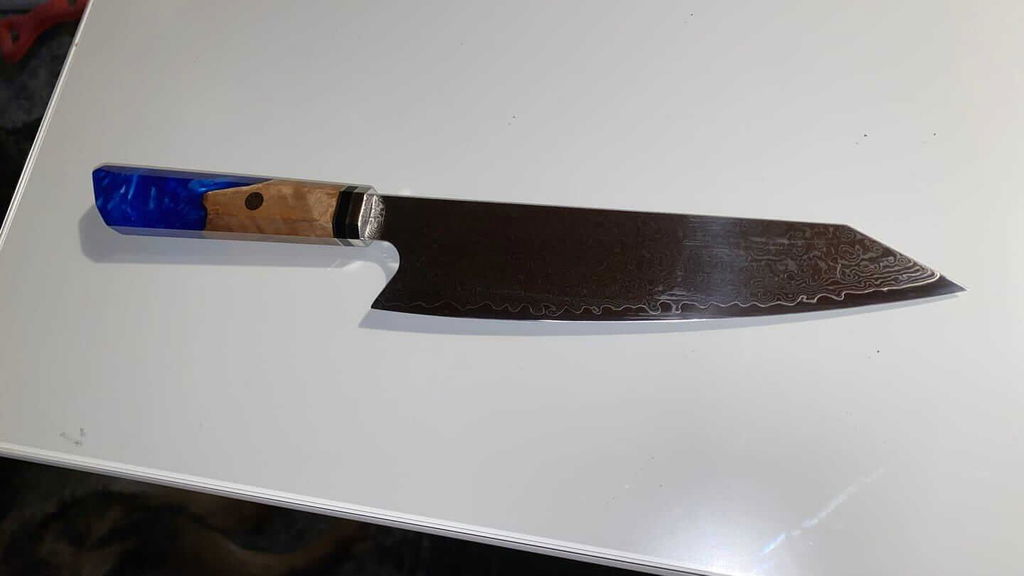
- Spectre VI: deep blue resin on light wood. The freshest variant in the series — a nod to the ocean against the undulating Damascus.
The wood is deeply impregnated to resist moisture and temperature variations, and the resin locks the handle structure in place over time. Wood grain and resin tones vary from piece to piece: no two Spectres of the same colour are ever exactly identical.
What is a Kiritsuke?
The versatility of a "K-Tip" blade
The Kiritsuke is recognisable by its long blade, rectilinear profile and angular "Reverse Tanto" tip. This tip is more than aesthetic: it offers superior agility for delicate incisions and tip work, where a classic chef's knife can sometimes lack finesse. The profile combines the length of the Yanagiba (fish knife) and the straight edge of the Usuba (vegetable knife).
The chef's knife, accessible to all
In Japanese kitchens, the Kiritsuke is traditionally reserved for the head chef. The Spectre retains the geometry and the exacting standard, but adopts a symmetrical double bevel sharpened at 15° per side and a Western-style handle: it suits both right- and left-handed users and does not require mastering a single-bevel knife.
Blade anatomy: shared across the entire Spectre series
A 10CR15CoMoV steel core at 58–60 HRC
The blade core is forged in martensitic 10CR15CoMoV stainless steel, with 1.05% carbon and cobalt enrichment. This alloy reaches a hardness of 58–60 HRC and accepts a precise 15° sharpening, for a razor-sharp edge that lasts significantly longer than standard steel. For reference, the Chef Tanaka range sits at 53–54 HRC — the Spectre is clearly positioned in the high-performance segment of our catalogue.
67 Damascus layers, a unique pattern on every blade
The core is protected by 67 layers of Damascus steel in San Mai construction. This sandwich structure brings resilience to the blade and reveals undulations found on no other piece. Depending on the handle colour, the Damascus stands out in sharp contrast (Spectre II and III) or in colour continuity (Spectre IV, V and VI).
Performance in the kitchen
Thanks to its hybrid geometry, the Spectre advantageously replaces several knives. Its long blade fillets and slices sashimi in a single stroke, without tearing the fibres. Its flat heel ensures full contact with the board for chopping herbs and achieving precise julienne. Its tapered profile glides through boneless meat for a clean cut. The cut is made by pulling from base to tip, and fine work is done with the "K-Tip" point — for trimming meat or finely dicing a shallot with a precision a Gyuto simply cannot match.
Kiritsuke, Santoku or Gyuto: which to choose?
| Feature | Kiritsuke Spectre | Santoku Tanaka | Gyuto (chef's knife) |
|---|---|---|---|
| Tip profile | K-Tip (Reverse Tanto) | Rounded | Curved |
| Hardness (HRC) | 58–60 (high performance) | 53–54 (robustness) | 53–58 |
| Skill level | Experienced / expert | Beginner / home cook | All levels |
| Ideal use | Hybrid precision | Everyday cooking | Large volumes, rocking motion |
The Gyuto has a more pronounced belly that favours the rocking motion. The Spectre is more rectilinear and favours vertical cuts and push-cutting. Compared to the Santoku, it is longer and more tapered: the tool for those who prefer the finesse of the slice over the speed of the stroke.
A good first Japanese knife?
Yes, if you already have a disciplined cutting technique — no, if you are a complete beginner. At 60 HRC and 15°, the steel does not forgive twisting motions or impact against bones. For a first purchase, the Santoku Tanaka remains our recommendation. The Spectre is the excellent second knife — the one you treat yourself to when you want to discover the absolute glide of a high-hardness Damascus.
Care guide
Sharpening: preserving the 15° angle
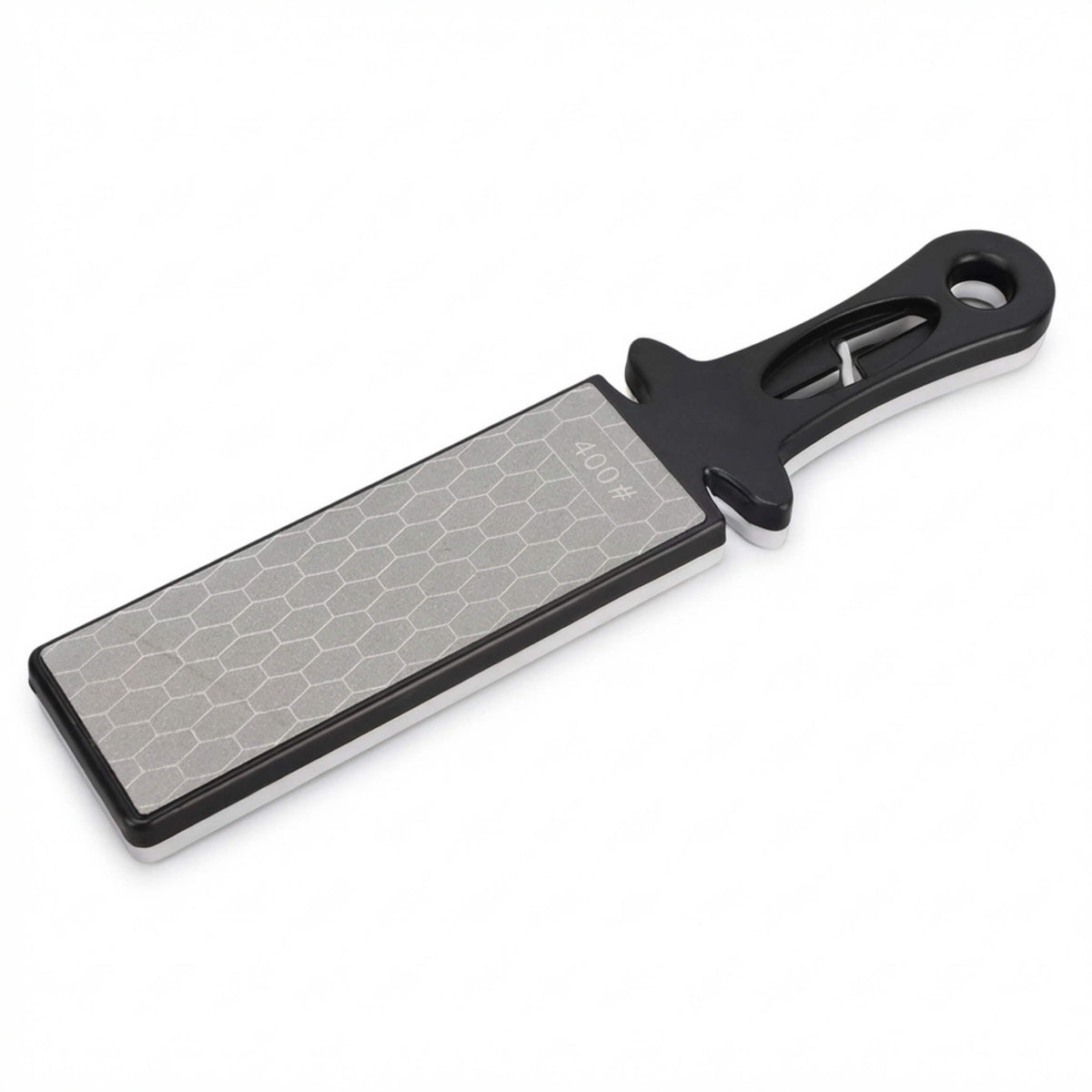
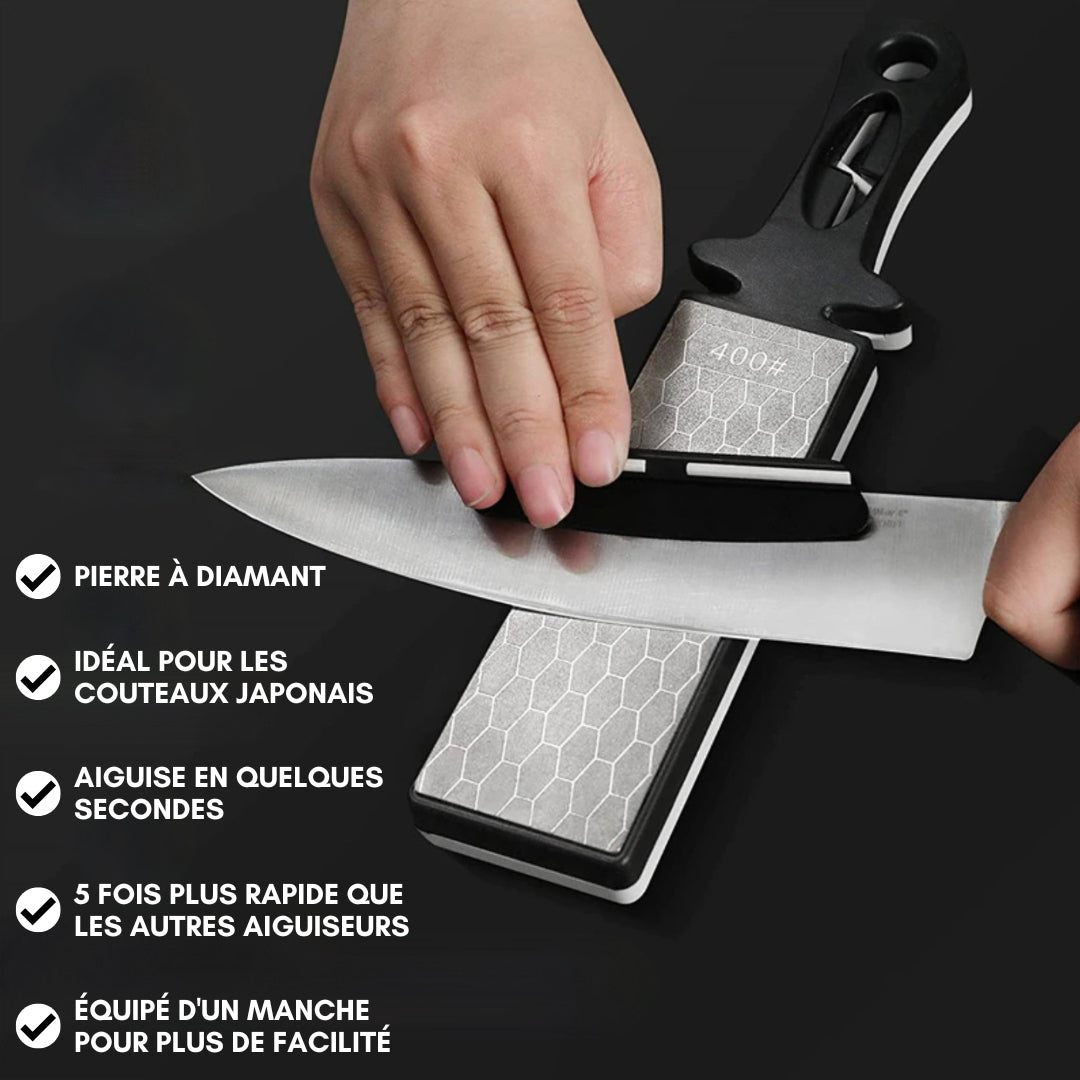
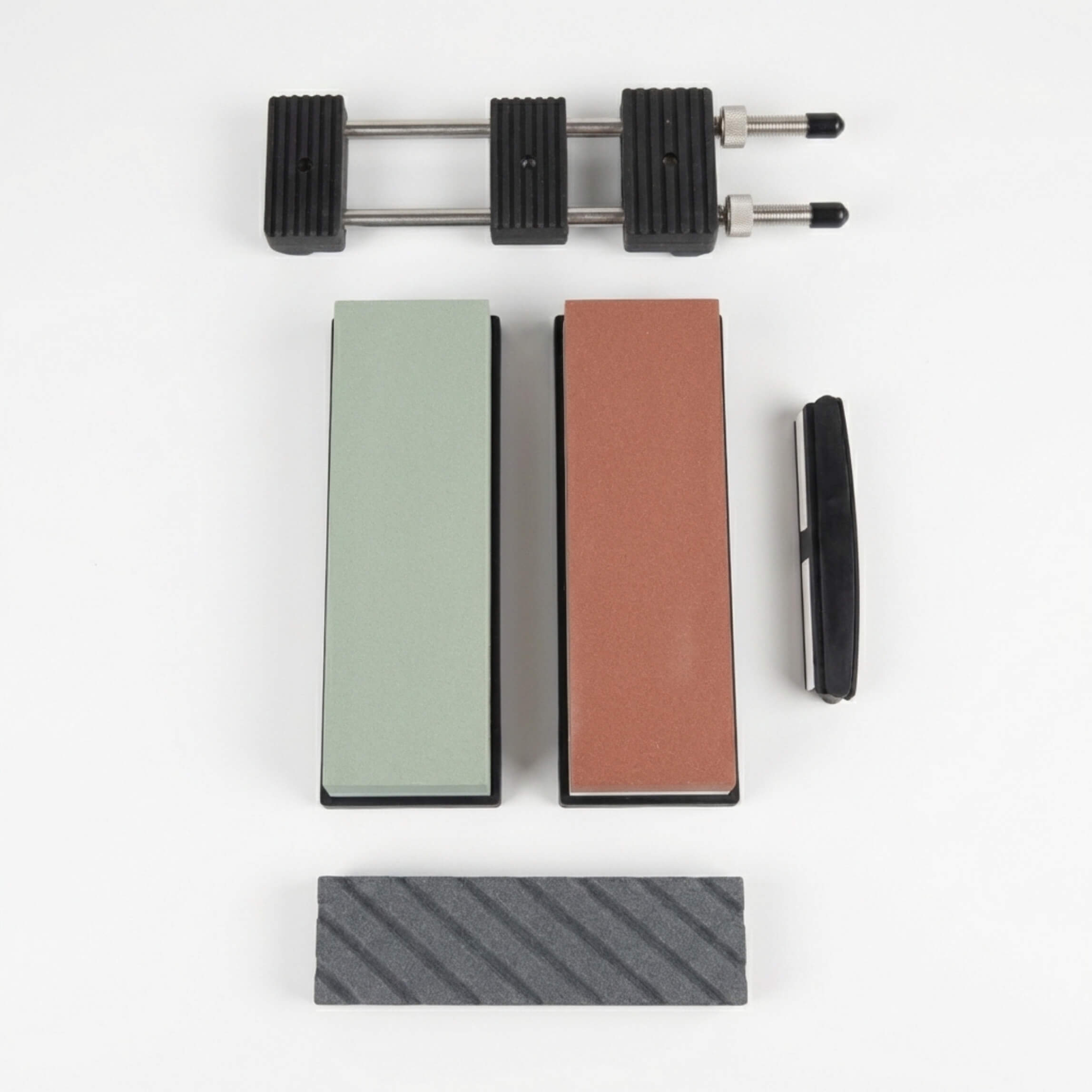
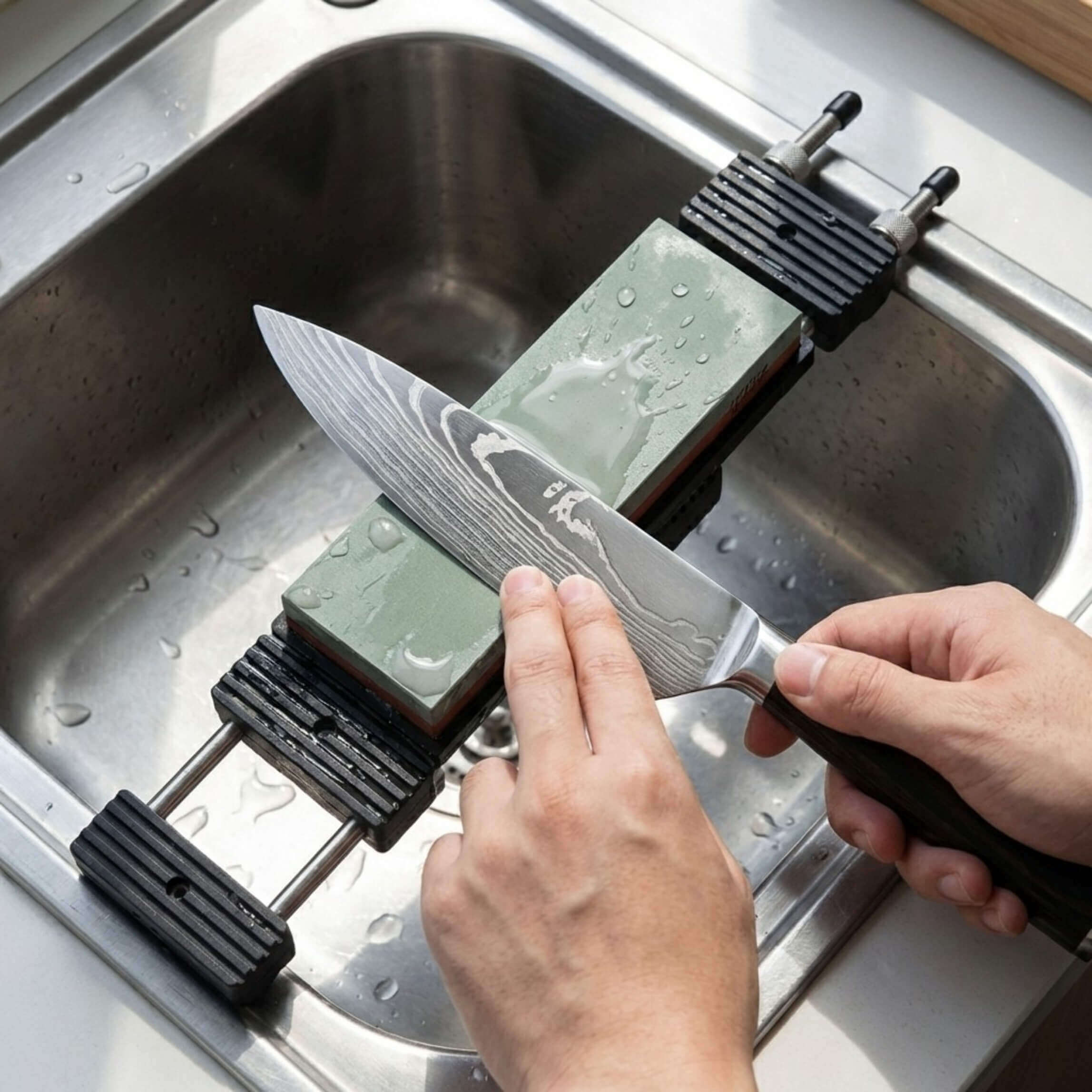
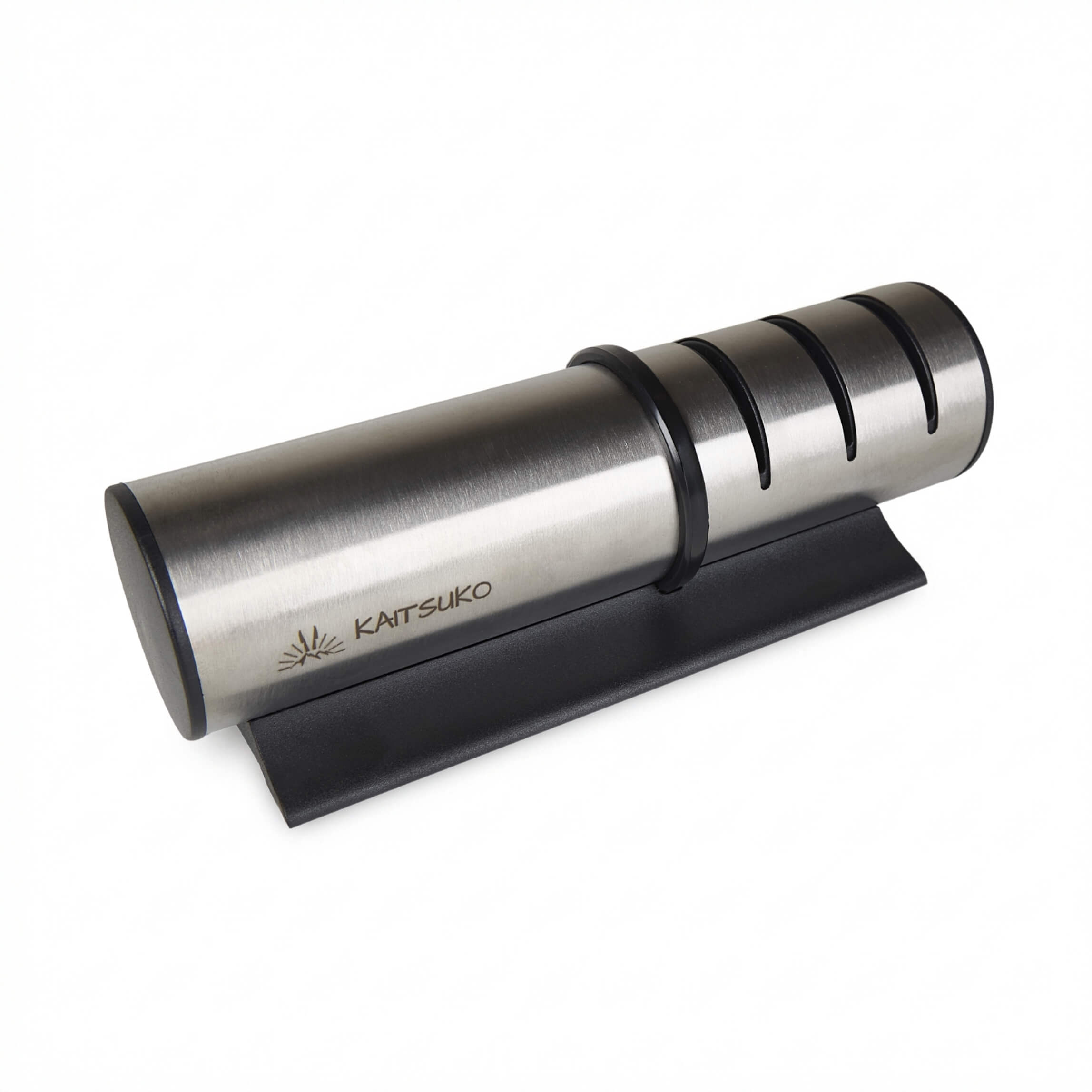
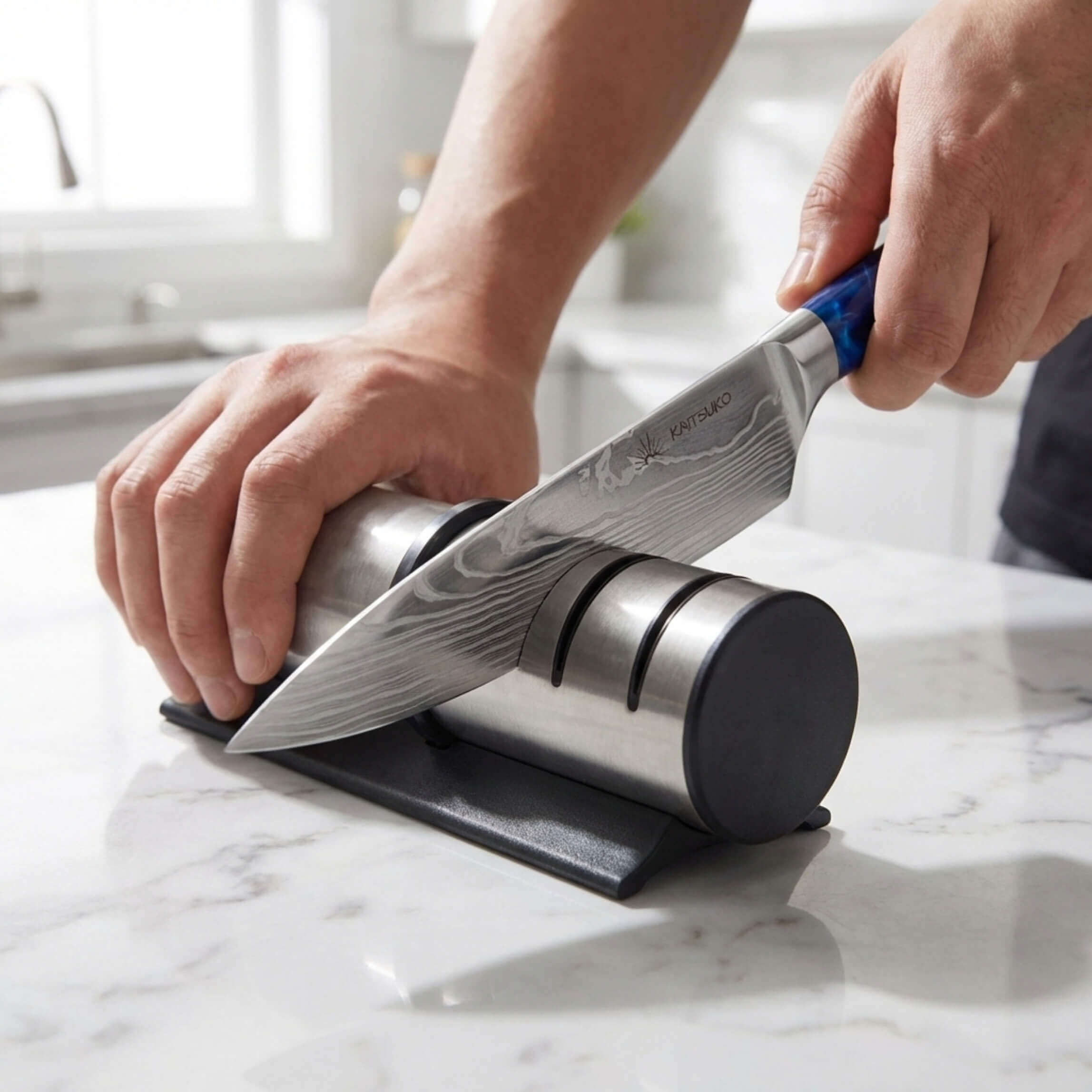
A 60 HRC steel is maintained on a whetstone (grit 3000/8000): the 3000 grit restores bite to the edge, the 8000 polishes the bevel to a mirror finish. For everyday use, a few light strokes on a ceramic honing rod are enough to realign the edge. Reserve the steel honing rod for softer ranges such as the Chef Tanaka.
The handle: hand wash only
The dishwasher is strictly forbidden: detergents and heat damage both the steel and the epoxy resin, which can dull, yellow or crack. Washing with warm soapy water followed by immediate drying with a soft cloth is sufficient to preserve the depth of colour in the handle.
The work surface
Work on a wooden chopping board, ideally end-grain, whose fibres receive the edge without crushing it. Never use the Spectre on frozen products, bones or carcasses: the fineness of the angle and the rigidity of the steel could cause irreversible micro-chipping on the edge.
The Kaitsuko expert verdict
The Spectre is the Kiritsuke we recommend to cooks who want a high-performance blade with a genuine visual identity. What won us over during testing is the rigidity of the 60 HRC core, which provides very precise tactile feedback, and the way each handle showcases the Damascus differently. The choice between the six variants is a matter of personal taste: the blade, however, never changes.
Technical specifications
- Model: Kiritsuke Spectre, 6 handle variants (Spectre I to VI)
- Collection: Prestige
- Type: Kiritsuke (K-Tip / Reverse Tanto point), symmetrical double bevel
- Blade: 10CR15CoMoV steel, San Mai construction, 67 Damascus layers
- Hardness: 58–60 HRC
- Blade length: 21.5 cm
- Sharpening angle: 15° per side
- Handle: stabilised wood and epoxy resin, colour according to chosen variant
- Weight: approx. 175 g
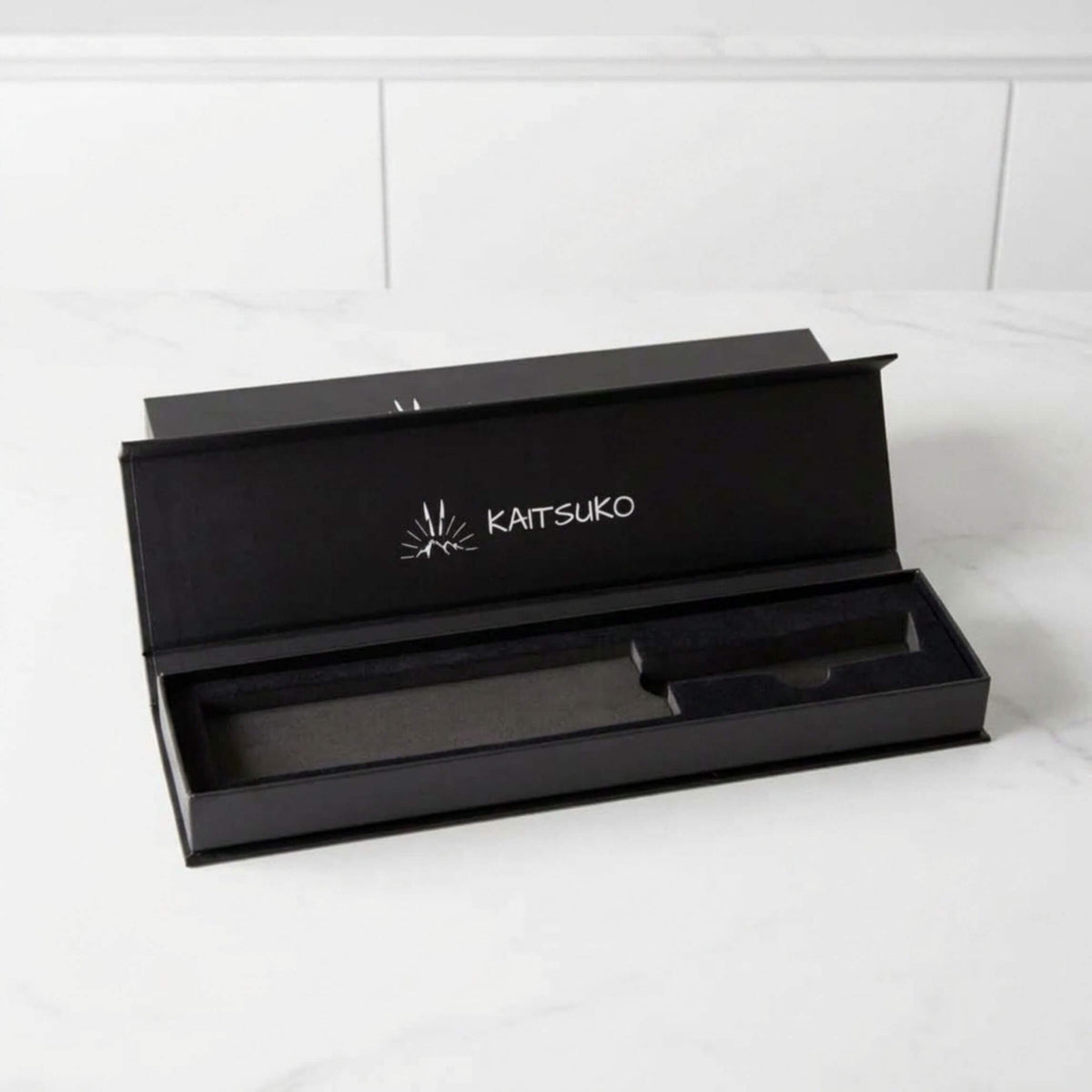
- Delivered in its Kaitsuko gift box
Our History
Kaitsuko knives are specially selected by our team of enthusiasts. They are designed to offer optimal comfort of use to those who use them. The blades are of impeccable quality .
The strength and durability of our knives will allow you to use them again and again!
They maintain an exceptional sharpness despite daily use.
Kaitsuko knives allow for clean and precise cutting of all your foods. Proper maintenance of your knives will extend their lifespan. This involves careful washing and good sharpening.
Do you have a question? Check out our FAQ to find the answer! If you have another question, our customer service will be happy to answer you from Monday to Friday at info@kaitsuko.fr
-
FAQ
The answer to all your questions HERE .
-
CUSTOMER SERVICE
Contact us Monday to Friday from 8am to 6pm at info@kaitsuko.fr
OUR MISSION
Discover our Prestige knife collection, which offers a range of high-end knives in different steels.
All designed to embody elegance, they are the result of unique know-how and combine quality materials with special manufacturing techniques.
Their design is unique and their aesthetics refined. Much more than simple kitchen tools, they are real fashion and decoration accessories, while offering an exceptional sharpness.


LEARN MORE
The use of each knife
Kiritsuke Knife : The Kiritsuke knife is a versatile knife that can be used for cutting a variety of foods. Its angled blade allows for precise cuts for slicing vegetables, meat, and fish.
Chef's Knife : The Chef's knife is a versatile tool that features a long, sharp blade, as well as a fine tip for precise and efficient cuts. It is an ideal knife for slicing, chopping, and chop all types of food.
Slicing Knife : The slicing knife is designed specifically for cutting thin slices of meat, poultry, or fish. Its long, narrow blade allows it to glide easily through food. It allows for precise cuts without tearing the food.
Bread Knife : The bread knife is designed to cut through different types of bread without crushing or tearing them. Its serrated blade allows you to slice cleanly through the crispy crust, without crushing the crumb inside.
Santoku Knife : The Santoku knife is also a versatile knife that is ideal for slicing, chopping and cutting different foods. With a wide, straight blade with a rounded tip, it has a large cutting surface. In short, the This knife is perfect for making multiple preparations in the kitchen.
Nakiri Knife : The Nakiri knife is specialized in cutting vegetables. Its straight, rectangular blade offers a wide cutting surface that is ideal for chopping, slicing and mincing precisely. It can also be used as a shovel knife to transfer vegetables into the flat.
Utility Knife : The utility knife is versatile. It is designed to perform several types of tasks in the kitchen. Its size, halfway between a chef's knife and a utility knife, makes it perfect for medium-sized cutting tasks, such as slicing fruit. , vegetables, cheese, peel, or even cut food into small pieces.
Boning Knife : The boning knife is specially designed to remove meat from bones with precision. Its rigid and narrow blade allows it to follow the contour of the bones, thus reducing meat waste.
Paring knife : The paring knife is ideal for precision tasks thanks to its small size and short, pointed blade. It is perfect for peeling and cutting fruits and vegetables, as well as for making delicate cuts. Versatile and handy, the paring knife is often used for detailed work that requires great precision. Whether it's for removing seeds from a fruit, coring tomatoes or chopping herbs, this knife is an essential companion for amateur and professional chefs.
Steak Knife : Steak knives, also called "table knives," are knives designed specifically for cutting cuts of meat during meals. They have a serrated blade that makes it easy to slice through pieces of meat without tearing the fibers.
Knife maintenance
- Never put knives in a dishwasher.
- Wash knives by hand and wipe the blade thoroughly with a soft, dry cloth to maintain the efficiency and quality of the blade.
- Clean the blades with soapy water.
- If the knives have wooden handles, dry them thoroughly before storing.
- Knives do not stay sharp for life, no matter the blade; it is therefore advisable to sharpen them as soon as the edge becomes less sharp.
- Do not use the edge of the knife to push food onto the board. Use the back of the blade instead.
- Never use the abrasive side of sponges to clean blades.
- Cut food on a wooden board to avoid damaging the blade of your knives.
- Do not make any cuts in a pan or baking dish to avoid damaging the blade of the knives.
COMPLETE YOUR PURCHASE
Magnetic Wall Mount Knife Holder


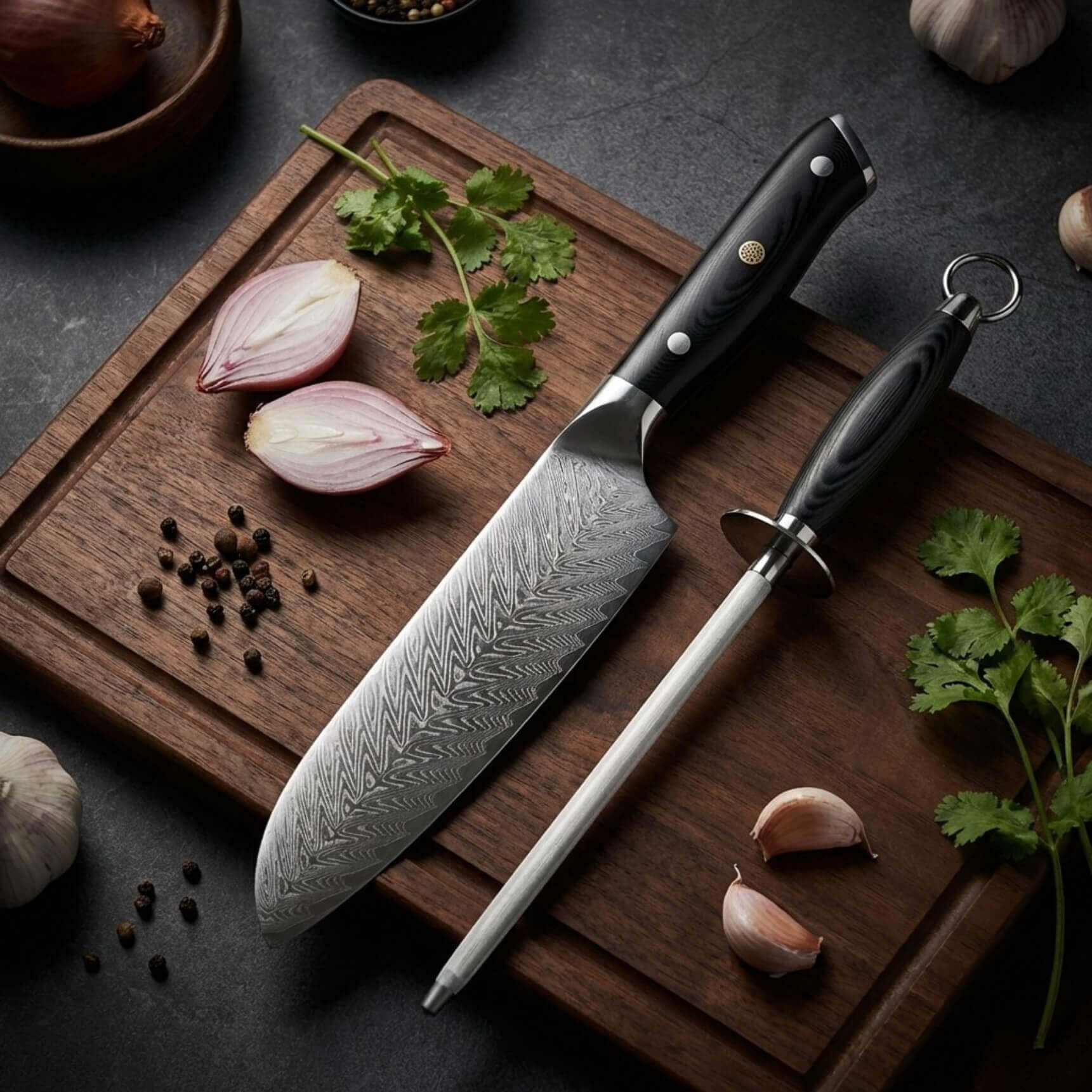
Sharpening steel - Wooden handle