





Which Japanese knife collection should you choose?
From one Kaitsuko collection to the next, three things change: the steel, the blade finish and the handle. Here is how to find your way through our seven ranges, from the most accessible to our most premium pieces. Most of them are available as Japanese knife sets and as individual knives.
Chef Tanaka: the everyday Japanese knife
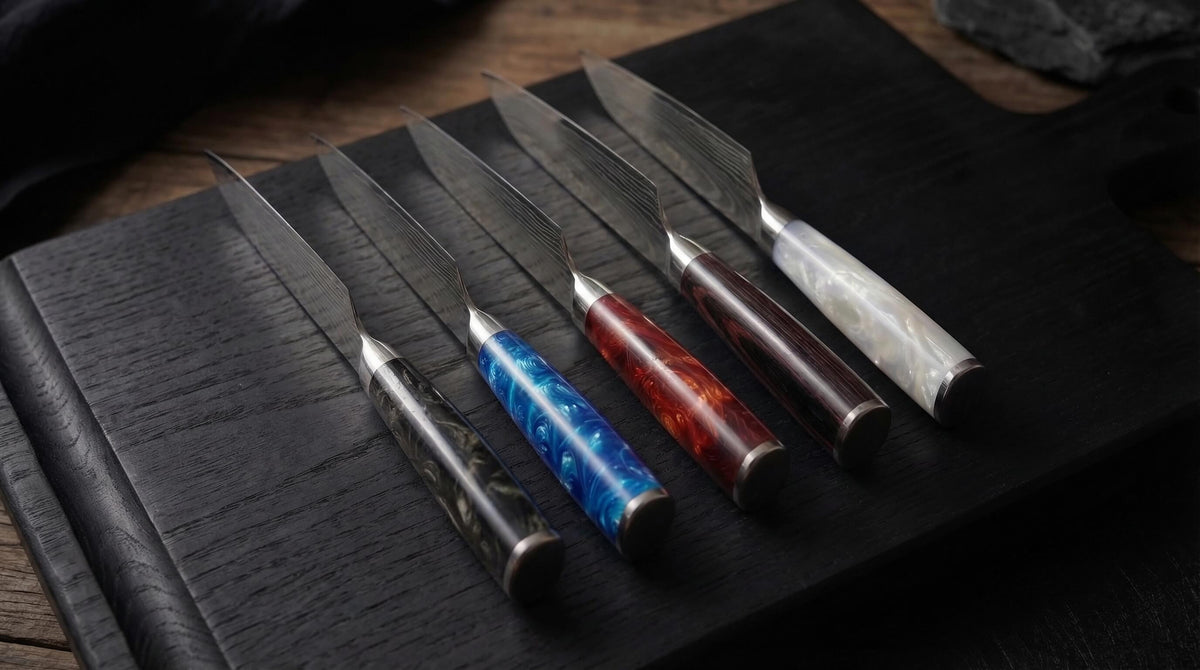
This is the collection we recommend for a first Japanese knife. Its 5CR15MoV steel, more flexible, handles knocks well and is easy to resharpen. The same blade comes with five handles: Forest Wood in pakkawood, Ocean Blue, Fire Earth, Ivory and Sumi Black. It covers every type of knife and is available in sets of 3, 5, 7 and 10 pieces.
Kaito: hammered steel and a wooden handle
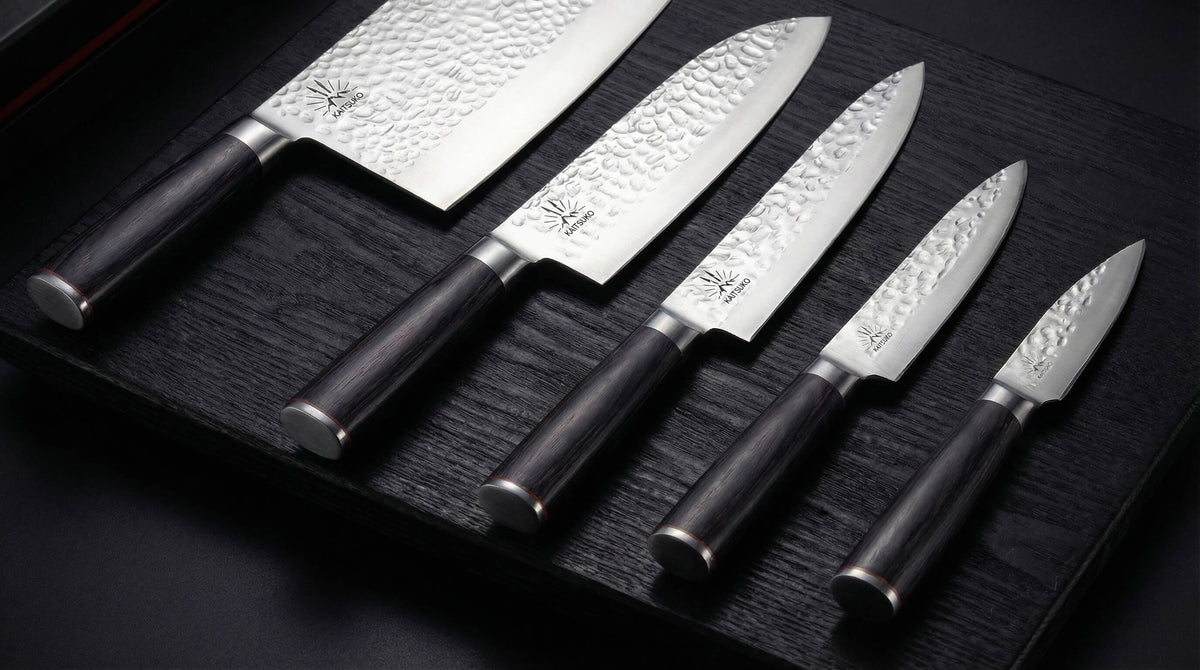
The Kaito collection is recognisable by its hammered blade and its cylindrical wooden handle, in the Japanese tradition. The hammering is not just decorative: its dimples reduce food sticking to the blade. A complete range, from the paring knife to the 10-knife set.
Kyoto, Yakumoto and Yellow Sea: 67-layer Damascus
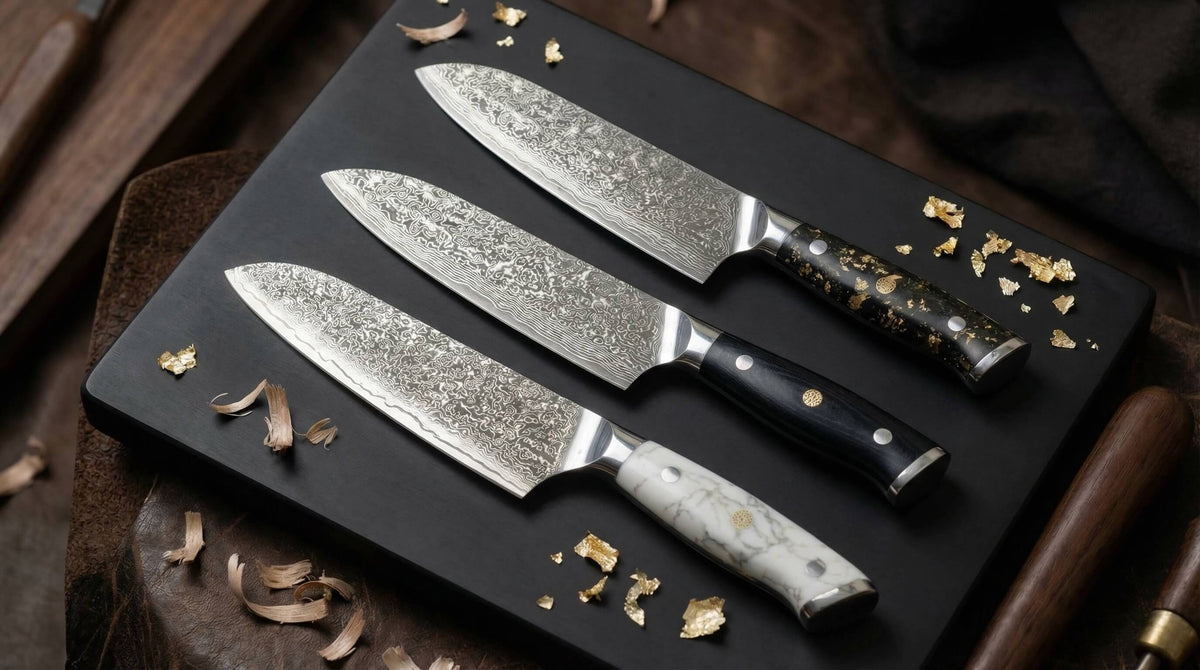
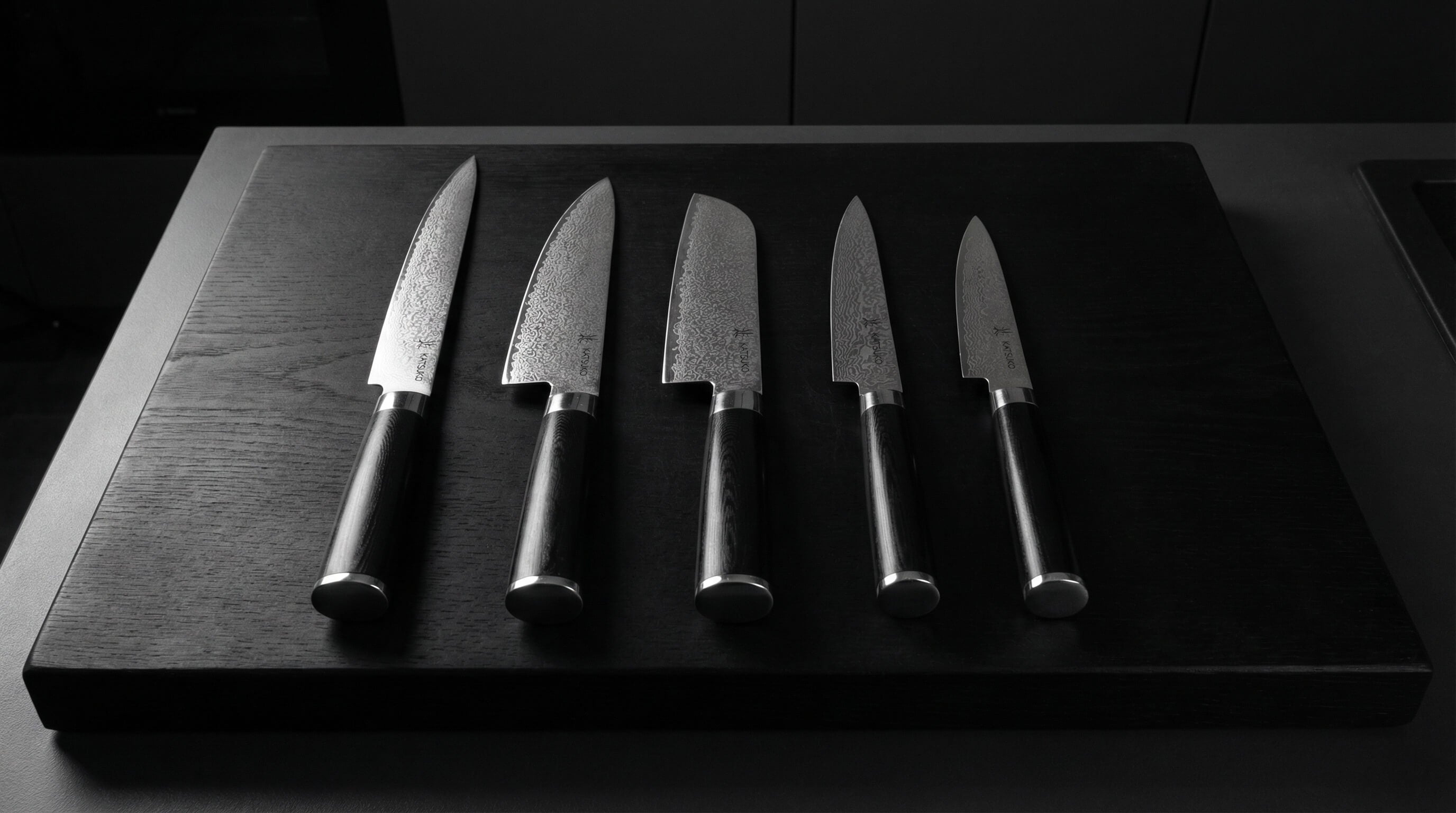
These three collections share the same construction: a 10CR15CoMoV steel core set between 67 layers of Damascus steel, for a hardness of around 60 HRC and an edge that lasts. The difference lies in the style. Kyoto keeps it understated with its black G10 handle. Yakumoto uses the same moisture-resistant G10 handle in three colours: Onyx, Carbon Gold and White Stone. Yellow Sea is the most expressive, with its hammered Damascus blade and its handle in stabilised wood and blue epoxy resin. If you are still undecided, all our Kaitsuko Damascus knives are brought together on a single page.
Prestige: the Kiritsuke Spectre
The Prestige collection is built around a single shape, the Kiritsuke. A 67-layer Damascus blade and a handle in stabilised wood and resin available in seven colours: no two pieces are alike. Each knife comes in its own case, which makes Prestige our most gifted collection.
Komodo: the 7-knife set
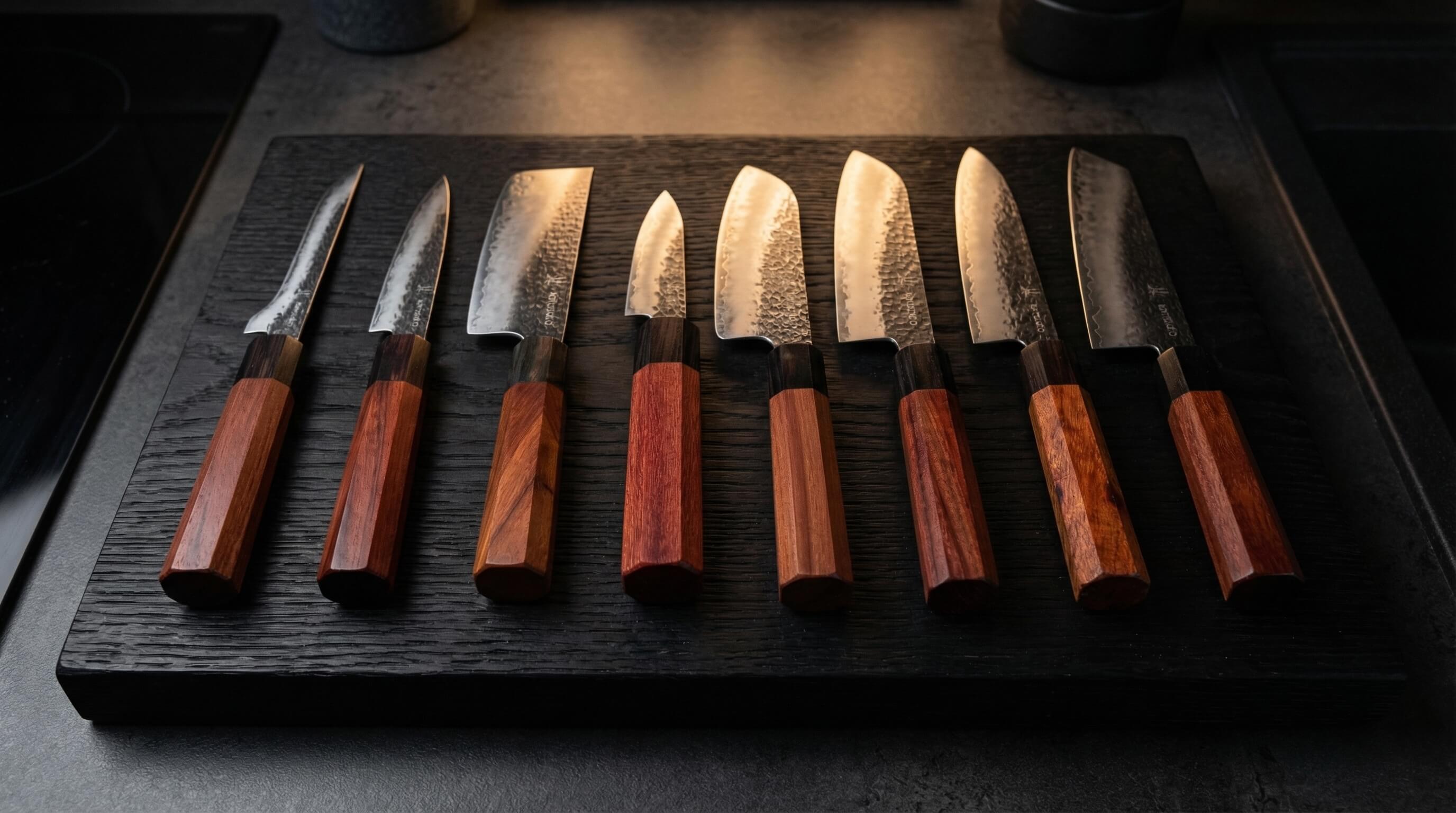
Komodo is only available as a complete set: chef's knife, Kiritsuke, Santoku, Nakiri, boning knife, utility knife and paring knife. Three-layer composite steel at 60 HRC, hammered finish, rosewood and ebony handles. It is the choice for equipping an entire kitchen with a single premium range.
Frequently asked questions about Japanese knives
Which collection is best for beginners?
Chef Tanaka. Its steel needs less care and is easy to sharpen, which gives you time to build good habits before moving on to a Damascus knife.
What is the difference between Damascus steel and hammered steel?
Damascus is a layering of steel that protects the hard core of the blade and creates wavy patterns. Hammered is a surface finish with small dimples. The two can be combined, as in the Yellow Sea collection.
Which collection makes the best gift?
Prestige for a one-of-a-kind piece delivered in its case, or a 3-knife set from the collection of your choice for a more complete gift.