


Our types of Japanese knives
What type of Japanese knife for what cut?
A Japanese knife is not chosen at random; each blade shape was designed for a precise movement. This page reviews the ten types of Japanese kitchen knives in the Kaitsuko range, along with what each one does really well. All are available among our individual Japanese knives.
The versatile ones: chef's knife, Santoku and Kiritsuke
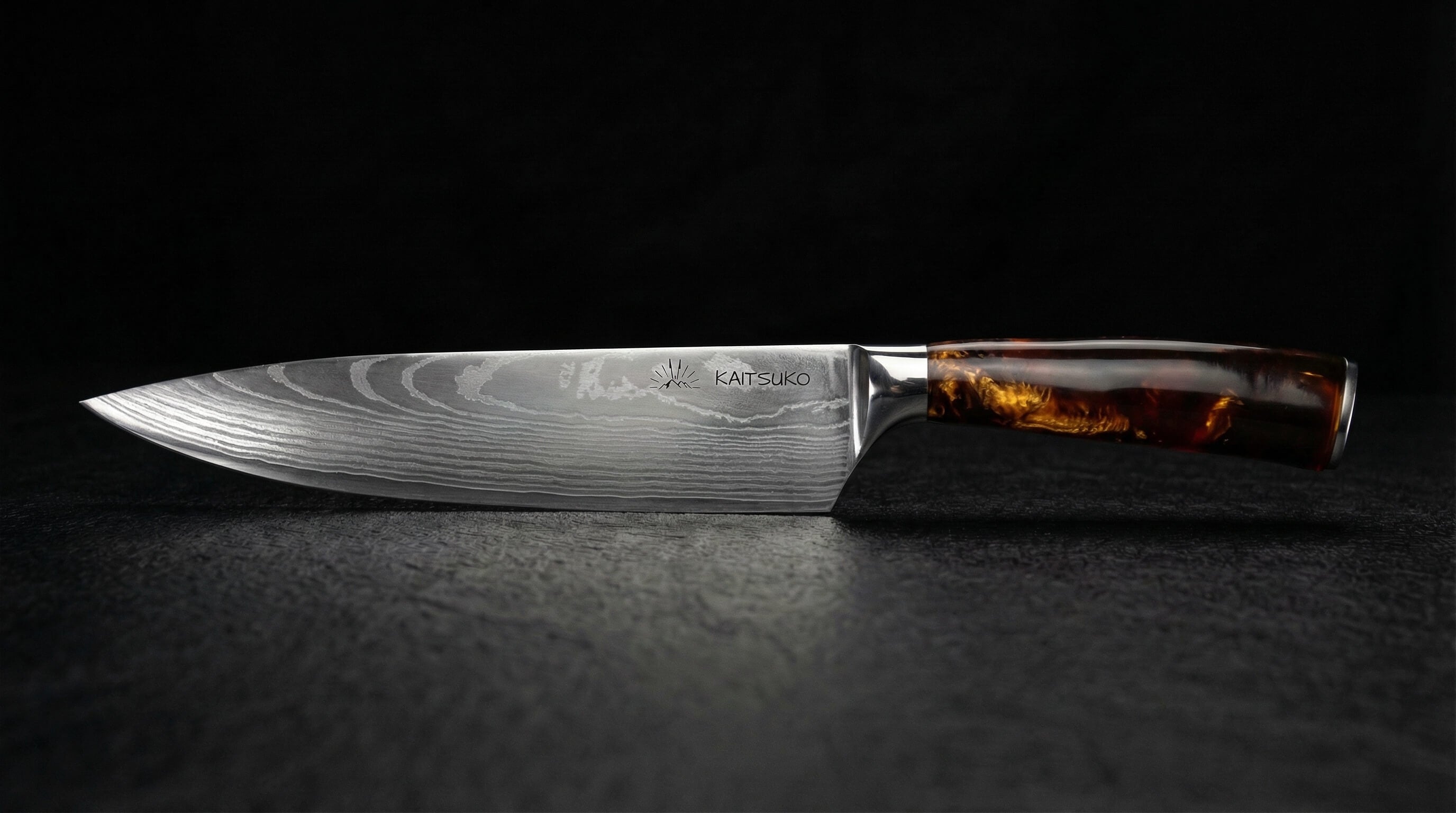
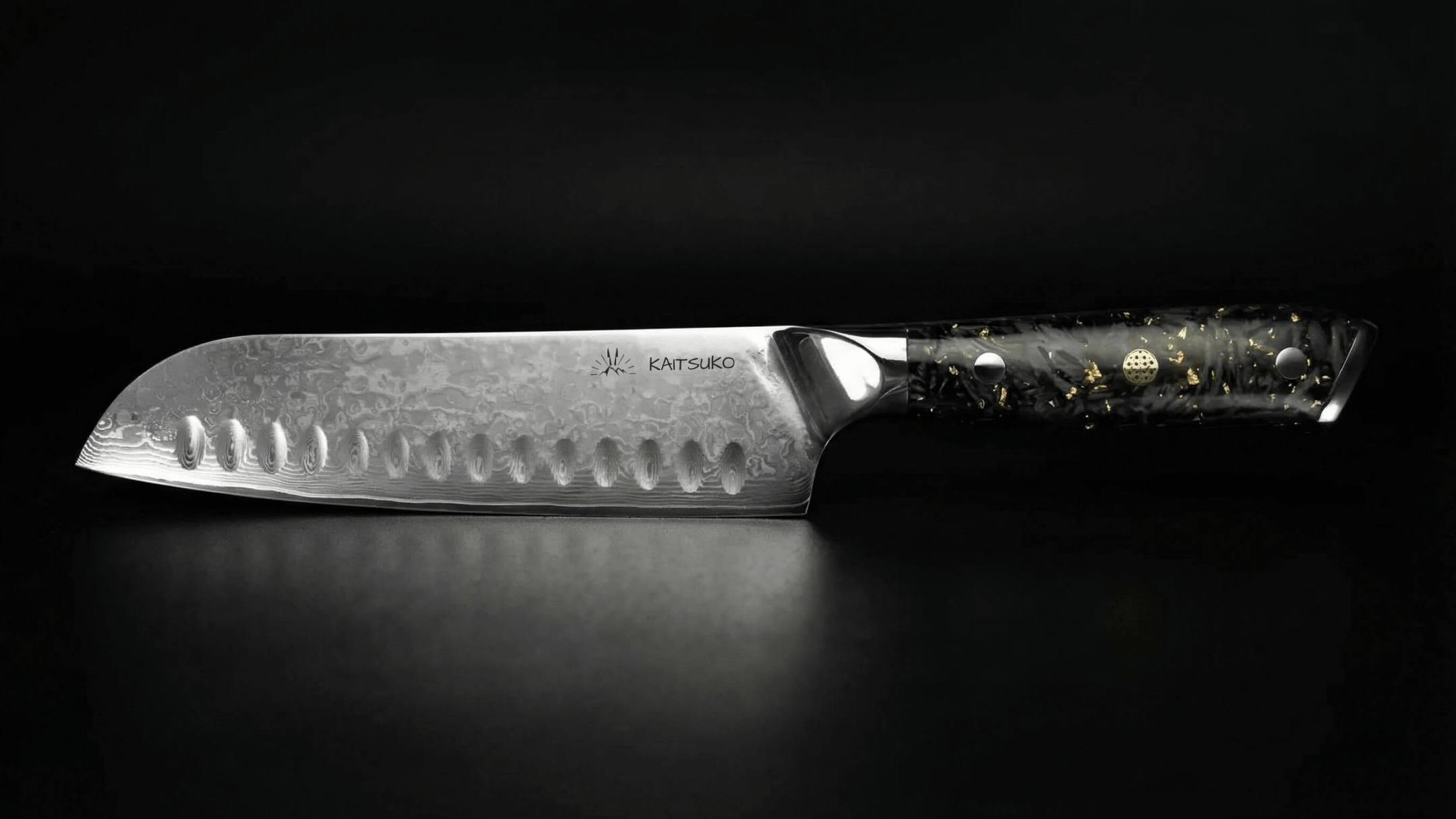
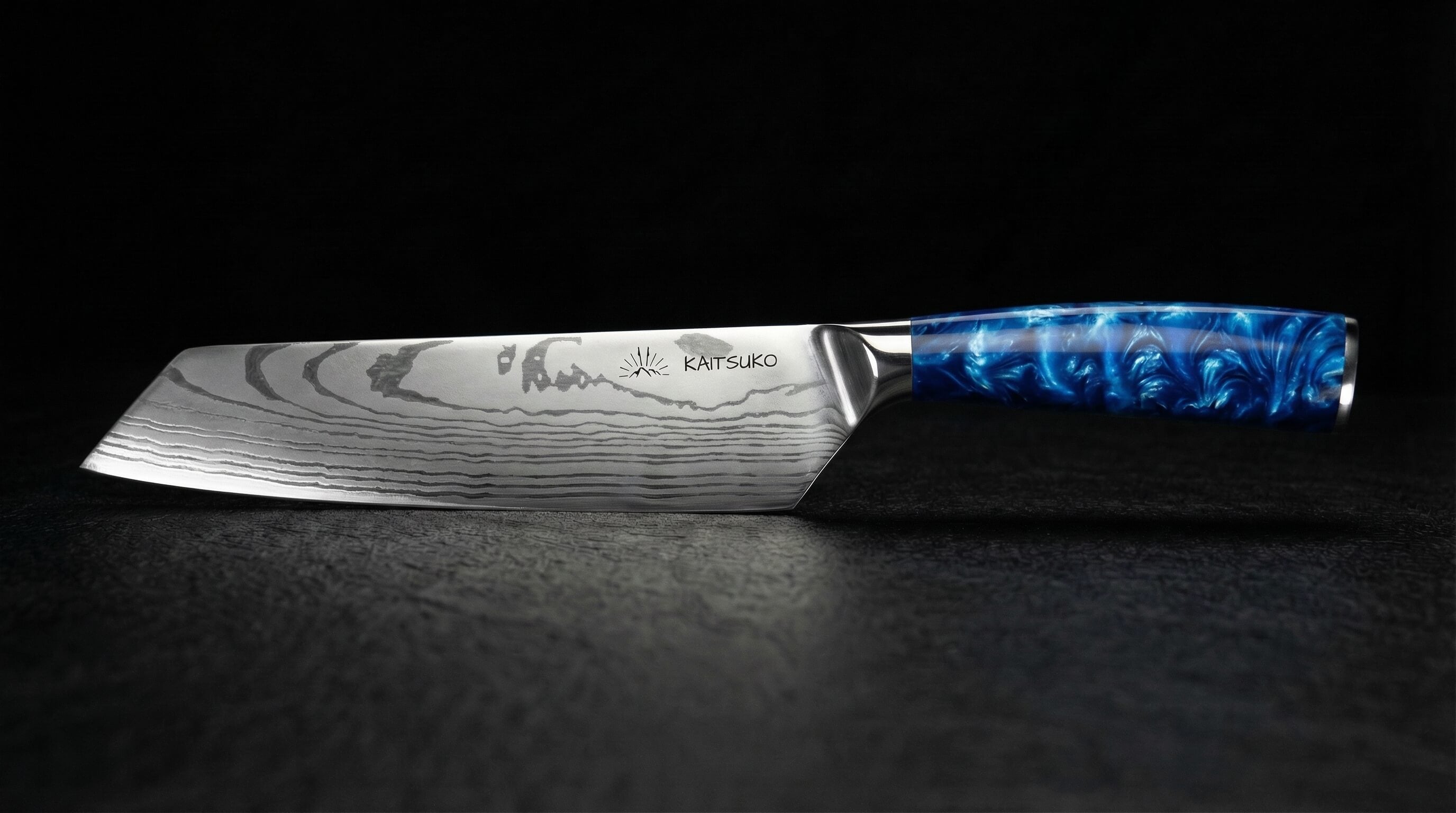
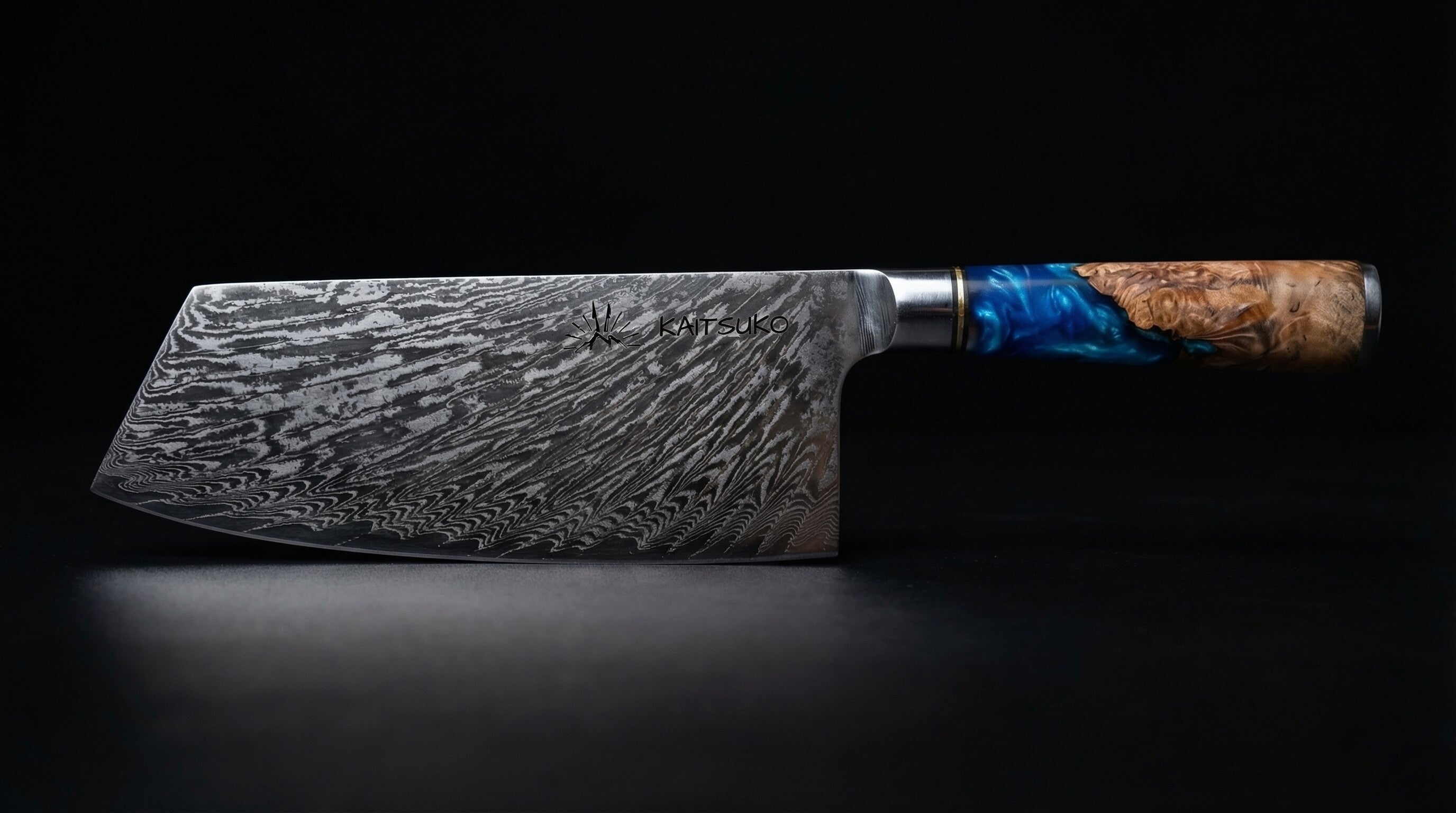
The Japanese chef's knife, or Gyuto, is the one we use most often. Its long and slightly curved blade allows you to chop, slice and cut meat, fish and vegetables with the same tool. The Santoku knife serves the same purpose with a shorter and wider blade, with an almost straight edge. Its name means "three virtues", for meat, fish and vegetables, and it appeals to those who prefer a compact blade. The Kiritsuke knife is recognizable by its angled tip. Traditionally reserved for the chef in Japan, it combines the length of a chef's knife with the precision of a vegetable knife, making it a very good choice for fine cuts.
The precision blades: paring knife and utility knife
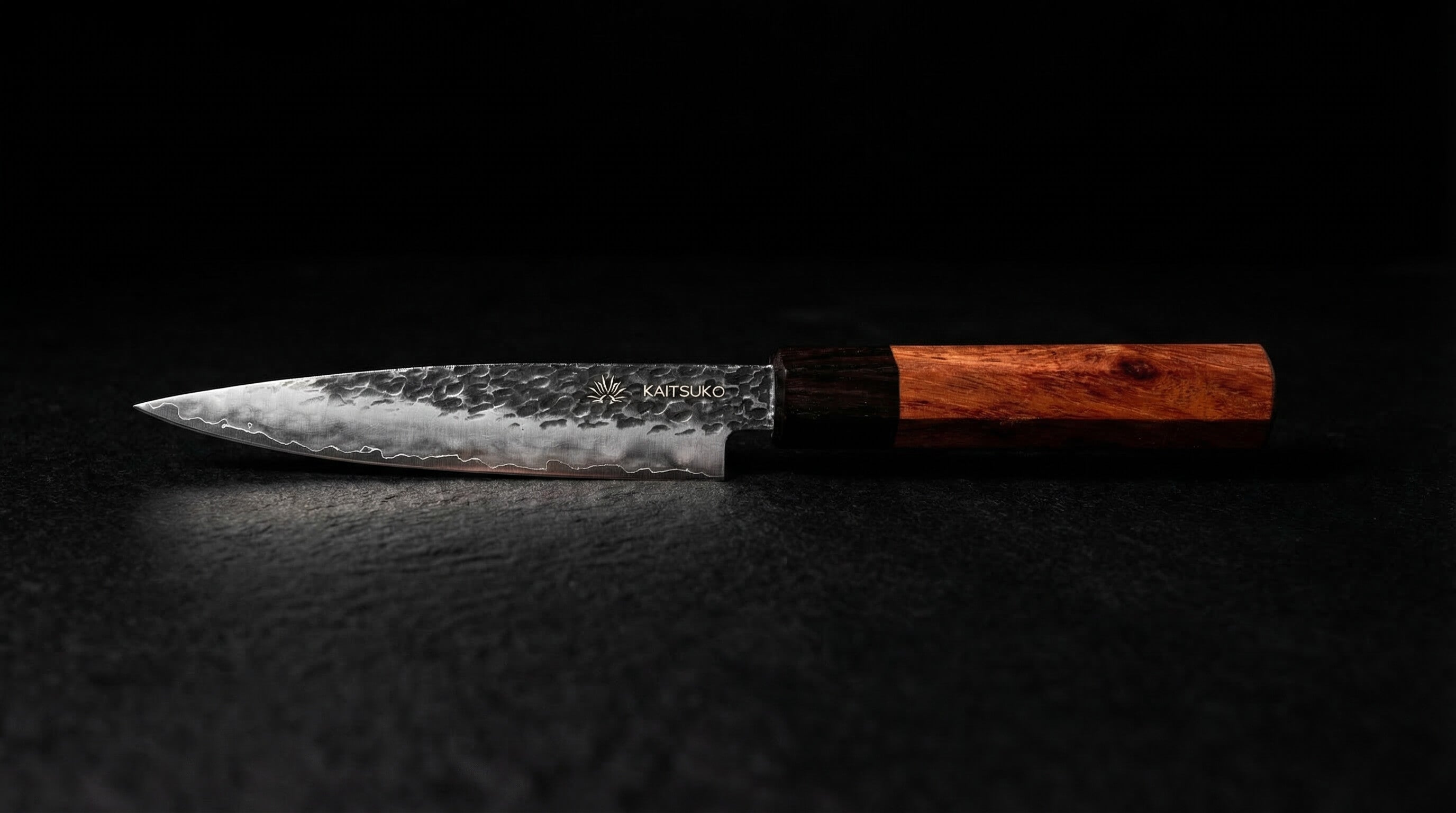
The paring knife is the smallest in the series. It is often used in the hand rather than on the board, to peel, turn a vegetable, trim, or remove a germ. The utility knife is between the paring and the chef's knife. It is the blade we take for a shallot, a tomato or a chicken breast, when the large knife is too much.
The specialists: Nakiri, bread, boning and slicing knife
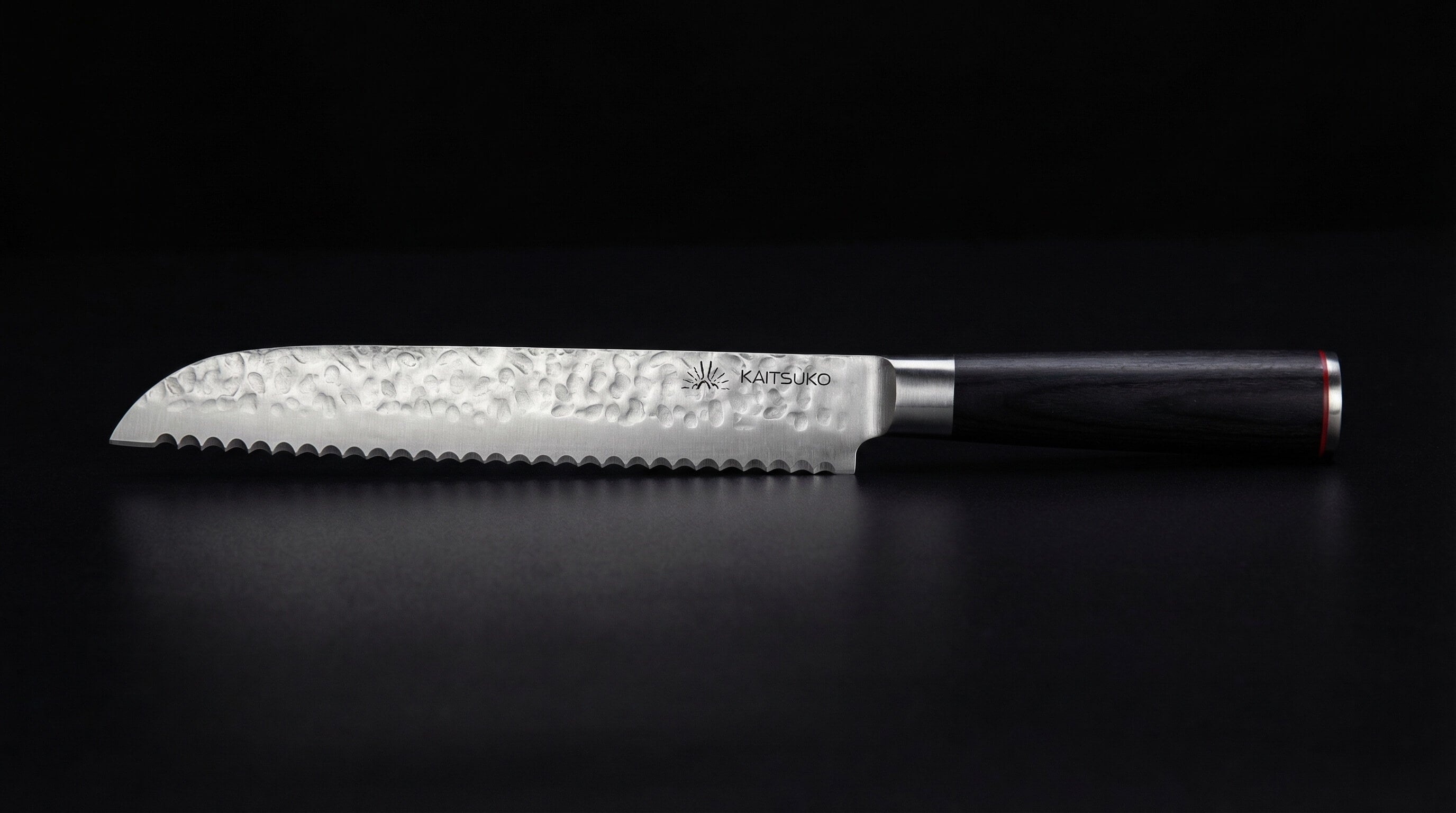
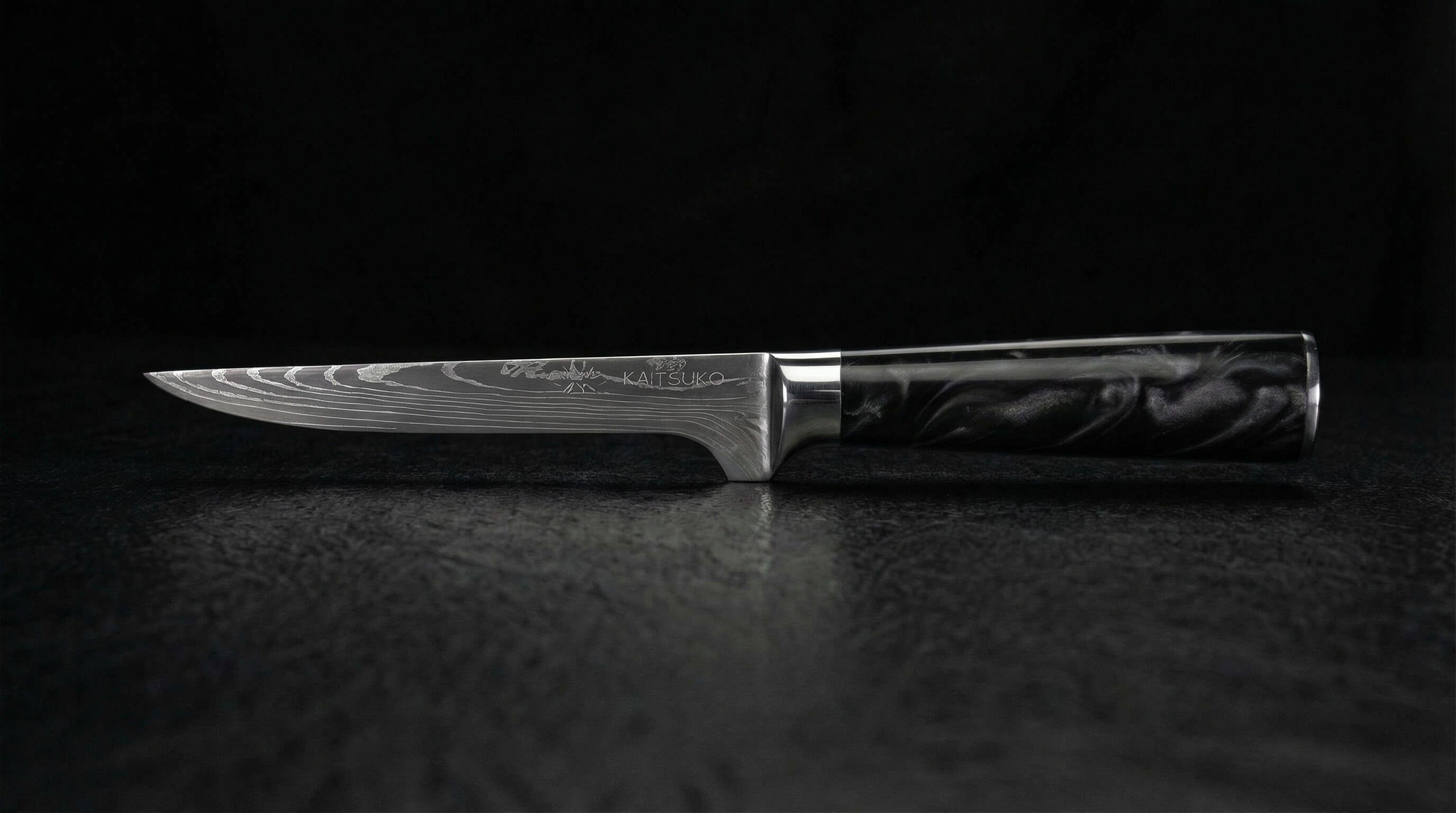
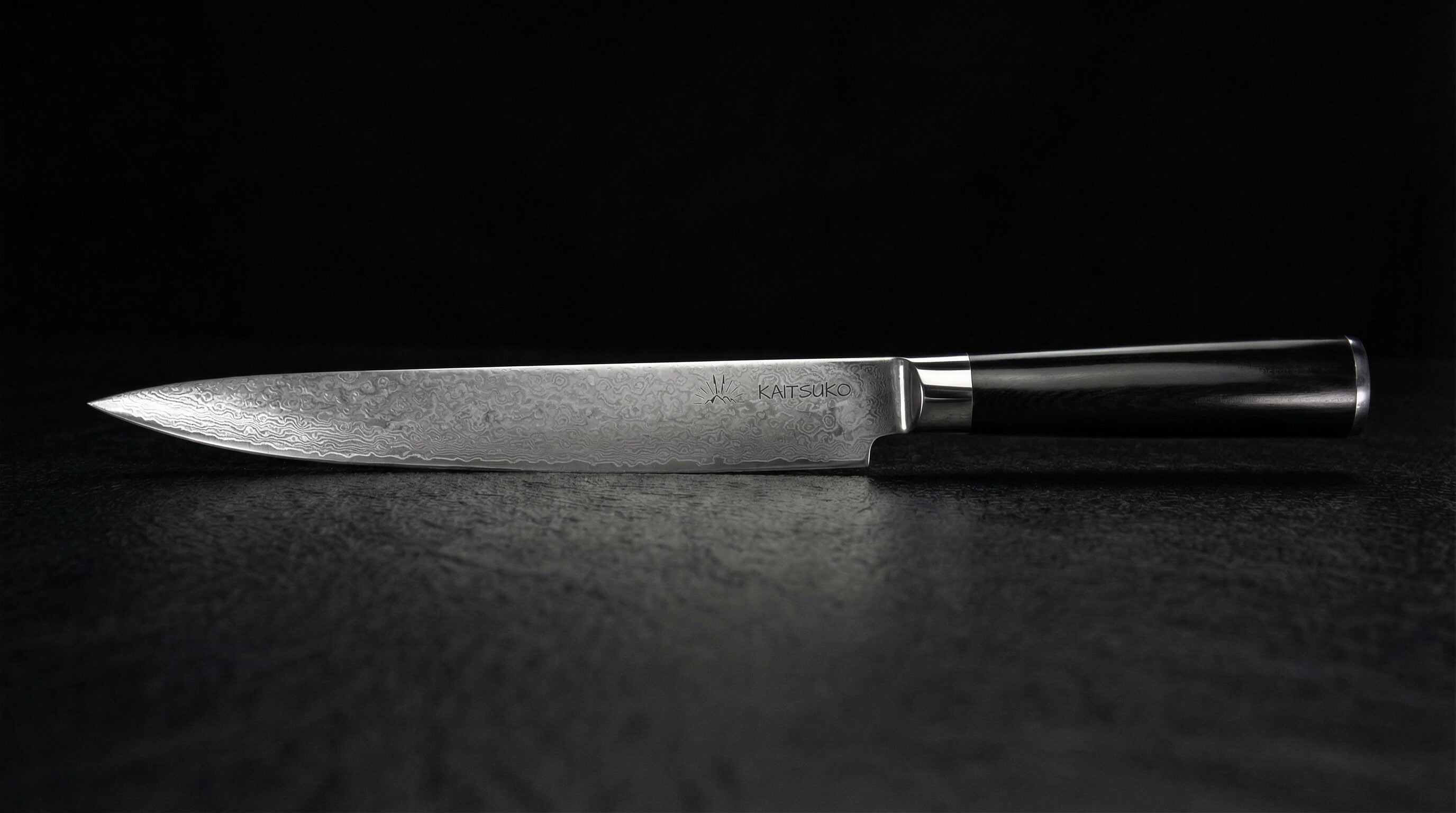
The Nakiri knife is the Japanese vegetable knife. Its rectangular blade with a straight edge touches the board along its entire length, which gives clean cuts in a single vertical movement, without slices that remain attached. The bread knife, with its serrated blade, cuts through thick crusts without crushing the crumb and also comes in handy on a brioche or a pineapple. The boning knife has a thin and narrow blade that follows the bone as closely as possible to remove a fillet or trim a piece of meat. The slicing knife, long and tapered, cuts roasts, legs of lamb and smoked fish into regular slices, in a single pass.
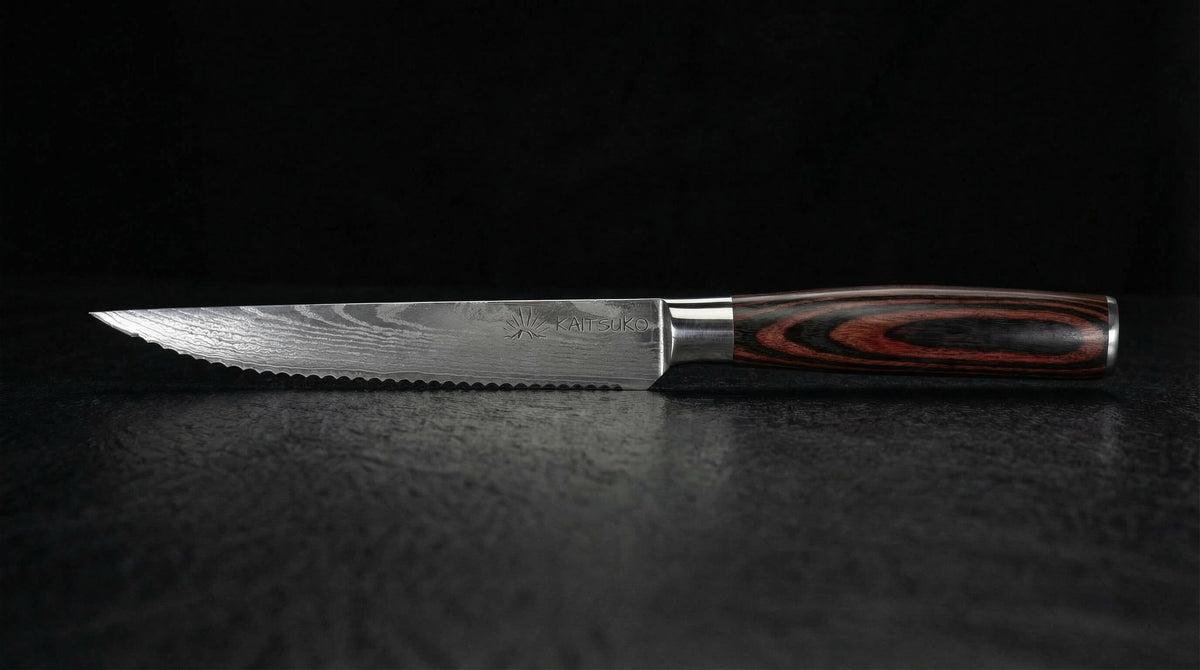
At the table: the Japanese steak knife
The sharpness does not stop at the kitchen. A Japanese steak knife cuts the meat cleanly, without tearing it, and really changes the experience at the table on a beautiful piece of beef.
The steel matters as much as the shape
Two knives of the same shape do not cut the same if the steel is not the same. Our damascus knives have 67 layers of steel, and our high-end collections reach a hardness of 60 HRC with a 15° sharpening. The result is felt from the first tomato: the blade enters without forcing and the edge holds over time.
Which knife to start with?
Three blades cover the vast majority of needs: a chef's knife or a Santoku for most cuts, a paring knife for precision work, a bread knife. If you cook a lot of vegetables, add a Nakiri. And if you prefer a matching set rather than buying blade by blade, our Japanese knife sets bring together the essential shapes in a single collection.
Frequently asked questions
-
What is the difference between a Santoku and a chef's knife?
The chef's knife has a longer and more curved blade, made for the rocking motion. The Santoku is shorter, wider, with a straighter edge, and is handled rather in a vertical cut or push. Both are versatile, the choice is mainly a matter of grip.
-
Kiritsuke or Nakiri for vegetables?
The Nakiri is dedicated to vegetables and does nothing else, but it does it better than all the others. The Kiritsuke does very well on vegetables and is also used for fish and meat.
-
Which Japanese knife to cut meat?
A chef's knife for raw pieces, a boning knife to work around the bone, a slicing knife for roasts and cooked meats, and a steak knife at the table.