



The different Japanese culinary specialties
Japanese cuisine is known for being some of the healthiest and most delicious in the world. It consists of a wide variety of dishes, from sushi and ramen to tempura and soba. In this article, we’ll explore some of the most popular Japanese culinary specialties and discover what makes them so tasty and unique.
1. Sushi 
Sushi is one of the most popular dishes in Japanese cuisine, known worldwide for its delicious taste and artistic presentation. These small rice rolls filled with raw fish, vegetables, seaweed and other ingredients are often served with soy sauce, wasabi and pickled ginger.
The creation of sushi dates back centuries, when the Japanese began preserving raw fish by fermenting it with rice. Over time, this technique evolved into the sushi we know today. Sushi is now a popular culinary specialty around the world and is often served in Japanese restaurants, sushi bars, and even supermarkets.
Sushi is made with vinegared rice, also called shari, which is combined with a variety of fresh and flavorful ingredients. The most popular sushi types are nigiri sushi, maki sushi, and temaki sushi. Nigiri sushi consists of a small ball of hand-pressed rice topped with a thin slice of raw fish. Maki sushi, on the other hand, consists of a sheet of nori seaweed rolled around a filling of rice and vegetables, while temaki sushi is a cone of nori seaweed filled with rice and raw fish.
Sushi is often accompanied by wasabi, a spicy green paste that adds extra flavor and a hint of heat. Diners can also add soy sauce for a salty taste and pickled ginger for a sweet and spicy taste. It is important to note that ginger is often used to cleanse the palate between bites of different types of sushi.
Finally, it is important to emphasize that the quality of the ingredients used to prepare sushi is essential to ensure its taste and freshness. Sushi chefs work with top quality ingredients, such as fresh fish and seasonal vegetables, to create sushi that is both healthy and delicious. Sushi can be enjoyed as a light snack, an appetizer or a complete meal and will satisfy the most demanding palates.
The santoku knife can be used to prepare sushi. The santoku knife is a versatile knife of Japanese origin that can be used to cut a variety of foods, including fish for sushi.
However, it is important to note that the knife used to prepare sushi must be extremely sharp and precise to obtain uniform and smooth slices. If you are using a santoku knife to prepare sushi, make sure that it is well sharpened and use a proper technique to obtain the perfect slices.
2. Ramen 
Ramen is a traditional Japanese dish that has become popular around the world. Ramen is a noodles served in a meat or vegetable broth, usually accompanied by toppings such as hard-boiled eggs, mushrooms, roast pork, and vegetables. Ramen is a very tasty and comforting dish that has become a staple in Japanese cuisine.
Ramen has a fascinating history that dates back to ancient China. The noodles were introduced to Japan by Chinese immigrants during the Edo period (1603-1868). Ramen has evolved over time to become a culinary specialty unique to Japan. There are several types of ramen in Japanese cuisine, each with its own ingredients and preparation methods.
The key to a great bowl of ramen is the broth. The broth is made by boiling meat bones and vegetables for hours to create a rich, flavorful base. The noodles are then added to the broth and cooked until tender. Toppings are then added to complete the dish. Hard-boiled eggs, roasted pork, and vegetables are common toppings in ramen, but there are many other options.
Ramen has become very popular around the world, with many restaurants offering their own version of this classic dish. Ramen is a staple in Japanese cuisine and is considered a comforting and filling dish. The noodles are high in complex carbohydrates and are a slow-release source of energy, making them perfect for a healthy, balanced diet.
Ramen is a delicious and comforting dish that has become popular around the world. The noodles, broth, and toppings are the key elements of this tasty dish. Whether you are looking for a quick and easy meal or a comfort food for a chilly evening, ramen is a great culinary option.
When preparing ramen, it is recommended to use a versatile chef's knife for most preparation tasks, such as cutting vegetables, meat or fish. However, it is important to note that the knife must be very sharp so as not to damage any food when cutting.
3. Tempura 
Tempura is a Japanese culinary specialty consisting of food deep-fried in a light and crispy tempura batter. This cooking technique was introduced to Japan in the 16th century by Portuguese missionaries, who also introduced deep-frying in oil. Since then, tempura has evolved into a popular dish in Japanese cuisine, often served as a main course or side dish.
Tempura batter is made by mixing wheat flour, ice water, and sometimes yeast or baking powder. The batter should be light and airy so that the food dipped in it doesn't become too heavy and soak up too much oil. Typical ingredients used in tempura include shrimp, fish, vegetables such as eggplant, peppers, carrots, zucchini, and mushrooms, as well as lotus roots and shiso leaves.
Tempura is quite simple to prepare. The food is cut into pieces, then dipped in tempura batter and fried in hot oil until golden brown and crispy. Tempura is often served with soy sauce and grated daikon, which adds a touch of spiciness and freshness to the dish.
Tempura is loved for its crispy texture and delicate taste. Tempura batter is lightly salted, which adds a subtle flavor to the ingredients dipped in it. Vegetables, in particular, retain their crunchy texture under the crispy batter, creating a pleasant and satisfying mouthfeel.
Tempura is also considered a healthier cooking option than traditional fried foods, as tempura batter is lighter and less greasy than other batters. However, as with any fried food, it is important not to overdo it and to eat them in moderation.
All in all, tempura is a delicious and light Japanese dish, perfect for a starter or a side dish. Their crispy texture and subtle taste make them popular among Japanese and international cuisine lovers.
When making tempura, you can use a versatile chef's knife for most prep tasks, such as cutting vegetables or seafood. When slicing foods for tempura, it's recommended to cut the food on an angle to get larger, flatter slices, which allows for more even cooking.
4. Yakitoris 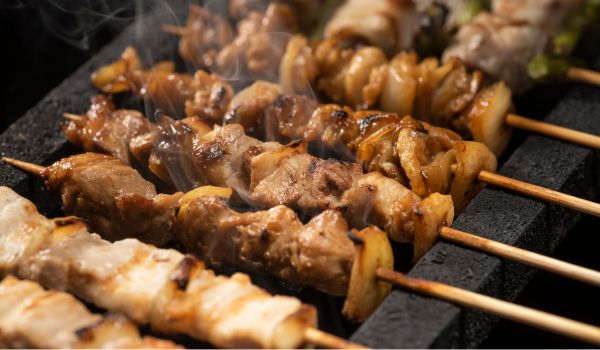
Yakitori are Japanese grilled skewers consisting of pieces of meat, vegetables, seafood, and sometimes cheese. They are traditionally made with chicken, but can also be made with beef, pork, fish, or vegetables. Yakitori are often served as a main course or as an appetizer.
Yakitori preparation involves cutting meat or vegetables into small pieces, which are then skewered onto bamboo skewers. The skewers are then grilled over an open fire or grill, giving them a delicious smoky flavor. Yakitori are often brushed with a sweet and savory teriyaki sauce while cooking, giving them an even more intense flavor.
Yakitori are very popular in Japan. They are often sold in street markets. They are also very popular in Japanese restaurants around the world. Yakitori can be served with rice, noodles or stir-fried vegetables for a complete and tasty meal.
Yakitori is a perfect example of simple yet delicious Japanese cuisine. Its combination of meat, vegetables and teriyaki sauce makes it a popular choice for Asian food lovers and those looking to try something new and exciting. If you’ve never tried yakitori before, we recommend starting with the classic meat skewers.
To prepare yakitori, it is advisable to use a versatile knife such as a chef's knife . It will allow you to perform most of the different tasks necessary to make the recipe such as cutting meat, cheese and vegetables.
5. Okonomiyaki 
Okonomiyaki is a popular Japanese food specialty, often described as a kind of Japanese "pancake" or "pizza." The word "okonomiyaki" literally means "what you like, grilled," and it is a very flexible dish that can be made with a wide variety of ingredients depending on your preferences.
The base of okonomiyaki is a thick batter made from flour, eggs and dashi (fish stock), which is then mixed with ingredients such as vegetables, pork, seafood, cheese or kimchi. The batter is then cooked on a griddle or in a pan until golden brown and crispy.
The dish is usually topped with mayonnaise, Okonomi sauce (a thick sauce made with Worcestershire, soy sauce, and ketchup), dried bonito flakes (katsuobushi), and dried seaweed (aonori). Diners can also add additional toppings to their taste, such as pickled ginger, spring onions, or chili flakes.
Okonomiyaki is sometimes prepared on hot plates built into the tables of Japanese specialty restaurants. These are called okonomiyaki-ya. Customers can watch the chef prepare the dish before their eyes before enjoying it while it is steaming hot.
Although okonomiyaki is a popular dish throughout Japan, it originated in the Osaka region, where it is considered a local specialty. There is also a variation called Hiroshima-style okonomiyaki, in which the ingredients are layered rather than mixed into the batter.
In short, okonomiyaki is a tasty and fun dish to enjoy, offering a wide variety of flavors and textures. If you have the opportunity to visit Japan, do not hesitate to try this unique culinary specialty.
While you can use a general-purpose chef's knife to prepare this recipe, we recommend using a slicing knife instead. This type of knife is designed to easily slice through soft foods like Okonomiyaki without tearing them. It's important to have a sharp knife to cut Okonomiyaki cleanly without distorting it.
6. Udons 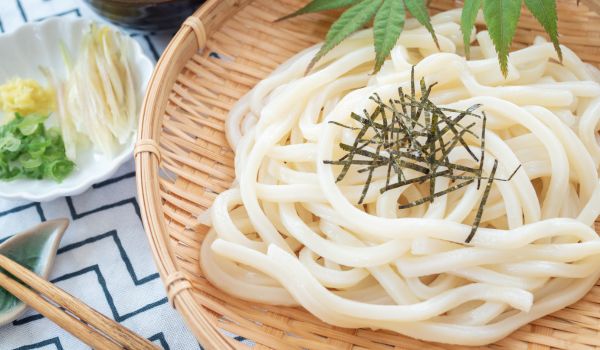
Udon are a variety of Japanese noodles, wide and thick, which are popular for their chewy texture and delicate taste. These noodles are traditionally made from wheat flour, water and salt, and are often served in hot or cold broth, with various accompaniments.
Udon noodles have been eaten for centuries in Japan, and have become popular around the world thanks to Japanese cuisine. The noodles can be prepared in a variety of ways, depending on the ingredients and sauces used. They can be served with tofu, vegetables, seafood, meat, or eggs, and can be seasoned with sauces such as soy sauce, mirin, rice vinegar, and dashi.
The preparation of udon can vary depending on the region where it is made. For example, in the Sanuki region of Shikoku, udon is often made with pure spring water and is steamed rather than boiled, giving it a unique texture and distinctive taste.
Udons are also valued for their nutritional value. They are high in carbohydrates, protein, and fiber, and also contain essential vitamins and minerals. They are an excellent source of energy for active people and are often eaten before or after a workout to replenish the body's energy stores.
In conclusion, udon is a delicious variety of Japanese noodles that can be prepared in many different ways and are loved for their chewy texture, delicate taste, and nutritional value. Whether you like them in hot or cold broth, or with different ingredients, udon is a versatile and delicious dish that is definitely worth trying.
You can use the Japanese Nakiri kitchen knife to prepare udon. This type of knife is specially designed for cutting vegetables and is often used to prepare the ingredients that accompany udon, such as green onions and mushrooms.
7. Soba 
Soba is a Japanese specialty of noodles made from buckwheat flour. It is often served cold with a sauce called tsuyu, or hot in a broth called kake soba. Soba is a popular dish in Japan, where it is considered a healthy and filling meal.
Making soba is an art form in Japan. The noodles must be made from a perfectly measured mixture of buckwheat flour and water, then stretched thinly by hand. Fresh soba have a deliciously chewy texture and nutty flavor that are unique to them.
Soba can be topped with a variety of ingredients such as tempura, nori seaweed, fish, or vegetables. Soba is also often accompanied by wasabi, a spicy green paste, and chopped spring onions.
Aside from its delicious flavor, soba is also a source of important nutrients. Buckwheat is rich in protein, fiber, vitamins, and minerals. Soba is also low in fat and calories, making it a healthy choice for health-conscious individuals.
If you are traveling to Japan, be sure to try soba at a restaurant that specializes in this specialty. This way, you can discover the richness of Japanese cuisine and enjoy the delicious flavor of soba.
To prepare soba, we recommend using a knife with a long, thin blade. The utility knife that meets these criteria is also versatile. You will be able to cut several types of food to accompany your soba.
8. Tonkatsu 
Tonkatsu is a Japanese culinary specialty appreciated for its breaded and fried pork meat. The name "Tonkatsu" comes from the contraction of the Japanese words "ton" (pork) and "katsu" (cutlet).
Tonkatsu is typically made with pork cutlets, which are seasoned with salt and pepper, then coated in flour, beaten eggs, and Japanese breadcrumbs (panko). The cutlets are then fried in hot oil until crispy and golden brown.
Tonkatsu is often served with white rice, shredded cabbage, and Tonkatsu sauce, which is a thick brown sauce made with fruits, vegetables, vinegar, soy sauce, and sugar. Some restaurants also serve Tonkatsu with fried eggs, cheese, or other toppings.
Although Tonkatsu is usually made with pork cutlets, there are variations that use other types of meat, such as chicken or beef. It is also possible to find vegetarian or vegan versions, which replace the meat with vegetables or plant-based proteins.
Tonkatsu is a very popular specialty in Japan and many other Asian countries. It is often served in specialty restaurants called "Tonkatsu-ya", but can also be found on the menus of many Japanese restaurants.
To make Tonkatsu, which is a Japanese breaded pork dish, you can use a medium-sized chef's knife or a pork tenderloin knife.
A chef's knife is versatile and can be used to cut vegetables and meat, making it a convenient choice for preparing ingredients for Tonkatsu. Make sure the knife blade is sharp to easily cut through breaded meat.
The benefits for your health
Now that we have detailed the most famous Japanese specialties, we would like to present to you the different benefits that this type of diet can have on your health.
Traditional Japanese dishes are often rich in vegetables, seafood, rice, and other fresh ingredients, making them a healthy and balanced cuisine. Here are some reasons why eating Japanese specialties can be beneficial:
-
Nutrient-rich: Traditional Japanese dishes are often rich in nutrients such as protein, vitamins, and minerals, from ingredients like seafood, vegetables, and rice. These nutrients are essential for maintaining good physical and mental health.
-
Low in fat and calories: Japanese cuisine often uses healthy cooking methods like steaming, grilling, and stir-frying, rather than frying. Additionally, portions are typically smaller, which can help with portion control and reducing calorie intake.
-
Variety of Food: Japanese cuisine offers a wide variety of dishes, from soups and stews to sushi and noodles. This provides the opportunity to eat a wide variety of foods, which is important for getting the different types of essential nutrients.
-
Mental Well-being: In addition to the food itself, Japanese culinary culture advocates a holistic approach to eating. Meals are often presented in an artistic and aesthetically pleasing manner, with particular attention paid to color, texture, and flavor. This can help stimulate the senses and improve mental well-being.
In summary, eating Japanese food can offer a healthy and balanced cuisine that is rich in nutrients, low in fat and calories, and offers a wide variety of dishes. In addition to this, Japanese culinary culture advocates a holistic approach to eating, which can help improve mental well-being.
What is a Mochi?
What are the most popular healthy foods in Japan?