


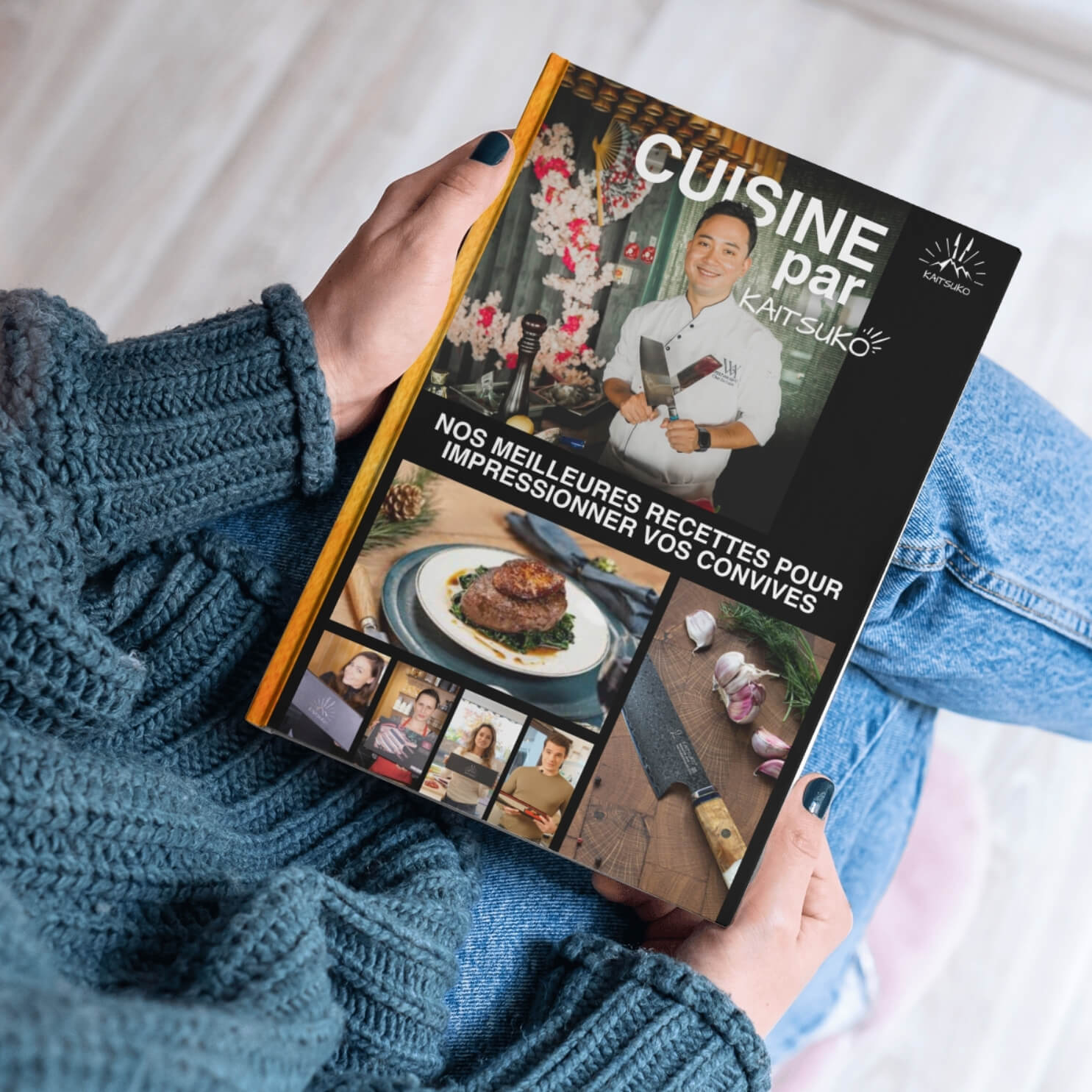
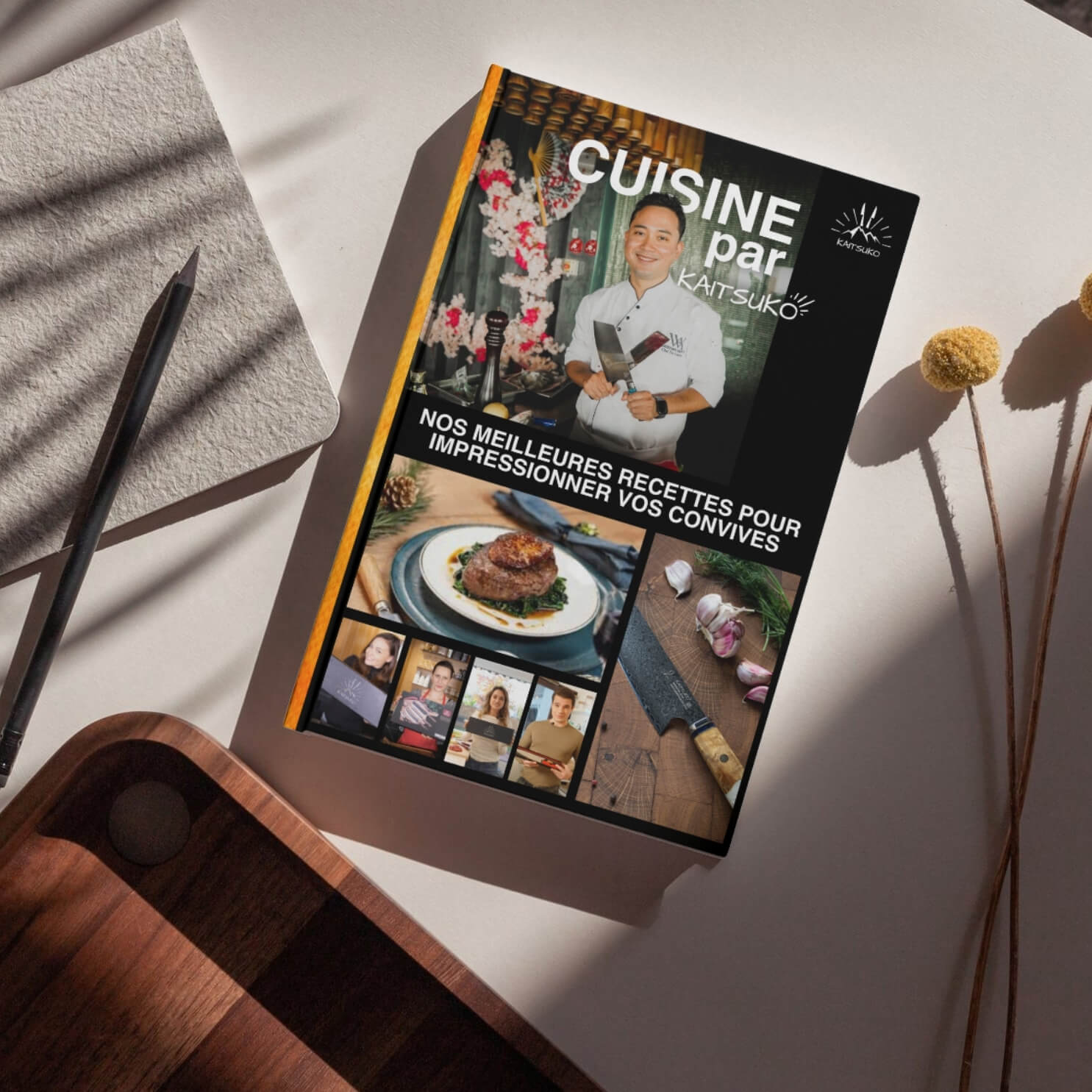

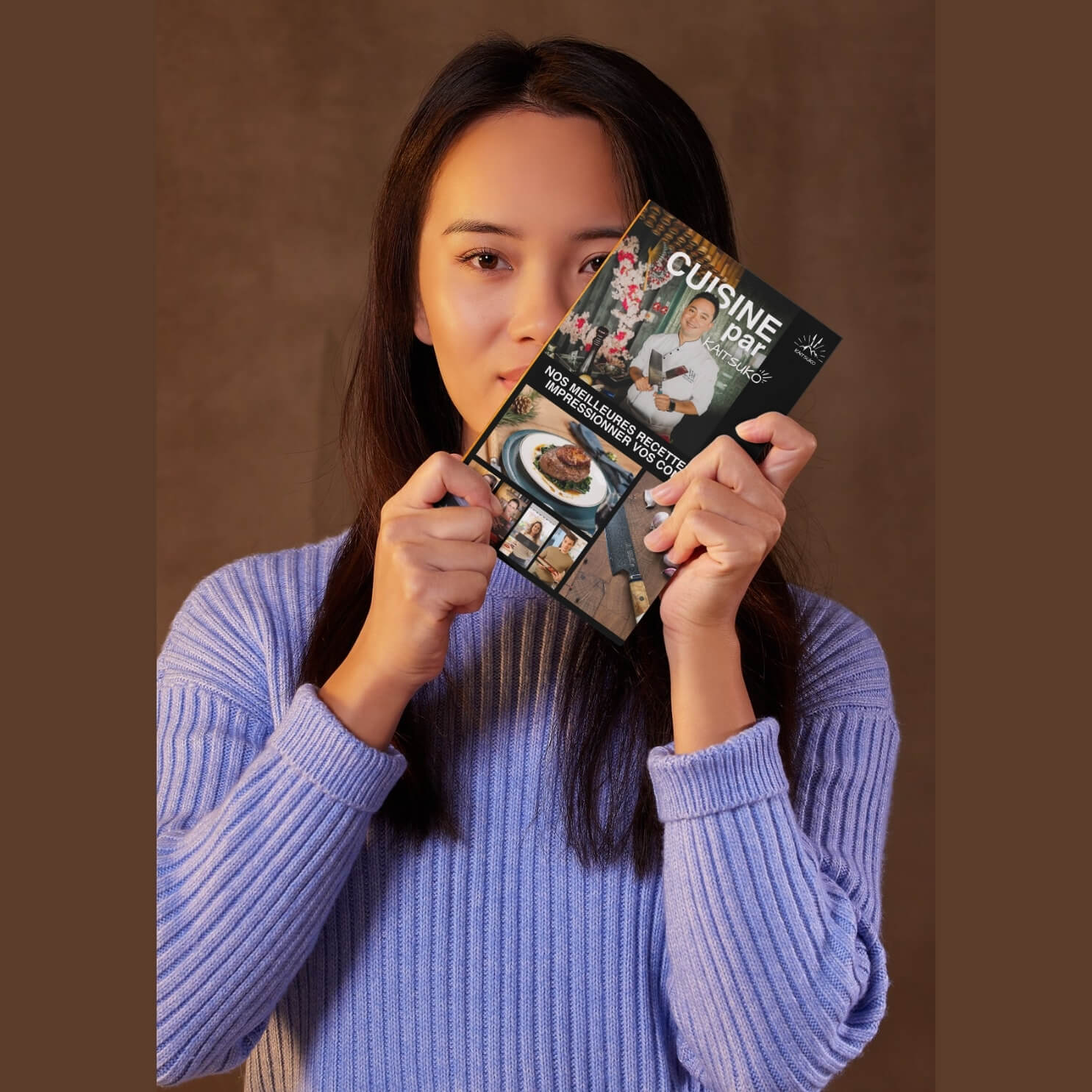
Kaitsuko Recipe E-Book – Chefs’ Recipes
Kaitsuko Recipe E-Book – Chefs’ Recipes
Description and technical specifications
Discover a Complete Digital Cookbook
Cooking is an art where every detail matters: the freshness of ingredients, the balance of flavors, and also the tools you use. Among these tools, the knife is undoubtedly the most essential. A good knife does more than cut, it enhances every movement, brings precision, and transforms meal preparation into a true culinary ritual.
Japanese knives, renowned for their exceptional sharpness and carefully designed ergonomics, are the ideal companions for anyone who wishes to cook with passion and perfection. Whether you are a knowledgeable enthusiast or an experienced chef, a Japanese blade offers a unique experience: clean cuts, complete respect for textures and flavors, and unmatched pleasure in the kitchen.
This recipe book was created to help you unlock the full potential of your Japanese knives. Inside, you will find dishes designed to highlight precision, finesse, and cutting techniques, while exploring exquisite flavors from Japan and beyond. From perfectly slicing sashimi, delicately chopping vegetables, to finely mincing herbs, each recipe demonstrates the importance of a well-sharpened knife suited to every task.
As you turn the pages, you will learn how to prepare dishes that are both delicious and elegant, ranging from Japanese classics such as sushi, ramen, and tempura to more modern creations inspired by cuisines from around the world. Each recipe invites you to experiment, refine your technique, and truly appreciate the art of Japanese knives.
So sharpen your blades, prepare your workspace, and let yourself be guided into a world where cutting becomes a true culinary signature. Enjoy discovering — and above all, enjoy tasting!
This E-Book version is perfect to take anywhere and enjoy on your own or with friends.
Our Story
Kaitsuko knives are specially selected by our team of enthusiasts. They are designed to offer optimal comfort of use to the user. The blades are of impeccable quality.
The sturdiness and durability of our knives will allow you to use them again and again!
They retain an exceptional sharpness despite daily use.
Kaitsuko knives allow for a clean and precise cut of all your food. Proper care of your knives will help extend their lifespan. This involves a thorough wash and proper sharpening.
Have a question? Check our FAQ to find the answer! If you have any other questions, our customer service team will be delighted to assist you Monday through Friday at info@kaitsuko.fr
-
CUSTOMER SERVICE
Contact us Monday to Friday from 8 a.m. to 6 p.m. at info@kaitsuko.fr
-
FAQ
All the answers to your questions can be found in our FAQ on Japanese knives.

The Complete Cookbook
Enjoy a comprehensive cookbook with recipes ideal for making the most of your Japanese kitchen knives. Recipes, usage tips, anecdotes. All in one complete book for amateurs, enthusiasts, or chefs.
LEARN MORE
The use of each knife
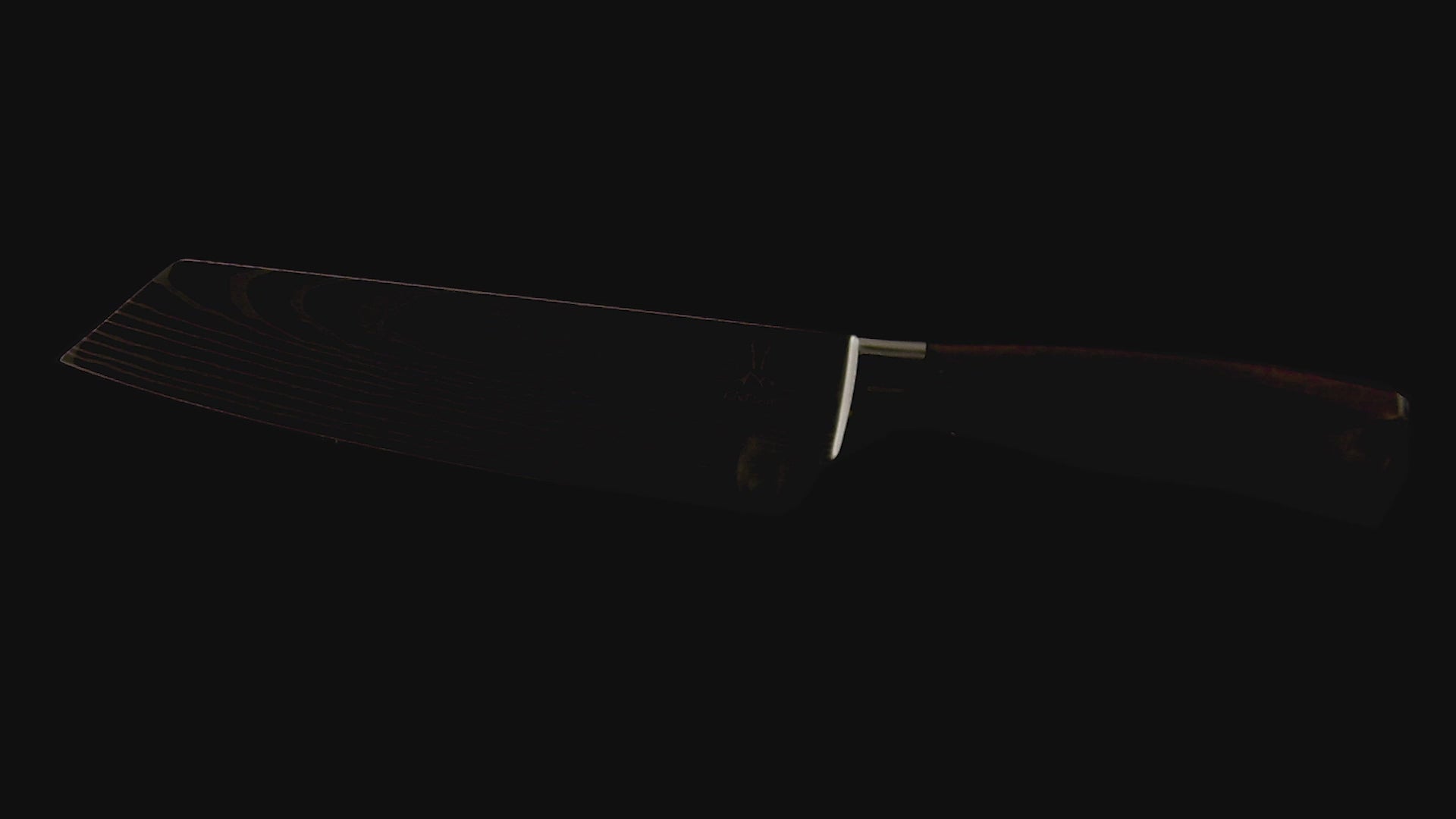
Kiritsuke Knife: The Kiritsuke knife is a versatile knife that can be used to cut a variety of foods. Its angled blade allows for precise cuts when slicing vegetables, meat, and fish.
Chef's Knife : The chef's knife is a versatile tool characterized by a long, sharp blade and a fine tip that allows for precise and efficient cuts. It is an ideal knife for slicing, chopping, and mincing all types of food.
Slicing Knife: The slicing knife is specifically designed for cutting thin slices of meat, poultry, or fish. Its long, narrow blade allows it to glide easily through food. It makes precise cuts without tearing the food.
Bread Knife: The bread knife is designed to cut different types of bread without crushing or tearing them. Its serrated blade allows it to cut cleanly through a crispy crust without crushing the soft crumb inside.
Santoku: The Santoku knife is also a versatile knife that is ideal for slicing, chopping, and cutting a variety of foods. With its wide, straight blade and rounded tip, it provides a large cutting surface. In short, this knife is perfect for preparing a variety of dishes in the kitchen.
Nakiri Knife: The Nakiri knife is designed specifically for cutting vegetables. Its straight, rectangular blade provides a wide cutting surface that is ideal for precise chopping, slicing, and mincing. It can also be used as a shovel knife to transfer vegetables to a plate.
Utility Knife: The utility knife is versatile. It is designed to perform a variety of tasks in the kitchen. Its intermediate size between a chef's knife and a paring knife makes it perfect for medium-sized cutting tasks, such as slicing fruit, vegetables, and cheese, peeling, or cutting food into small pieces.
Boning Knife: The boning knife is specially designed to remove meat from bones with precision. Its rigid, narrow blade allows it to follow the contours of the bones, thereby reducing meat waste.
Paring Knife: The paring knife is ideal for precision tasks thanks to its small size and short, pointed blade. It is perfect for peeling and cutting fruit and vegetables, as well as for delicate work. Versatile and easy to handle, the paring knife is often used for detailed tasks that require great precision. Whether removing seeds from fruit, coring tomatoes, or chopping herbs, this knife is an essential companion for both amateur and professional chefs.
Steak Knife: Steak knives, also known as "table knives," are designed specifically for cutting meat during meals. They have a serrated blade that makes it easy to slice through pieces of meat without tearing the fibers.
Knife maintenance
- Never put knives in a dishwasher.
- Wash knives by hand and dry the blade thoroughly with a soft, dry cloth to maintain the blade's performance and quality.
- Clean the blades with soapy water.
- If the knives have wooden handles, dry them thoroughly before storing them.
- Knives do not stay sharp forever, regardless of the blade; therefore, it is recommended to sharpen them as soon as the edge becomes less keen.
- Do not use the cutting edge of the knives to push food across the cutting board. Use the back of the blade instead.
- Never use the abrasive side of sponges to clean the blades.
- Cut food on a wooden cutting board to avoid damaging your knife blades.
- Do not cut food in a pan or baking dish to avoid damaging the knife blades.