



Kaito Connoisseur Set
Individual knife value: 360,00 €.
Save 135,01 € (38%) by buying the set.
Also discover
Kaito Connoisseur Set
Description and technical specifications
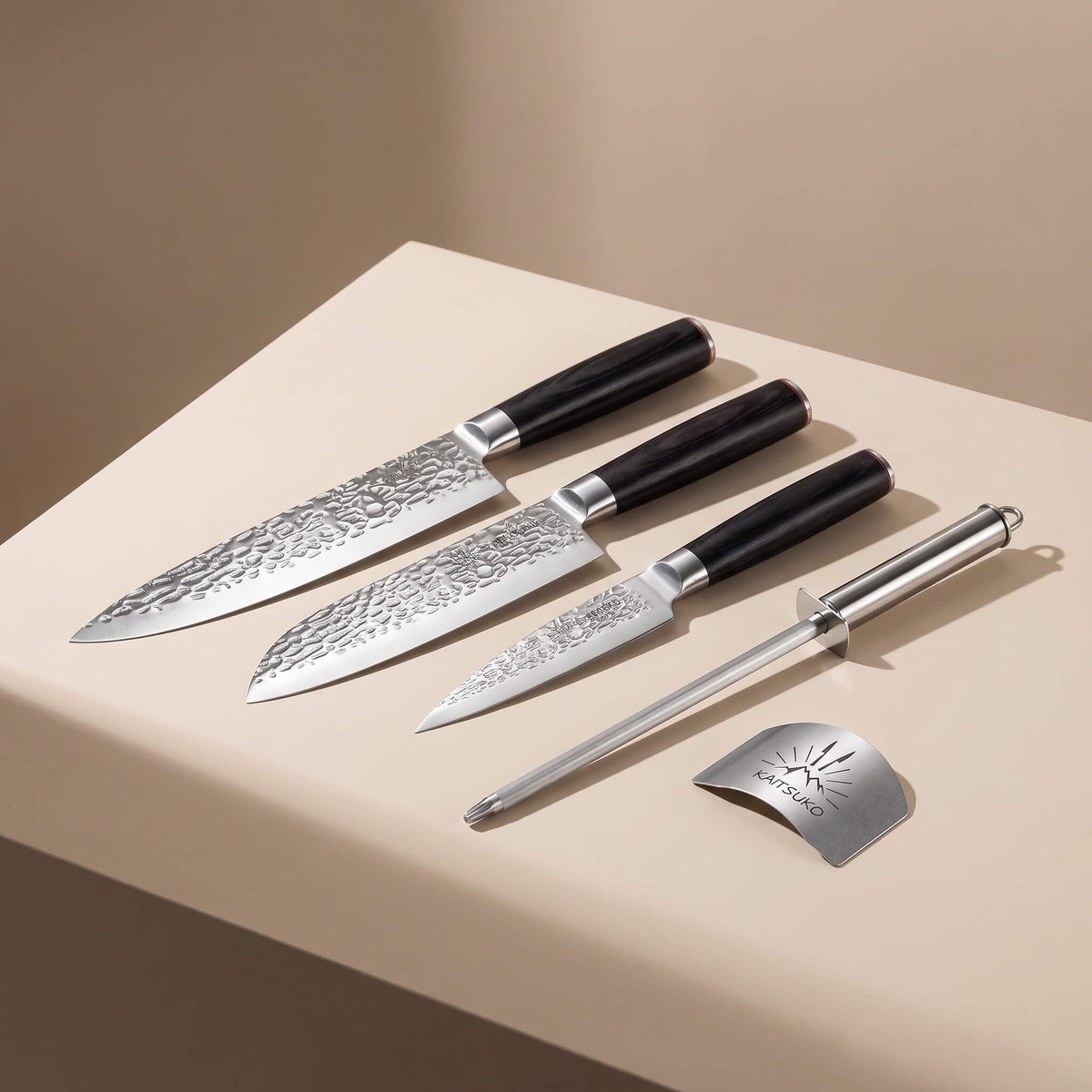
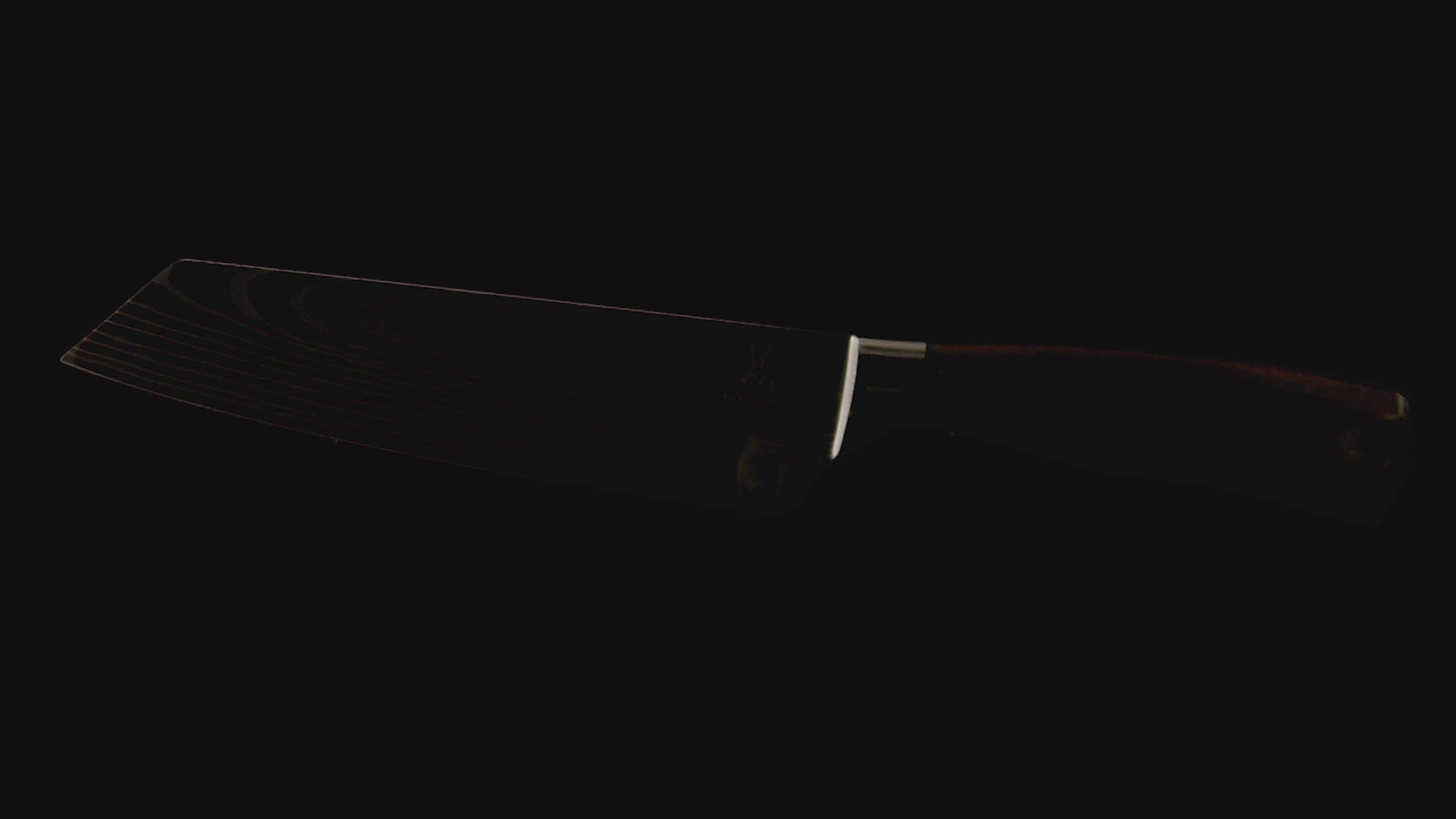
The Kaito Collection trio, accompanied by the two accessories that matter in everyday use. A chef knife for heavy cuts, a Santoku for everything else and a paring knife for fine work — all in hammered 10CR15CoMoV steel at 60 HRC with a hand-polished pakkawood handle. The honing steel maintains the edge between sharpenings, the finger guard guides the blade and protects the hand. Everything you need to fully equip a kitchen in a single set.
What's in the Set
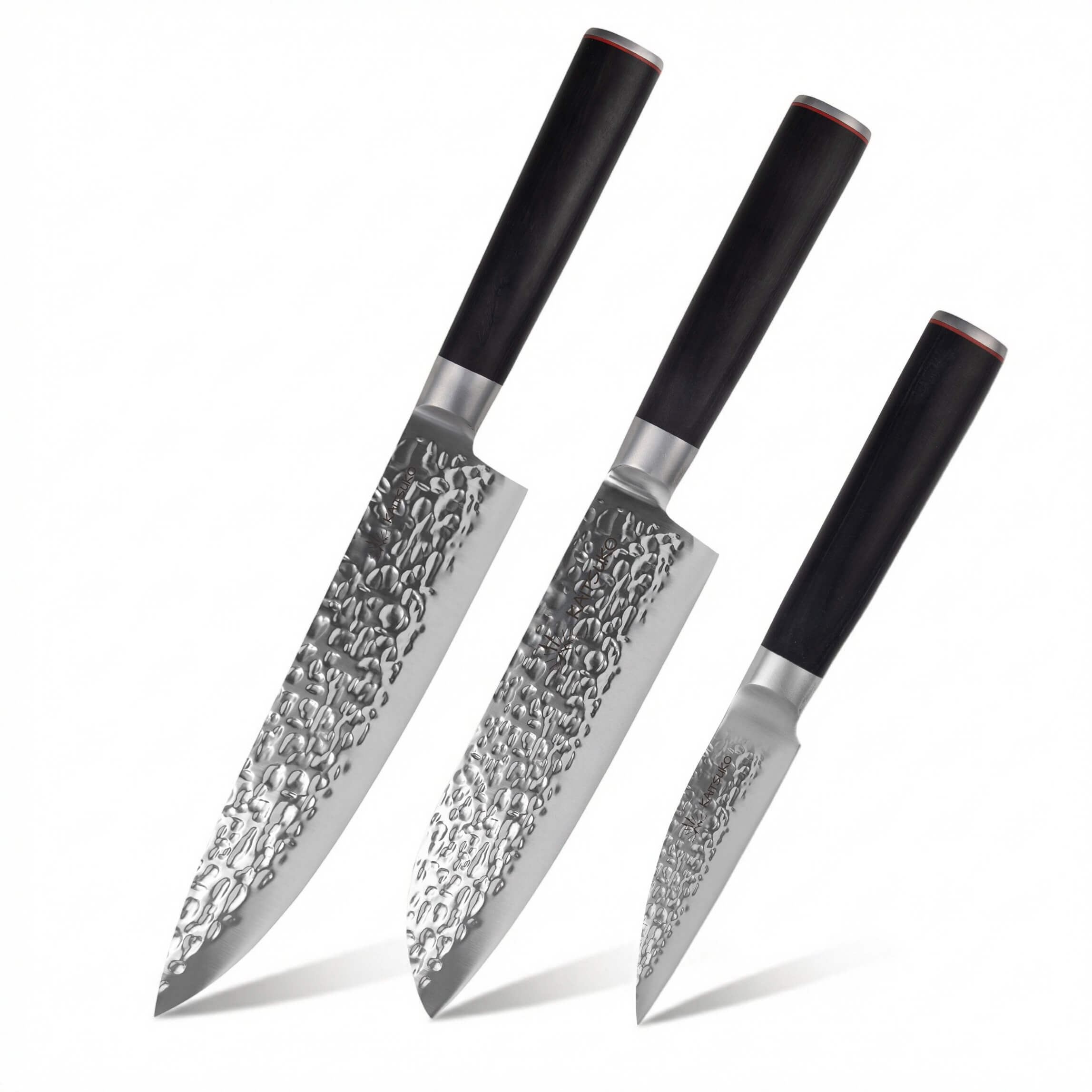
- 1 Kaito chef knife (200 g): the ultimate all-rounder. Meat, fish, vegetables, herbs, fruit — it handles everything.
- 1 Kaito Santoku (191 g): wide blade and harmonious silhouette for chopping, slicing and dicing, equally at home on crunchy vegetables and tender meats.
- 1 Kaito paring knife (86 g): compact and agile for peeling, trimming, hollowing and detailed cutting with precision.
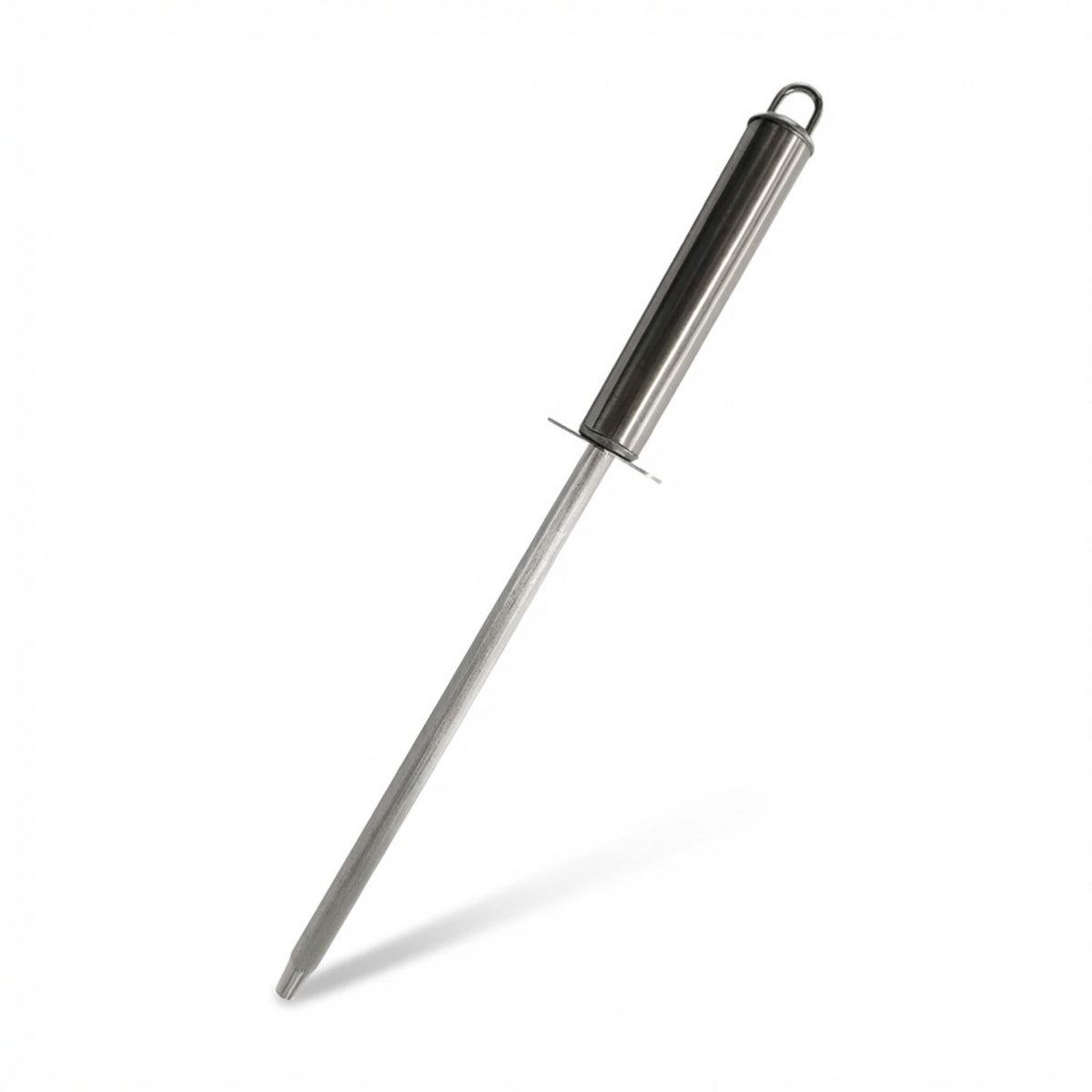
- 1 honing steel: 20 cm stainless steel rod, ergonomic handle. A few light strokes realign the edge and keep the blade sharp day after day.
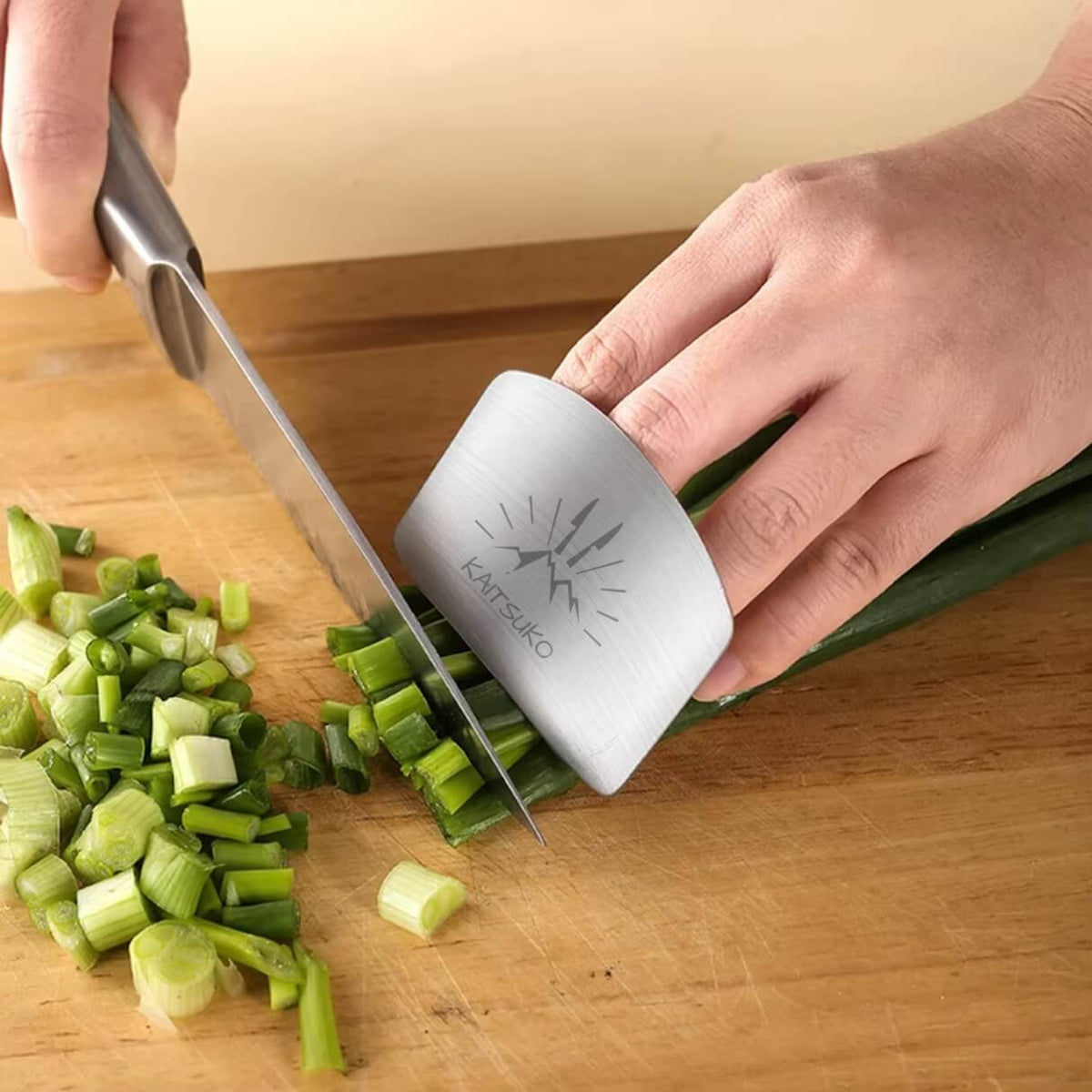
- 1 stainless steel 304 finger guard: 6.5 x 4.5 cm, adjustable ring, for right- and left-handed users. It secures the fingers and acts as a guide for even julienne and brunoise cuts.
Why the Kaito Collection?
Kaito blades are forged in 10CR15CoMoV stainless steel — a carbon-rich, cobalt-enhanced steel hardened to 60 HRC for an edge that lasts. The hammered finish gives the blade its visual signature and reduces food sticking during cutting. The hand-polished pakkawood handle fits comfortably in the hand and resists kitchen moisture. Three knives, one single standard: precision of cut, without effort.
Care and Maintenance
For everyday use, a few light strokes on the honing steel to realign the edge. When the cut weakens, sharpen on a whetstone maintaining the original angle. Hand wash and dry immediately for both knives and accessories: the dishwasher damages the steel, the handle wood and the polished finish of the finger guard. Work on a wooden chopping board and avoid bones, frozen food and twisting motions.
Technical Specifications
- Knives: chef, Santoku and paring knife from the Kaito Collection
- Blade: hammered 10CR15CoMoV stainless steel, hardness 60 ± 1 HRC
- Handle: hand-polished pakkawood
- Weight: chef 200 g, Santoku 191 g, paring knife 86 g
- Honing steel: stainless steel, 20 cm rod, ergonomic handle
- Finger guard: stainless steel 304, 6.5 x 4.5 cm, approx. 20 g, adjustable ring
- Knives delivered in their Kaitsuko gift box
Our History
Kaitsuko knives are specially selected by our team of enthusiasts. They are designed to offer optimal comfort of use to those who use them. The blades are of impeccable quality .The strength and durability of our knives will allow you to use them again and again!
They maintain an exceptional sharpness despite daily use.
Kaitsuko knives allow for clean and precise cutting of all your foods. Proper maintenance of your knives will extend their lifespan. This involves careful washing and good sharpening.
Do you have a question? Check out our FAQ to find the answer! If you have another question, our customer service will be happy to answer you from Monday to Friday at info@kaitsuko.fr
-
CUSTOMER SERVICE
Contact us Monday to Friday from 8am to 6pm at info@kaitsuko.fr
-
FAQ
The answer to all your questions HERE.
OUR MISSION
Discover the perfect fusion of Japanese tradition and contemporary design with our Kaito collection. Each knife is crafted to deliver exceptional cutting performance, featuring a hammered 440C stainless steel blade that combines precision, durability, and elegance.
Beyond its refined appearance, the hammered pattern is more than a visual detail—it creates tiny air pockets between the blade and the food, following an ancestral Japanese technique. This reduces friction and prevents ingredients from sticking to the blade, resulting in a smoother and more efficient cut.
The pakkawood handle, enhanced with a subtle red accent, offers a comfortable, ergonomic, and stable grip. Designed for demanding chefs and passionate home cooks alike, Kaito knives turn every slice into a fluid, precise experience.


LEARN MORE
The use of each knife
Kiritsuke Knife : The Kiritsuke knife is a versatile knife that can be used for cutting a variety of foods. Its angled blade allows for precise cuts for slicing vegetables, meat, and fish.
Chef's Knife : The Chef's knife is a versatile tool that features a long, sharp blade, as well as a fine tip for precise and efficient cuts. It is an ideal knife for slicing, chopping, and chop all types of food.
Slicing Knife : The slicing knife is designed specifically for cutting thin slices of meat, poultry, or fish. Its long, narrow blade allows it to glide easily through food. It allows for precise cuts without tearing the food.
Bread Knife : The bread knife is designed to cut through different types of bread without crushing or tearing them. Its serrated blade allows you to slice cleanly through the crispy crust, without crushing the crumb inside.
Santoku Knife : The Santoku knife is also a versatile knife that is ideal for slicing, chopping and cutting different foods. With a wide, straight blade with a rounded tip, it has a large cutting surface. In short, the This knife is perfect for making multiple preparations in the kitchen.
Nakiri Knife : The Nakiri knife is specialized in cutting vegetables. Its straight, rectangular blade offers a wide cutting surface that is ideal for chopping, slicing and mincing precisely. It can also be used as a shovel knife to transfer vegetables into the flat.
Utility Knife : The utility knife is versatile. It is designed to perform several types of tasks in the kitchen. Its size, halfway between a chef's knife and a utility knife, makes it perfect for medium-sized cutting tasks, such as slicing fruit. , vegetables, cheese, peel, or even cut food into small pieces.
Boning Knife : The boning knife is specially designed to remove meat from bones with precision. Its rigid and narrow blade allows it to follow the contour of the bones, thus reducing meat waste.
Paring knife : The paring knife is ideal for precision tasks thanks to its small size and short, pointed blade. It is perfect for peeling and cutting fruits and vegetables, as well as for making delicate cuts. Versatile and handy, the paring knife is often used for detailed work that requires great precision. Whether it's for removing seeds from a fruit, coring tomatoes or chopping herbs, this knife is an essential companion for amateur and professional chefs.
Steak Knife : Steak knives, also called "table knives," are knives designed specifically for cutting cuts of meat during meals. They have a serrated blade that makes it easy to slice through pieces of meat without tearing the fibers.
Knife maintenance
- Never put knives in a dishwasher.
- Wash knives by hand and wipe the blade thoroughly with a soft, dry cloth to maintain the efficiency and quality of the blade.
- Clean the blades with soapy water.
- If the knives have wooden handles, dry them thoroughly before storing.
- Knives do not stay sharp for life, no matter the blade; it is therefore advisable to sharpen them as soon as the edge becomes less sharp.
- Do not use the edge of the knife to push food onto the board. Use the back of the blade instead.
- Never use the abrasive side of sponges to clean blades.
- Cut food on a wooden board to avoid damaging the blade of your knives.
- Do not make any cuts in a pan or baking dish to avoid damaging the blade of the knives.