



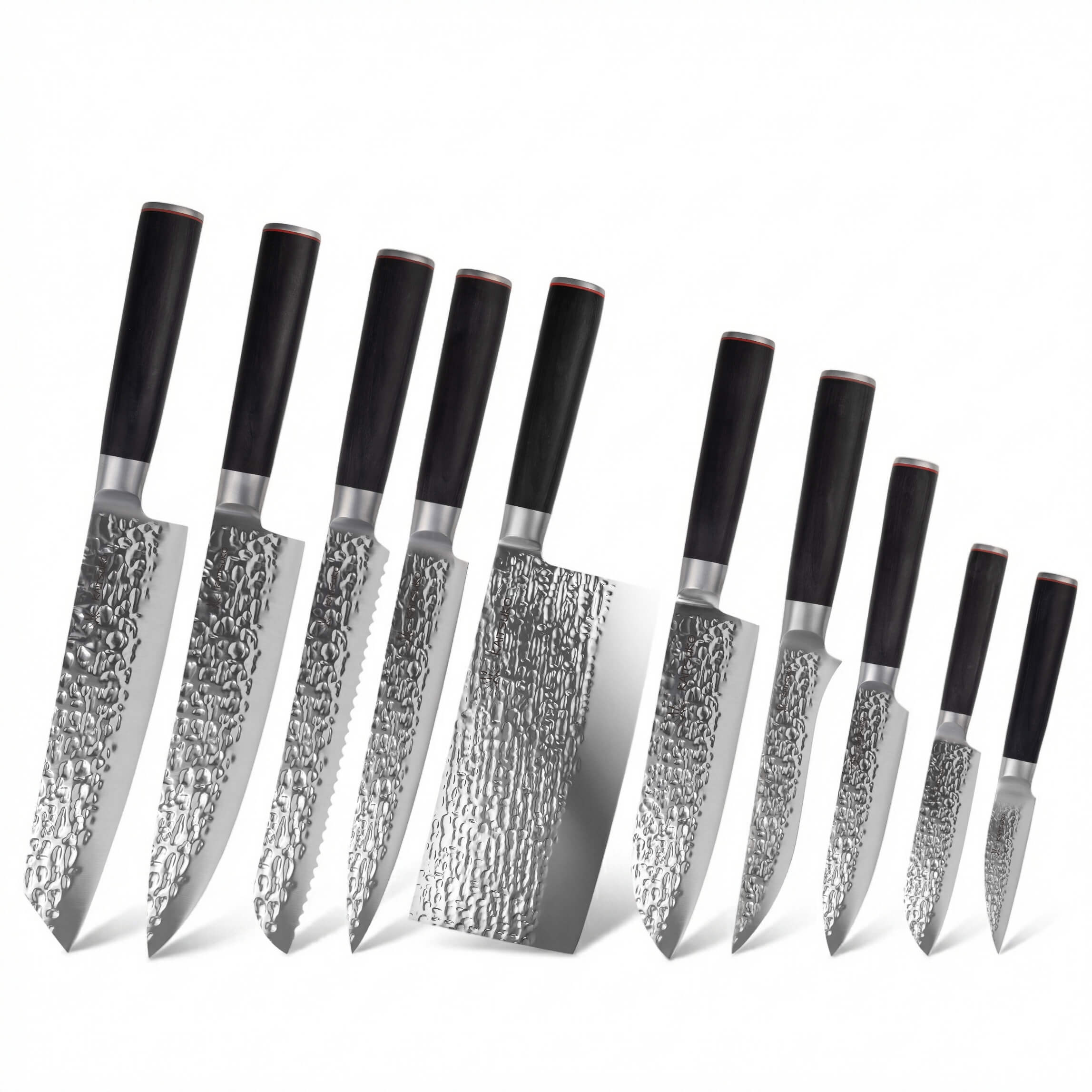
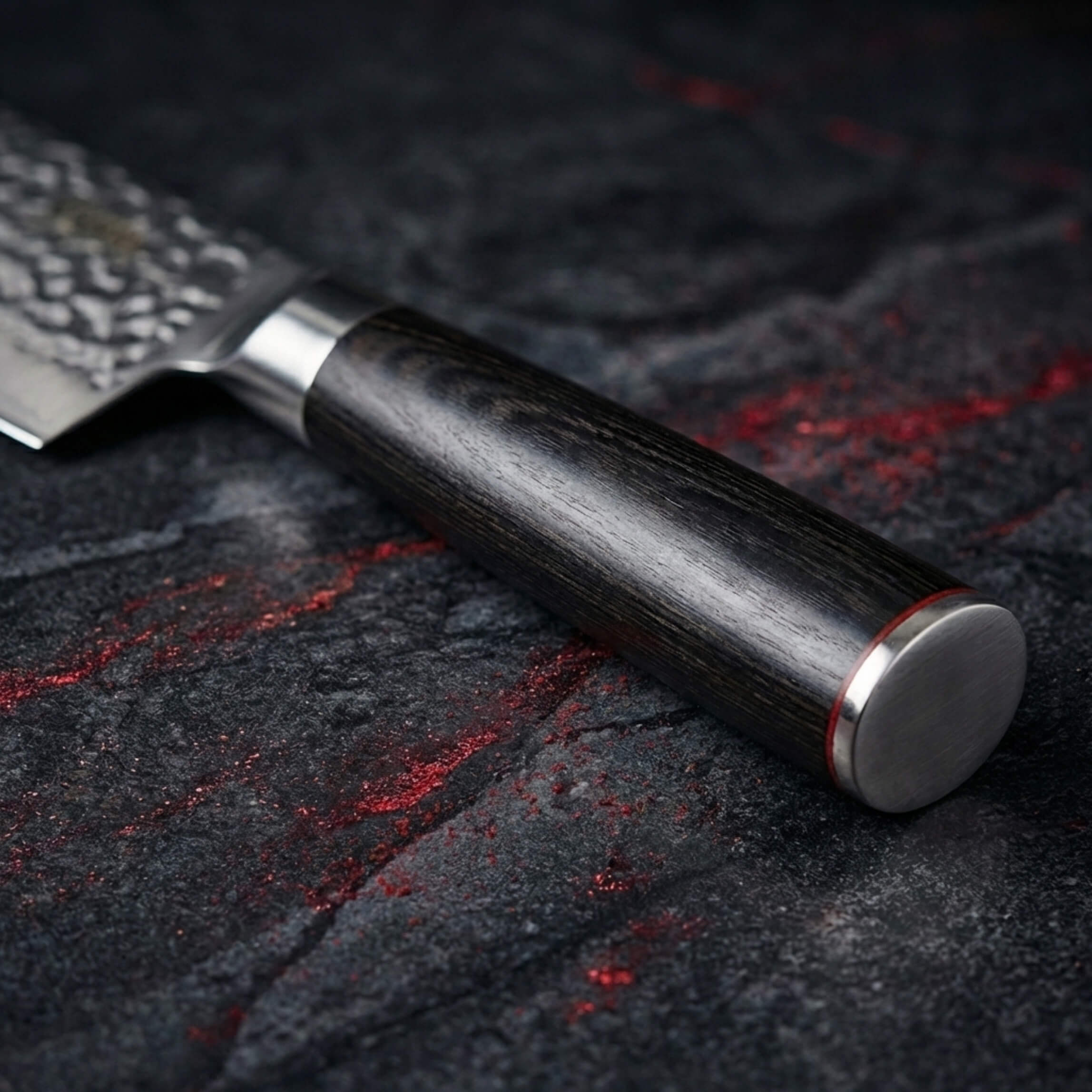
Set of 10 Japanese knives - Kaito
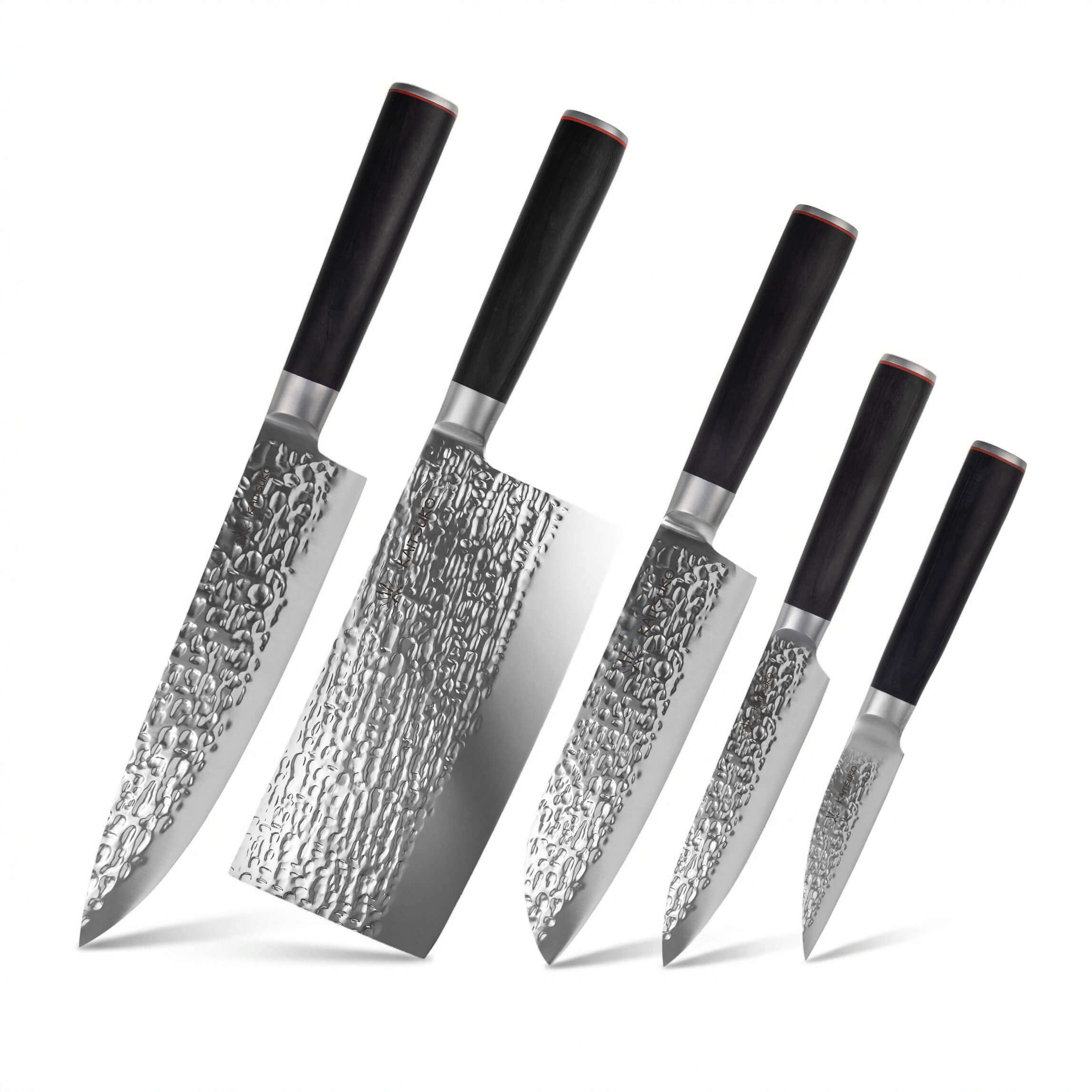
Set of 5 Japanese knives - Kaito
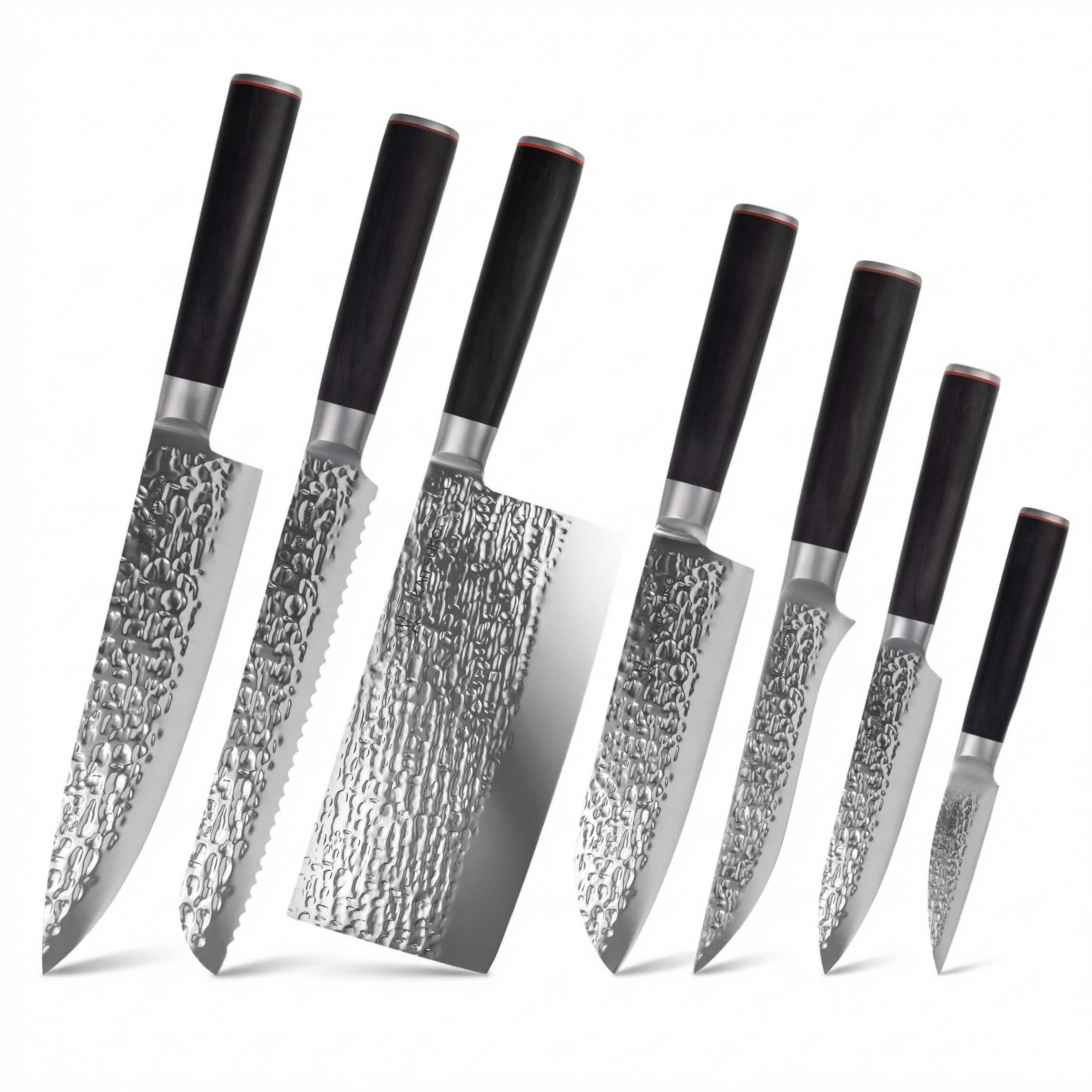
Set of 7 Japanese knives - Kaito
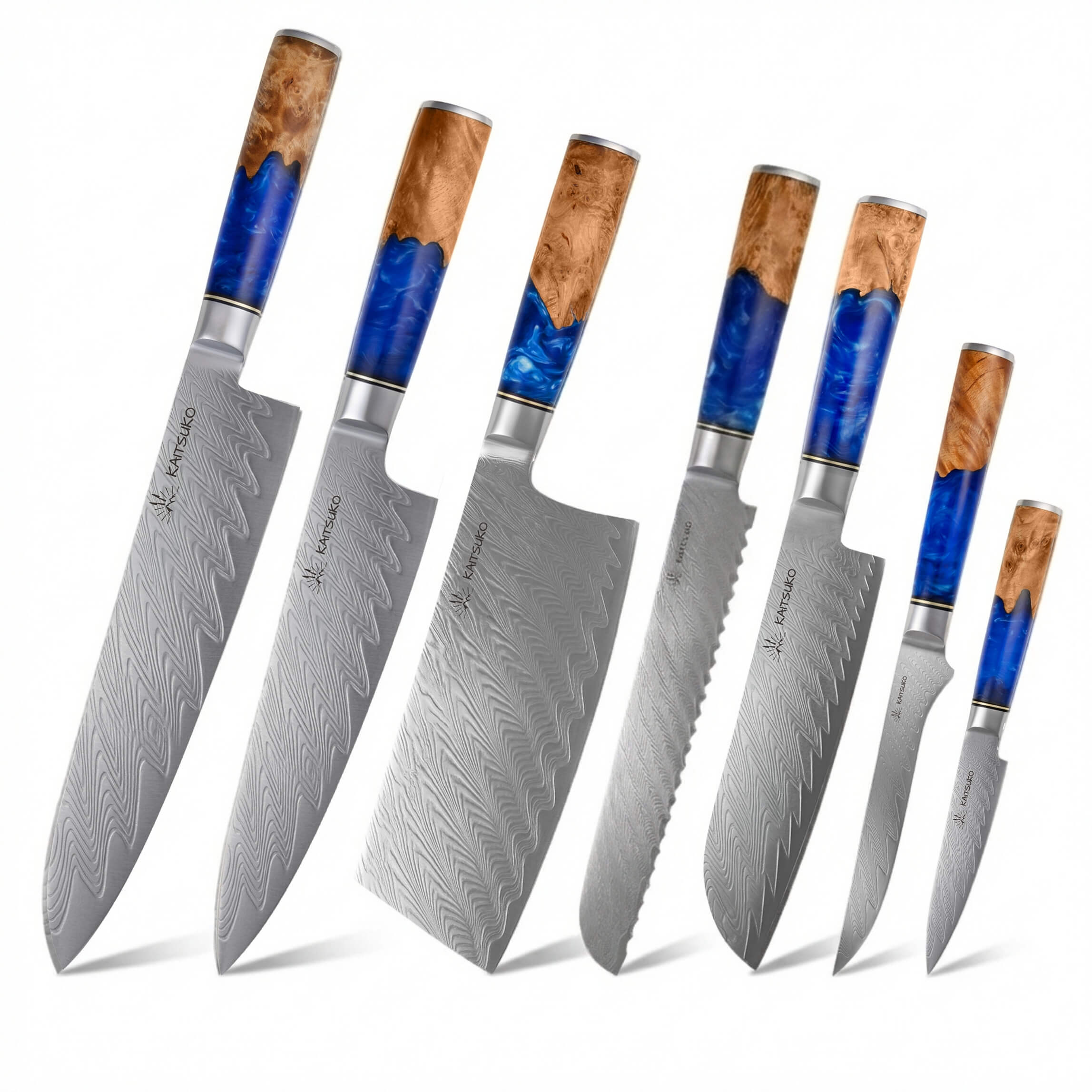
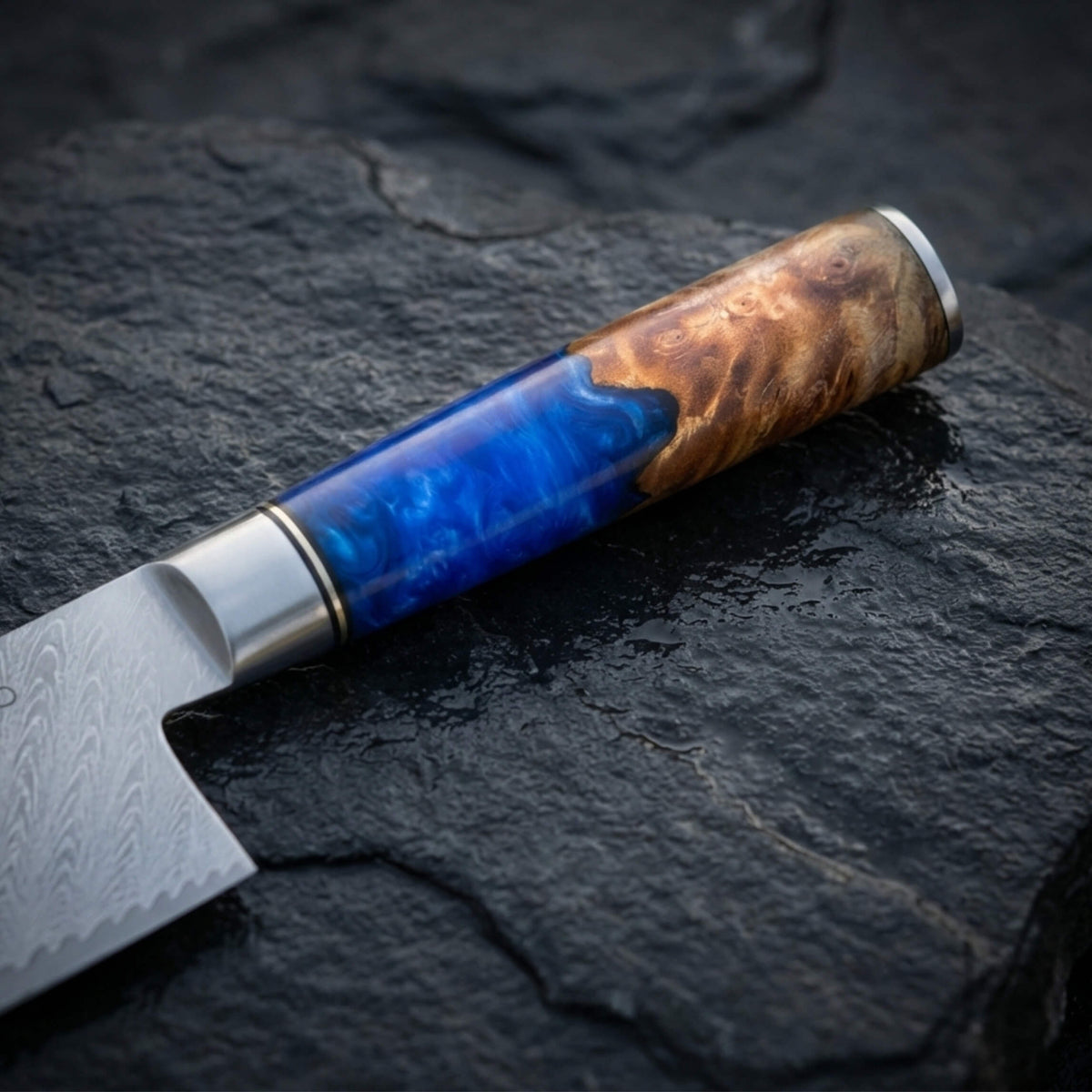
Set of 7 Japanese knives - Yellow Sea Series
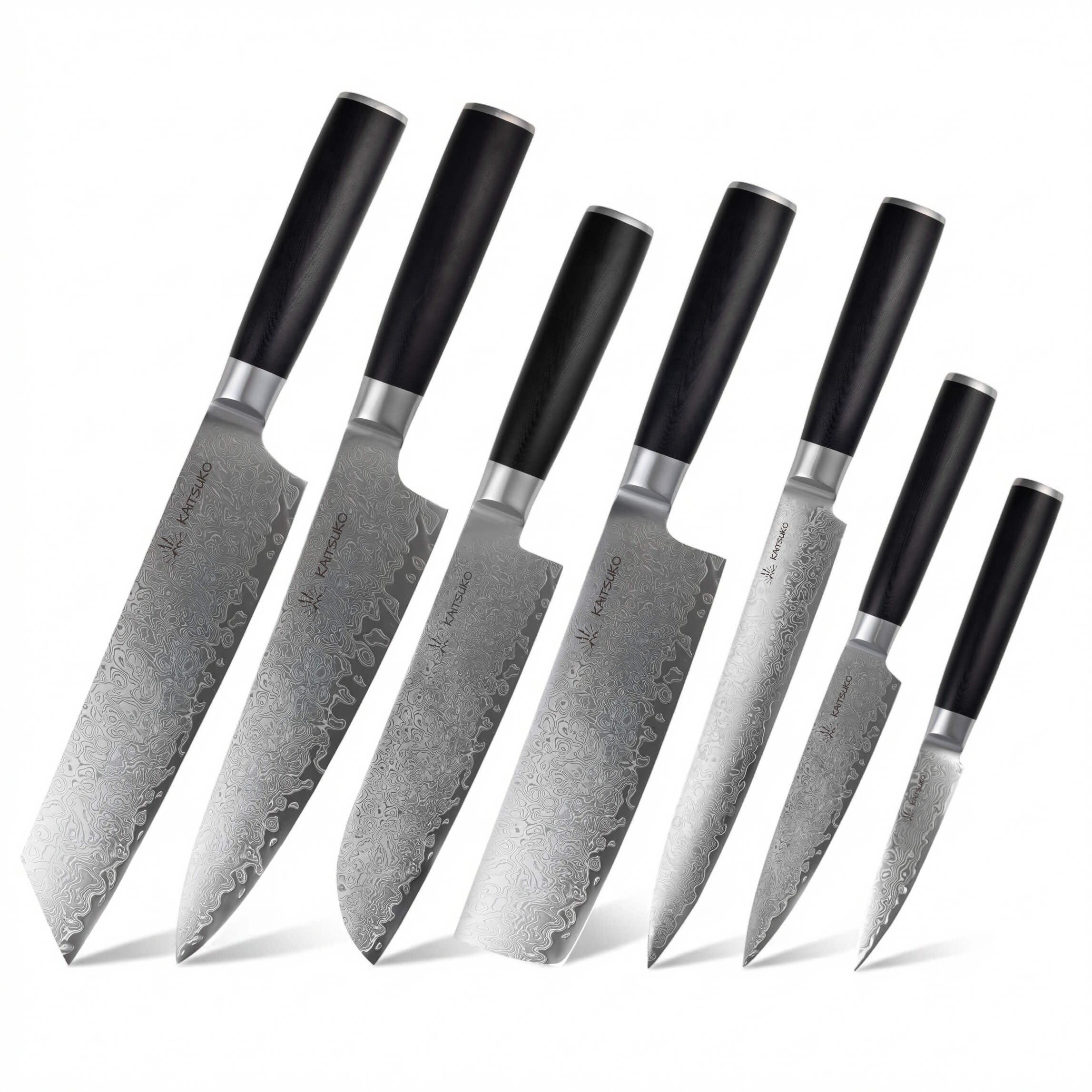
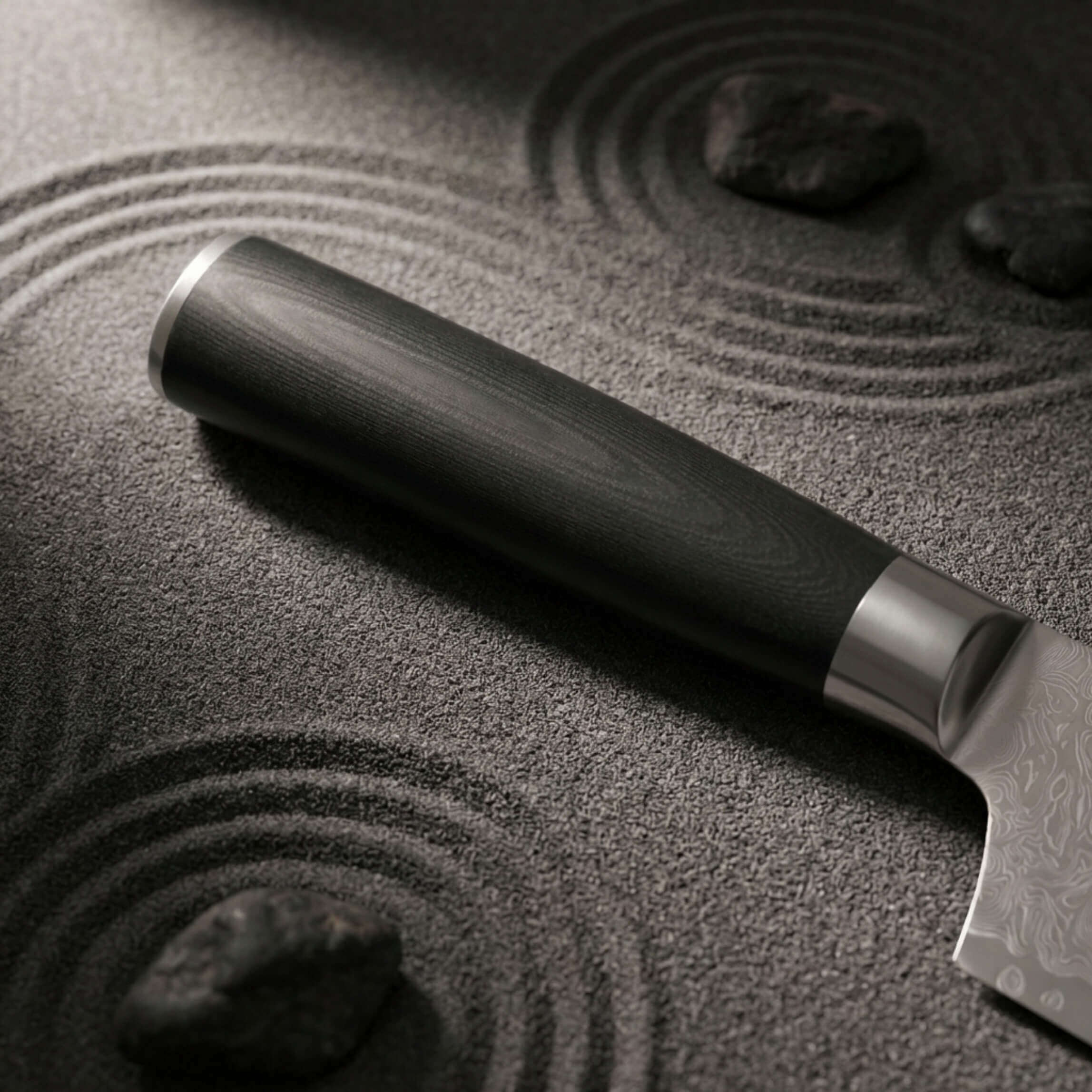
Set of 7 Japanese knives - Kyoto
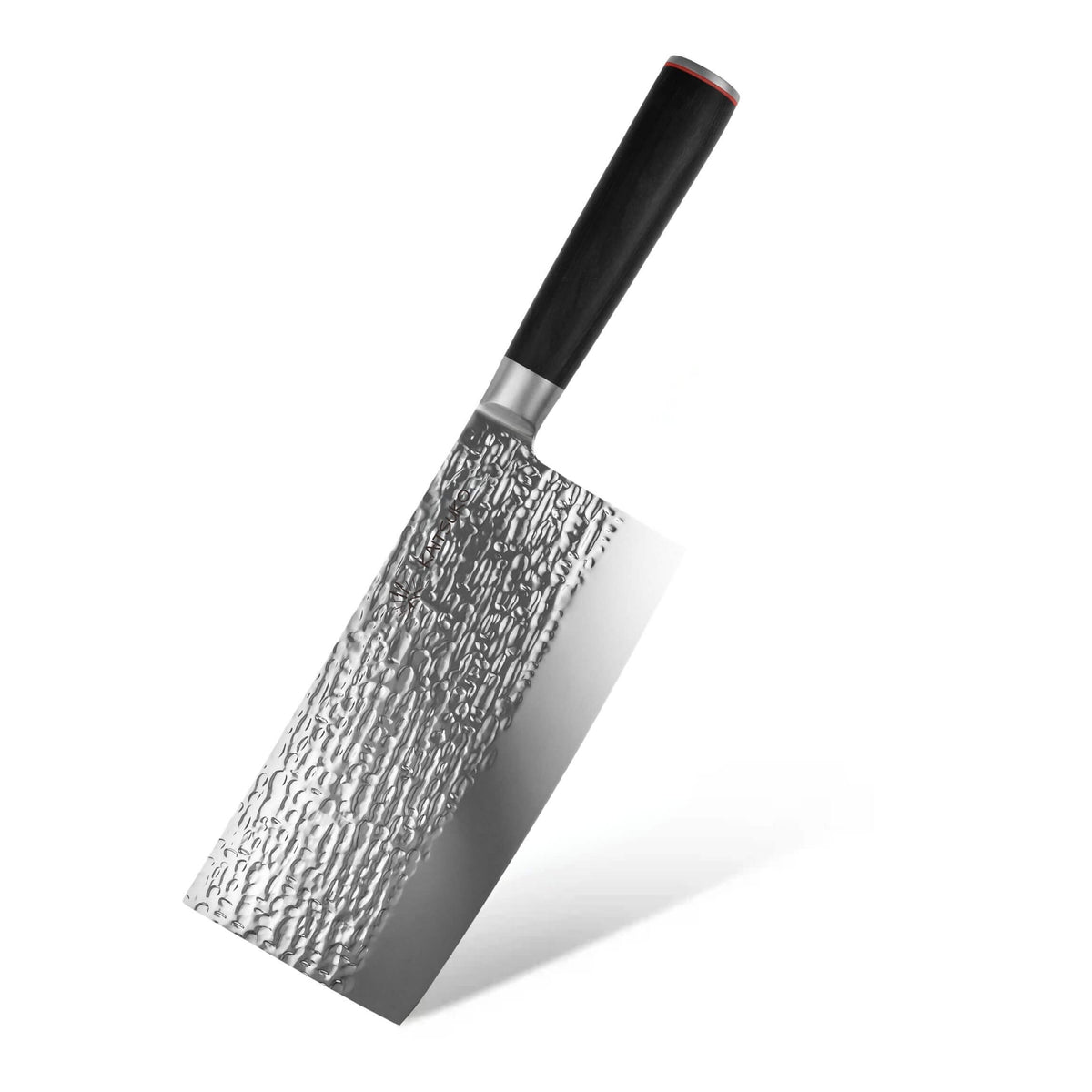
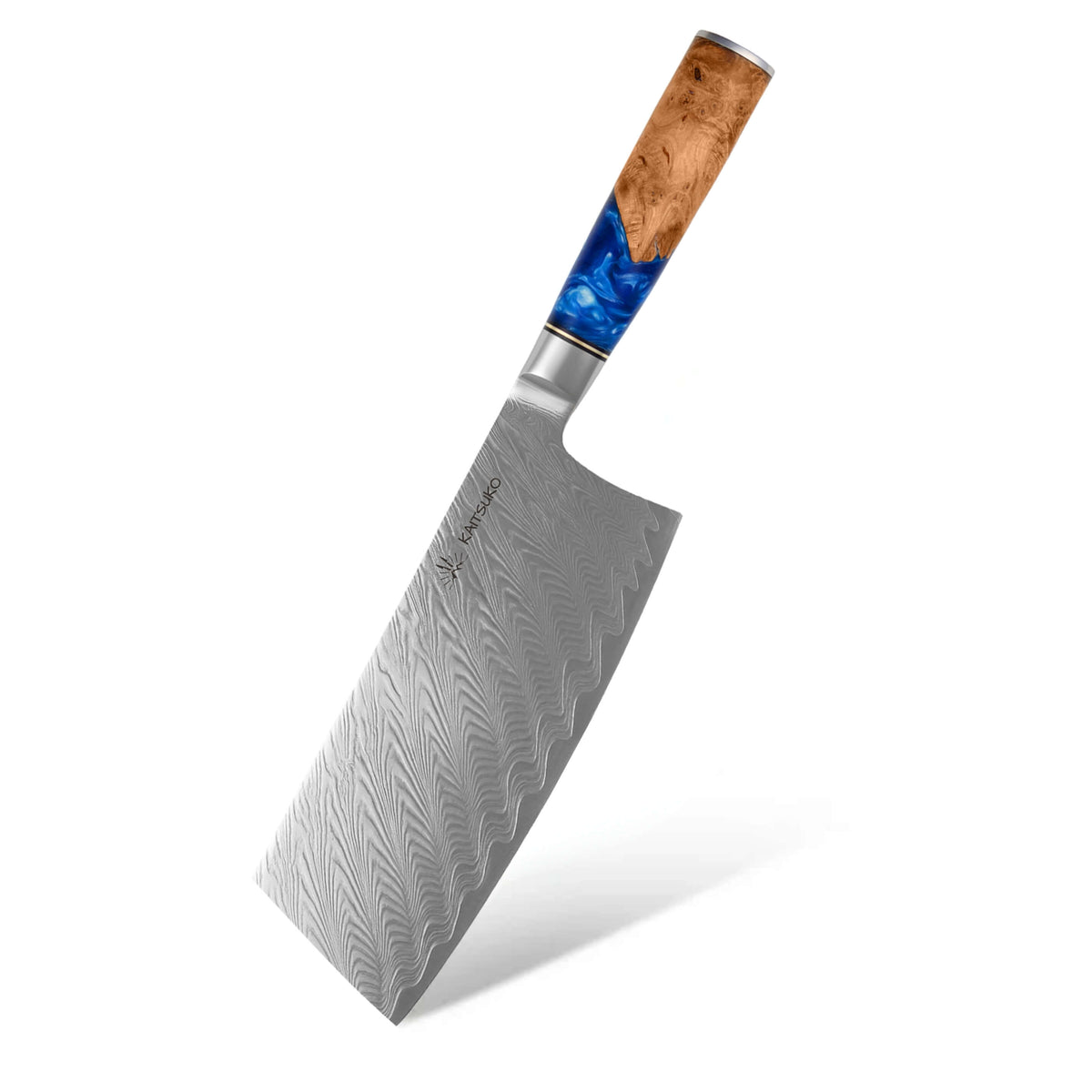
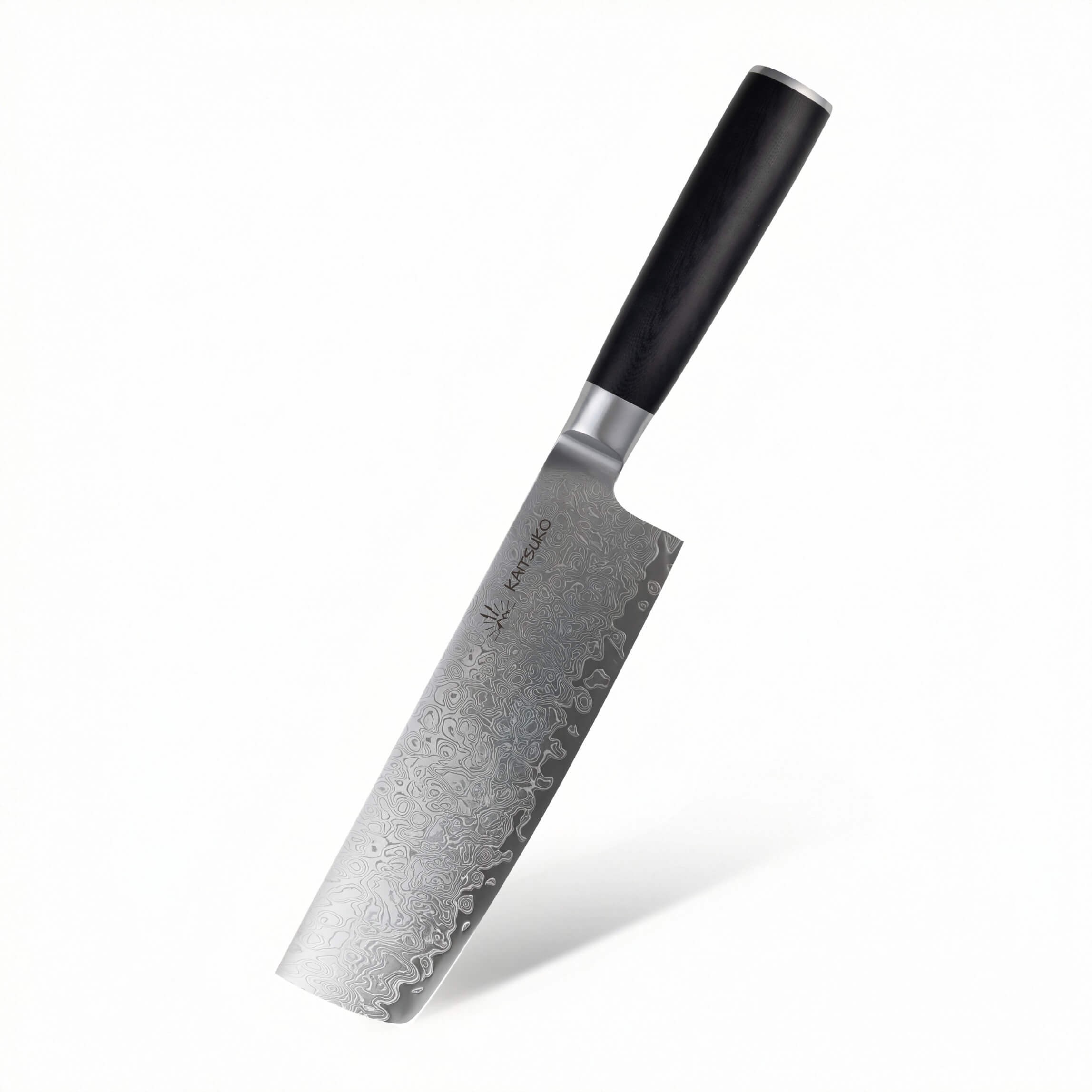
Nakiri knife / cleaver - Kyoto


Set of 7 Japanese knives - Komodo

Set of 7 Japanese knives - Chef Tanaka


Set of 10 Japanese knives - Chef Tanaka
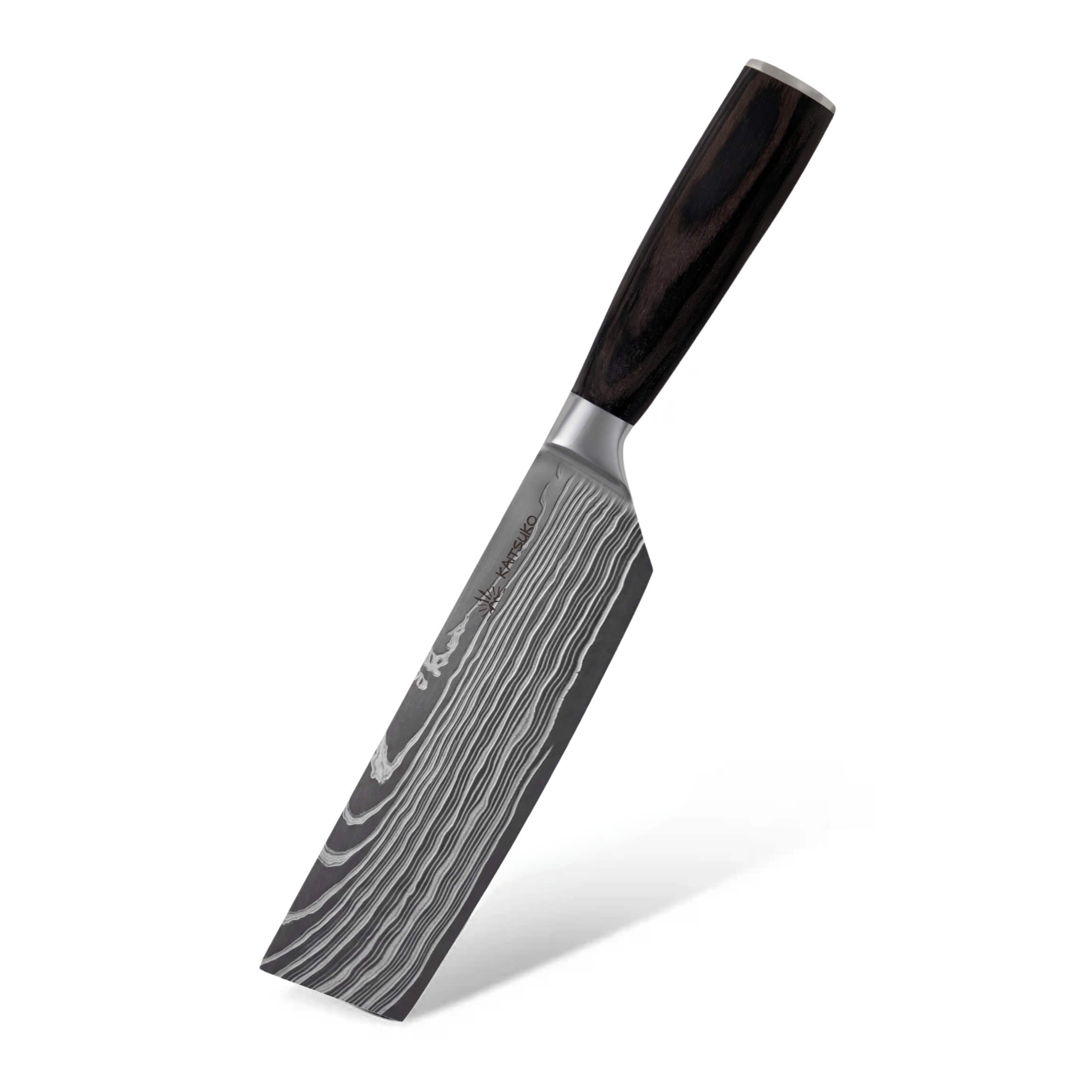
Nakiri Knife: Rectangular Precision for Your Vegetables and Herbs
Straight double-edged blade — 10CR15CoMoV Steel — San Mai Technique — Clean cut without compression.
The Nakiri knife is the specialist tool whose rectangular geometry allows a perpendicular descent to the board, without any rocking motion. This unique architecture ensures a precise cut that does not compress vegetable fibers, preserving their original flavors and textures. Forged in 10CR15CoMoV steel (67 layers/hammered) or 5CR15MoV for the Tanaka range, every Kaitsuko Nakiri combines the technical precision of the 15° bevel with the comfort of a perfectly studied balance.
The Technical Expertise of the Vertical "Push-Cut"
A Nakiri knife is defined by a flat blade with no curvature and a double-beveled edge at 15 degrees. Unlike the chef's knife, it allows a pure vertical motion: the blade descends along its full length simultaneously, guaranteeing rounds and julienne of surgical regularity.
Its generous width offers an immediate functional advantage: it acts as a spatula to transfer your sliced vegetables directly into your cooking vessel.
The 4 Kaitsuko Nakiri Models
Nakiri Chef Tanaka
- Steel: Martensitic 5CR15MoV (53-54 HRC).
- Use: Robust and accessible knife, ideal for facilitated daily handling.
- Handle: Epoxy resin or ergonomic Pakkawood.
Nakiri Kyoto
- Steel: Premium 10CR15CoMoV (58-60 HRC), San Mai structure 67 layers.
- Use: Razor performance and exceptional edge retention for intensive use.
- Handle: Black G10, unalterable moisture-resistant composite.
Nakiri Yellow Sea Series
- Steel: Damascus 10CR15CoMoV (58-60 HRC).
- Use: For enthusiasts seeking the perfect balance between Damascus aesthetics and pure technical precision.
- Handle: Blue epoxy resin and worked stabilized wood.
Nakiri Kaito
- Steel: Hammered 10CR15CoMoV.
- Advantage: Hammering creates hollow-edges that reduce friction and prevent food from sticking.
- Handle: Hand-polished pakka wood.
How to Use a Nakiri Knife for Precise Cuts
The Vertical Motion: the Basic Technique
Unlike the chef's knife or Santoku knife which use a rocking motion, the Nakiri works in a vertical push-cut: the blade descends straight, resting on the curled knuckles that guide the cut. This repetitive motion produces slices of perfectly regular thickness — rounds, julienne, fine slicing — with minimum effort.
The flat and straight blade also allows the chop: slightly lift the knife and lower it with a firm motion to finely chop (herbs, garlic, shallots). The 16-18 cm blade length covers all common vegetables without needing to reposition mid-cut.
What the Nakiri Does Well and What It Doesn't
| ✓ Designed for | ✗ Avoid |
|---|---|
| ✓ Fine and regular julienne | ✗ Meat with bone, risk of chipping on the bevel |
| ✓ Rounds of constant thickness | ✗ Whole fish with thick bones |
| ✓ Fine slicing, chopping, precision cutting | ✗ Frozen foods, HRC 60 steel is more brittle than soft stainless |
| ✓ Firm vegetables (carrots, courgettes, leeks, cabbage) | ✗ ✗Hard surfaces: marble, glass, ceramic |
| ✓ Watery vegetables (tomatoes, cucumbers), flat blade doesn't tear | ✗ Filleting or boning |
| ✓ ✗ Spatula effect to transfer food |
A Nakiri knife is a specialized knife, not a versatile one. It excels at cutting vegetables — that is precisely its value. For meat and fish, a chef's knife or Santoku remains the appropriate choice.
Nakiri vs Santoku vs Gyuto: What Technical Choice?
| Features | Nakiri Knife | Santoku Knife | Chef's Knife (Gyuto) |
|---|---|---|---|
| Blade profile | Rectangular and flat | Rounded tip, hollow-edge | Long and tapered, fine tip |
| Technical gesture | Pure vertical push-cut | Rocking and versatile chopping | Pull cut and rocking |
| Specialty | 100% Vegetables | Versatile (3 virtues) | Total versatility (Meat/Fish) |
Caring for a Nakiri Knife: Gestures That Preserve the Blade
Daily Care Protocol
✓ Hand wash with soapy water only — the dishwasher oxidizes the bevel and swells wooden handles (pakka wood included)
✓ Immediate drying after washing — watery vegetables (tomato, lemon) leave acidic residues on the blade if it dries without being wiped
✓ Wood or bamboo cutting board only — hard surfaces (marble, glass, ceramic) irreversibly chip the 15° bevel
✓ Storage in a knife block, on a magnetic bar or with a blade guard — blade-to-blade contact creates micro-chips on the fine edge
Sharpening the Nakiri at 15°: What You Need to Know
The rectangular double-edged Nakiri blade is sharpened like a standard Japanese chef's knife: constant angle at 15° on each side with a whetstone. The flat geometry of the blade facilitates maintaining the angle as it lies flat on the stone.
Double-sided whetstone 400-1000 — Complete sharpening
- 400 grit: restores a dulled bevel in 8-10 passes per side
- 1000 grit: refines the fine edge in 5-6 passes Constant angle at 15° Check the edge on a fingernail between each series
Whetstone with handle — Guided sharpening
- Integrated angle guide
- Recommended on Damascus HRC 60+ steel
- The flat Nakiri blade positions easily on the stone
- Ideal for beginners in Japanese cutlery
Magnetic bar / magnetic holder — Storage
- Protects the Nakiri's double edge
- Prevents any blade-to-blade contact
- Showcases the Damascus blade
Technical FAQ: Nakiri
What is a Nakiri knife and how does it stand out?
The Nakiri is a specialized Japanese knife whose rectangular blade allows total contact with the cutting board without a rocking motion. It differs from the Santoku (versatile) through its straight blade that avoids compressing food.
What steels are used for Kaitsuko Nakiri knives?
We select two high-performance martensitic steels: 5CR15MoV for its daily robustness, and 10CR15CoMoV (comparable to VG10) for our Damascus and San Mai blades, offering a hardness of 58-60 HRC.
Can a Nakiri knife go in the dishwasher?
Never. Heat and aggressive detergents alter the edge and damage the noble handle materials (G10, Pakkawood or resin). Hand washing and immediate drying are imperative to preserve the molecular structure of the steel.
How to maintain the edge of a Nakiri blade?
For daily edge maintenance, use a chrome steel honing rod that realigns the blade without removing material. To restore a razor edge, we recommend using a whetstone (1000/400 grit) to rebuild the edge precisely at a 15-degree angle.
The vegetable knife that works from the very first stroke
10CR15CoMoV Steel — San Mai Technique — 60 HRC Hardness — Express delivery 24-48h.