

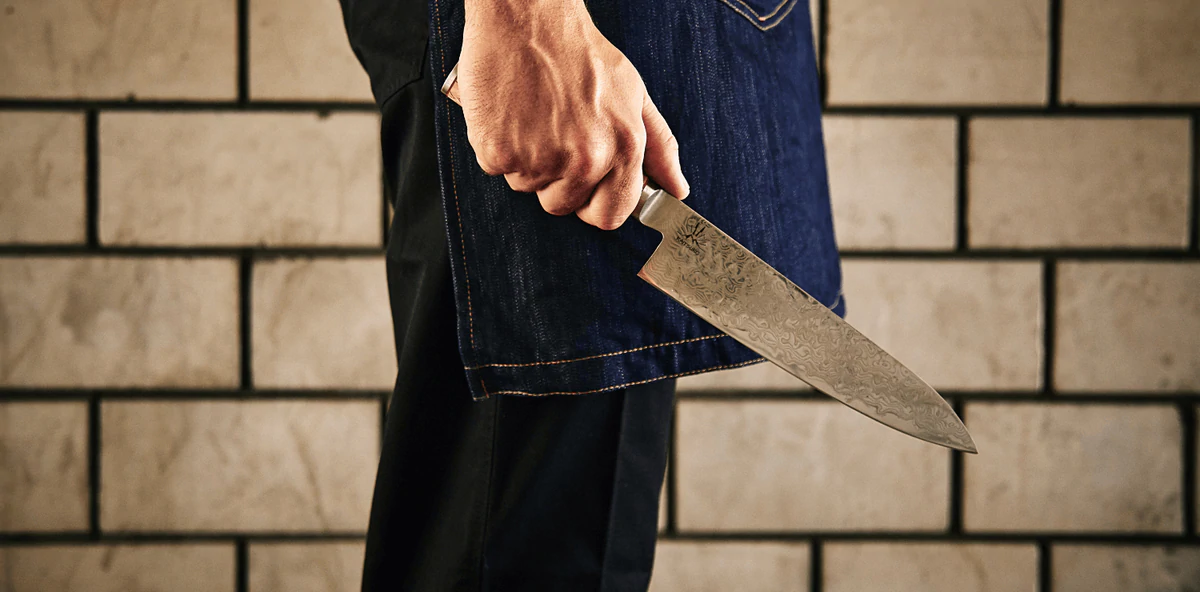
Kaitsuko France and its Japanese knives announce their collaboration with the restaurant La Popote.
At the end of 2020, Kaitsuko equipped the kitchen of La Popote, the bistro on rue Clovis in Metz, with its Japanese Damascus steel knives. The idea was simple: take our blades out of private kitchens and put them to the test in the most demanding environment for a knife—a real restaurant service, with its morning prep, busy services, and packed dining room. And not just any restaurant: one known for its meat, where the knife works from morning to night. This article looks back at this partnership, at the knives that do the most work in a kitchen like this, and at what a bistro has taught us about our own products.
La Popote, a Metz bistro that gets people talking about meat
La Popote is the place we recommend in Metz when someone asks where to enjoy a good meal of meat in a real bistro atmosphere. Checkered tablecloths, enamel burners, old posters, long counter: the decor sets the tone from the moment you walk in. On the plate, you'll find generous, homemade cuisine, featuring the classics people go out of their way to enjoy. Bone marrow, steak tartare, lamb loin with candied shallots, ribeye, calf's head, homemade terrine, and for dessert, crème brûlée or chocolate fondant.
This partnership also felt like a natural fit for us. Kaitsuko is based in Metz, and we wanted to start our collaborations with restaurateurs with a place our teams knew, where we could drop by and see how the knives performed in service, and get direct feedback rather than polite reviews by email.
Why a meat bistro is the best test for a Japanese knife
A home cook uses their chef's knife for a few minutes a day. In a bistro like La Popote, the same blade spends hours trimming, portioning, slicing, and cutting vegetables. The flaws that a customer might take two years to notice appear in just a few weeks: a handle that fatigues the wrist, an edge that dulls too quickly, or a blade that marks when it comes into contact with acidic foods.
Meat adds another layer of difficulty. It is fibrous, sometimes fatty, and contains connective tissues that put a blade to the test. A knife that perfectly slices a tomato can easily tear a lamb loin. This makes it the ideal environment to judge a Japanese knife on what really matters.
Knife-cut tartare
A real bistro tartare is cut with a knife, not a chopper. A chopper crushes the meat, releases its juices, and creates a paste-like texture. A knife produces clean little cubes that retain their bite and freshness. But to do this, you need a perfectly sharpened blade that enters the meat without pushing it. With a dull knife, you crush the meat just as much as with a chopper, and it takes three times as long. This is probably where the difference of a Japanese knife is most quickly apparent in the kitchen.
Lamb loin and pieces that need slicing
Lamb loin is a flavorful but demanding cut: its fibers are long and pronounced, and it must be sliced perpendicular to the grain to remain tender. A long, thin blade makes this possible in a single stroke, without the back-and-forth motion that tears the meat. The same logic applies to a ribeye that needs to be sliced before serving, or a homemade terrine that you want to serve in clean slices, without crumbs.
Daily trimming
Removing nerves, trimming fat, and prepping a cut before cooking: this is precision work repeated every day during preparation. A fine tip and an edge that holds allow you to follow the meat closely, and therefore waste less. Over a year in a restaurant, that adds up.
What a restaurant kitchen really demands of a knife
We often talk about sharpness, but in a professional kitchen, that is far from the only criterion. Four things really matter.
Edge retention. Everyone knows how to make a knife cut perfectly on the first day. In a restaurant, what matters is that it still cuts cleanly at the end of Saturday night's service. Here, the hardness of the steel and the quality of the heat treatment make the difference, far more than the original sharpening.
Long-term ergonomics. After three hours of prep, an unbalanced handle takes its toll on the forearm. A knife's balance point, ideally at the bolster or just in front of it, affects fatigue far more than its overall weight.
Precision. Uniformly diced shallots for a tartare, finely chopped parsley that doesn't turn black, a slice of terrine that holds its shape: all of this requires a thin blade capable of entering the product without crushing it.
Resistance to the daily demands of a kitchen. Moisture, acidic foods, quick rinses under running water, and a succession of cutting boards. A blade must withstand this environment without rusting or staining at the slightest oversight.
This is precisely how the Japanese knife has won its place in French professional kitchens over the past fifteen years. Its harder steel allows for a steeper sharpening angle, and therefore a thinner, more durable cut—provided you take care of the blade. To learn more about the restaurant side of things, we have detailed the typical equipment of a kitchen brigade in our restaurateur's guide to essential knives in professional kitchens.
The Japanese knives that do the work in a bistro
Rather than sending a standard set, we built the equipment with the kitchen, starting with its workstations and menu. Here is the role of each type of blade in a kitchen like La Popote's.
The chef's knife (gyuto): the all-purpose blade
This is the knife that never leaves the cutting board. Thinly slicing an onion, finely chopping shallots, chopping herbs, cutting poultry, and dicing tartare: the Japanese chef's knife does most of the work. Its blade, which is thinner than that of a German chef's knife, allows for cleaner cuts, and its slightly curved profile enables the rocking motion that French-trained cooks have in their hands.
The kiritsuke and slicing knife: meat first and foremost
In a meat bistro, this is the blade that does the most work after the chef's knife. To slice lamb loin, portion a cut of beef, or serve a terrine, a long, thin blade makes it possible to cut in a single stroke. The kiritsuke, positioned between a chef's knife and a slicing knife, has become a staple for many cooks because of its versatility with meat, fish, and vegetables.
The santoku and nakiri: the vegetable station
Even in a restaurant focused on meat, garnishes make up a large part of the prep: potatoes, lentils and their aromatic garnish, salads, and large quantities of shallots. The santoku, with its higher blade and flatter profile, is excellent for quick, uniform cuts. The nakiri, a rectangular blade designed for produce, cleanly slices root vegetables without crushing them.
The paring knife: the small details
Trimming a fruit for a tart, removing a germ, scoring a skin, preparing a gherkin: the paring knife remains essential even in a kitchen equipped with large blades. In its Japanese version, it retains the same cutting finesse as its larger siblings.
Damascus steel in a professional kitchen: what really changes
Let's be honest, because this is a question we are often asked. The pattern on a Damascus steel knife comes from layering sheets of steel that are folded and forged together. This pattern is beautiful, and it does have a real function: the outer layers protect a harder steel core, which provides the edge.
But it is not the pattern that cuts. What makes a Damascus steel knife perform is the quality of the steel at the core of the blade and the way it was tempered. Low-quality Damascus is still a low-quality knife, just prettier. That is why at Kaitsuko we first talk about the steel used and its hardness, and only then about aesthetics. Our collection of Damascus steel knives details these characteristics model by model.
In a restaurant, the practical advantage of Damascus lies in three points. The layered structure limits the adhesion of food to the blade, saving time on repetitive cuts. The hard core retains its edge longer between sharpenings. And in a bistro where the kitchen is never far from the dining room, these are tools that stand out and say something about the care given to the plate.
Maintenance in a restaurant: the routine that preserves an edge
The first issue to address was not cutting, but maintenance. A Japanese knife requires more rigor than a classic European knife, and in a restaurant, this rigor must become a collective habit.
Rule number one: never put it in the dishwasher. Aggressive detergents, impacts against other utensils, and heat cycles damage the edge and handle in just a few cycles. In the kitchen, the routine that works is simple: rinse with hot water immediately after use, especially after raw meat or acidic food, then wipe dry immediately with a dry cloth. A blade left wet on a work surface during a busy service is the best way to get stains.
Second rule: use the right cutting board. Glass, marble, and stainless steel are the worst enemies of a Japanese edge. Wood or a professional-grade polymer preserves the edge much longer.
Third rule: maintain the edge daily and sharpen regularly. A quick pass over a suitable sharpening rod at the start of service straightens the edge, and sharpening on a whetstone every few weeks, depending on the intensity of use, restores the blade to like-new condition. Also avoid slicing through bones: for a bone marrow cut or a ribeye, use a saw or a cleaver, not a thin Japanese blade. Finally, storage: use a block or a magnetic strip, never a drawer where blades can knock together. The entire method is detailed in our guide to maintaining and washing your Kaitsuko Japanese kitchen knives.
What this collaboration has changed at Kaitsuko
Working with a professional kitchen means accepting direct feedback. Comments on the balance of the blades, the grip after a long service, or the edge retention on meat have informed the design of subsequent collections. The partnership with La Popote has also paved the way for other collaborations with chefs, schools, and culinary competitions.
Since then, Kaitsuko has equipped more than 100,000 customers and sold more than 500,000 knives and accessories, but the logic remains the same: test our knives where they are most heavily used before offering them to everyone.
And if you are passing through Metz, go and taste La Popote's tartare on rue Clovis. You will know what it was cut with.
Are you a restaurateur, chef, or kitchen manager looking to equip your brigade? Write to us at info@kaitsuko.fr, and we will build the equipment workstation by workstation, just as we did for La Popote.
FAQ: Japanese knives in restaurants
Are Japanese knives suitable for a professional kitchen?
Yes, and it is in professional kitchens that they first established themselves in France. Their harder steel provides a thinner cut and a more durable edge. However, they require a real maintenance discipline: no dishwasher, immediate wiping, and a suitable cutting board.
Which knife should you use for knife-cut tartare?
A well-sharpened Japanese chef's knife is the ideal tool. First slice the meat into strips, then into sticks, then into small cubes, without ever chopping. The thinness of the blade prevents crushing the meat and preserves its texture.
Does a Damascus steel knife cut better than a classic knife?
The Damascus pattern itself does not cut better. What matters is the steel at the core of the blade and its heat treatment. A quality Damascus steel knife, with a hard core protected by softer layers, retains its edge longer and is less likely to stick to food.
Which Japanese knives should you choose to equip a kitchen brigade?
The basics are one chef's knife (gyuto) per cook, complemented by a long kiritsuke or slicing knife for meat, a santoku or nakiri for the vegetable station, and a paring knife for small details. The rest depends on the menu.
How often should you sharpen a Japanese knife in a restaurant?
Edge maintenance should ideally be done every day, at the start of service. Full sharpening on a whetstone should be done every few weeks, depending on the intensity of use. A knife that starts to slip on the skin of a tomato needs sharpening.
Does Kaitsuko offer deals for restaurants?
Yes. We help restaurateurs put together equipment suited to their kitchen. Simply contact us at info@kaitsuko.fr, specifying the number of workstations and the type of cuisine.
Yakiniku: The Japanese cooking method
Kaitsuko comes to Saint Tropez